
Strength Training for Cyclists Near Zionsville: Two Winter Days That Survive Ride Season
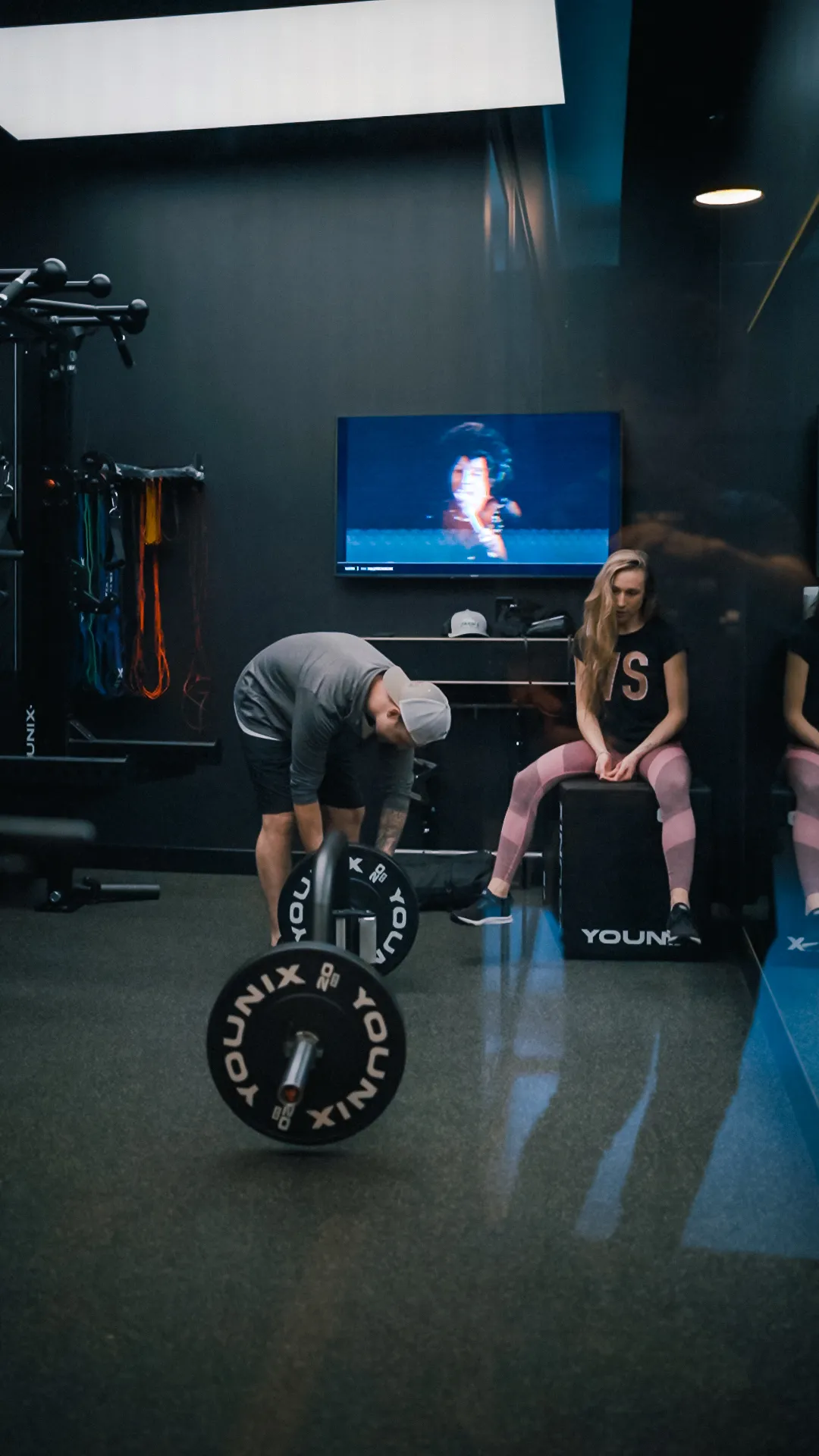
Cyclists are famously strong in one direction and fragile in every other: years of pedaling build an engine while quietly neglecting bone density, upper-body strength, and the hip stability that keeps riders comfortable for decades. Two lifting days a week in winter, cut to one in ride season, closes that gap without costing a single watt. Around Zionsville, that plan is coached one-on-one by a personal trainer serving Zionsville in a private suite about 15 to 20 minutes east at Carmel City Center.
Why riders need the weight room at all
Cycling is wonderful and incomplete. Because the bike supports your weight, riding provides almost no loading signal to the skeleton, and research on endurance athletes has repeatedly flagged low bone density in cyclists who do nothing else. Strength work is the fix, the same mechanism covered in our guide to strength training and bone density: load the body, and bone adapts.
The performance case is just as practical. Sprint power and short climbs draw on maximal leg strength that pedaling alone stops developing after your first seasons. Single-leg strength evens out the imbalances a fixed pedal stroke builds. And trunk and upper-body strength is pure comfort: the difference between mile 50 feeling like mile 20 or like a neck-and-lower-back countdown. Around here that matters, because the riding culture is real: the Monon Trail alone runs 28.5 miles through the metro and carries more than a million users a year, and plenty of Zionsville riders log long flat miles all season.
The two-day template
The winter program fits in two focused hours a week. A typical structure, adjusted to your assessment:
- Day one, hinge-dominant: deadlift variation, single-leg work, upper-body pull, anti-rotation core.
- Day two, squat-dominant: squat variation, step-ups or split squats, upper-body push, trunk carries.
The dosing is deliberately un-heroic: three or four working sets per lift, low repetitions once technique is grooved, and full rest between sets, because the target is force production rather than fatigue. Loads progress week to week, which is the entire point: coached progression, not a random circuit. Nothing is trained to collapse, and your legs should feel used, not wrecked, because the trainer knows Saturday belongs to the bike.
This is technique-dense work, and the private-suite format earns its keep here: a reserved room with a rack, cables, and dumbbells, a coach watching every rep, video on the monitor when a hinge needs fixing, and no one waiting on your equipment between sets. The hinge deserves the attention, by the way: hours in a riding position shorten the front of the body and put the low back on notice, and a well-coached deadlift pattern is the most direct antidote a cyclist can buy.
A calendar that respects ride season
The plan periodizes around Indiana’s seasons instead of fighting them.
November through February: build. Winter around here means an average January high near 33 degrees and roughly 22 inches of snow a year; outdoor volume drops whether you like it or not. Use it: two lifting days, progressive load, the biggest strength gains of the year while the bike sits on the trainer.
March through April: convert. As outdoor miles return, lifting shifts toward power and lighter maintenance loads so your legs arrive at spring fresh, not fried.
May through October: survive and keep. One short session a week, placed away from hard ride days, holds winter strength through the season. This is the part most riders skip, and it is why they rebuild from scratch every winter. One hour a week is cheap insurance, and the two-day-a-week training logic explains why minimal doses hold gains so well. Riders building toward a specific event, a century, a multi-day tour, a first race, simply tell the coach the date, and the lifting calendar bends around the ride calendar rather than the reverse.
“Won’t lifting make me slower?”
The honest answer: only if it is programmed like a bodybuilding plan. Cyclists worry about mass, interference with riding, and sore legs on ride days. A coach solves all three with placement and dose: strength work sits on easy or rest days, volume stays low enough that recovery belongs to the bike, and load progresses without chasing pump or soreness. Riders who lift this way consistently report the opposite of slower: better sprints, less late-ride fatigue, and fewer of the nagging aches that used to accumulate by August. If you already have a knee, hip, or back issue, clear it with your physician or physical therapist first; a good coach programs around a diagnosis, never instead of one.
The Zionsville logistics
From most Zionsville addresses the drive runs about 15 to 20 minutes east along 116th Street or Sycamore and Main into Carmel, no interstate required, and garage parking sits a short walk from the door. Weekday hours run 5 AM to 9 PM, weekends 7 AM to 4 PM, so a 6 AM winter lift is done before work and a Saturday session still leaves the whole day. The free consultation starts it: a free InBody body composition scan for your baseline, a conversation about your riding calendar, and a FlexConnect match with a coach who understands that the bike stays the priority.
If your winters keep disappearing into the trainer while your strength stays flat, this is the season to add the two days: book the consultation and bring your ride schedule.
Related questions
Will lifting make me heavier on the bike?
A properly programmed cycling plan builds strength with minimal mass: moderate volume, progressive load, and plenty of recovery. Most riders gain watts and durability while their weight barely moves, which re-scans confirm.
How do I fit lifting around riding in summer?
You do not add; you shrink. One short maintenance session a week, kept away from your hardest ride days, preserves winter strength through the season without stealing recovery from the bike.
Is strength work still worth it if I only ride casually?
Arguably more so. Casual riders get the same bone-density and durability benefits, and stronger legs simply make every ride feel easier. The program just starts gentler and progresses at your pace.