
Sports Performance Training for Noblesville Athletes, Built Around the Club Calendar
The modern youth sports calendar develops schedules faster than it develops athletes: seasons stack onto seasons, and the physical foundation that should sit underneath, strength, landing mechanics, sprint technique, never gets built. One-on-one performance training fills exactly that gap, and for Noblesville families it sits about 20 minutes south with a personal trainer serving Noblesville at Carmel City Center. This is the case for treating individual development as the missing piece rather than one more activity.
The year-round calendar is the problem to solve
Hamilton County might be the most scheduled place in America to be a young athlete. Grand Park alone covers 400 acres with 31 fields and 26 diamonds and draws around 1.5 million visitors a year, and families here know the rhythm: fall season rolls into winter league rolls into spring tryouts, with a summer tournament block instead of a rest. What that calendar almost never includes is general physical preparation, the strength and movement base that lets a body absorb all that competition.
Sports medicine has warned about this pattern for years: year-round, single-sport competition without a strength foundation is the textbook recipe for overuse injuries. The fix is not quitting the club team; it is putting one or two focused development hours underneath the schedule that already exists, and being disciplined about in-season versus off-season loading so training supports competition instead of competing with it.
Development is not conditioning
Practices condition athletes. Coaches yell effort into them at every level. What team environments structurally cannot do is develop individuals, because development requires three things a group setting cannot provide:
- An individual assessment. What limits this athlete: strength, mobility, mechanics, or simply training age? Programs built without an answer are guesses.
- A program for that answer. The 130-pound freshman who needs two years of progressive strength and the strong-but-stiff senior who needs mobility and speed work should not share a spreadsheet.
- Technique coached every rep. Sprinting, cutting, landing, and lifting are motor skills, and skills need immediate correction, which one coach watching forty athletes cannot deliver.
Picture two Noblesville freshmen on the same club roster. One is fast but folds on contact and has never touched a barbell; her year belongs to progressive strength. The other is the strongest kid on the team and still loses every first step; his year belongs to sprint mechanics and elastic power. Same team, same practices, opposite programs, and only an individual format can deliver both.
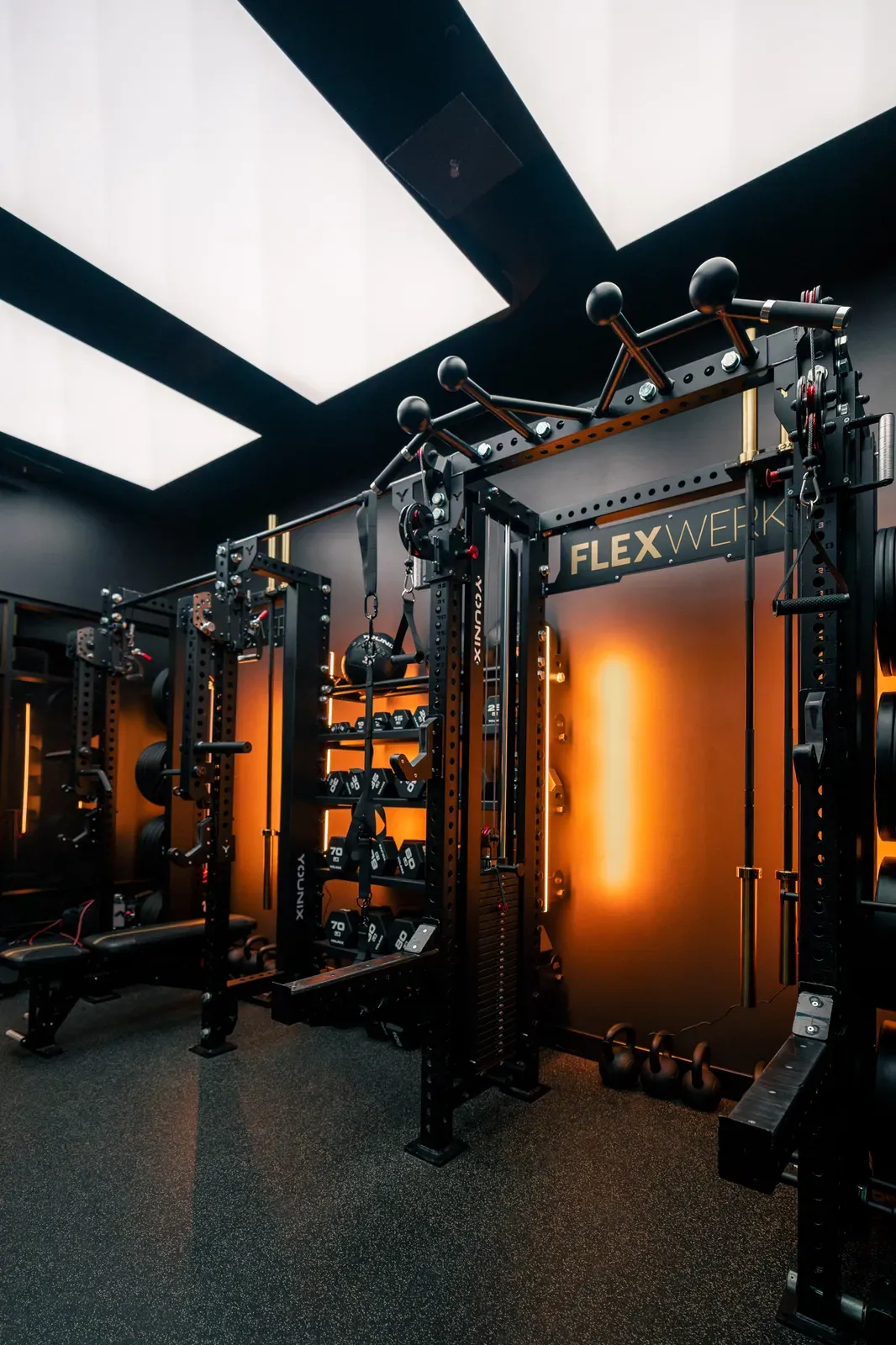
At FlexWerk, every session runs one coach, one athlete, in a reserved private suite with a rack, cable system, and dumbbells, and the rooms are deliberately filming-friendly: drills get captured, reviewed on the monitor, and corrected inside the same hour. For self-conscious teens there is also no gym-floor audience, which does more for learning than most parents expect. The broader one-on-one philosophy is laid out in our sports performance training guide.
What a season-aware program looks like
The engagement starts with assessment: a free consultation, a free InBody body composition scan, movement screening, and a hard look at the sport calendar. FlexConnect then matches the athlete with a coach whose specialty fits the sport and the age, drawn from more than 40 independent professionals.
From there, the calendar decides the shape. Off-season blocks push development: strength climbing week to week, sprint and jump mechanics rebuilt, work capacity expanded. Pre-season shifts to power and speed expression. In-season drops to one maintenance session so gains survive without stealing recovery from games. Return-from-injury athletes follow one extra rule without exception: physician or physical therapist clearance first, then a coach who coordinates with that guidance rather than improvising around it.
Parents should hold any program, including this one, to a measurement standard. Baselines, scheduled re-tests, video comparison over time: a vertical jump number, a short-sprint time, a loaded-carry or trap bar benchmark appropriate to the athlete’s age, and body composition tracked on re-scans rather than eyeballed. When those numbers move, you know the investment is working; when a program cannot show numbers, you are buying enthusiasm. It is also fair to expect restraint: with multi-sport kids, the honest professional answer is typically fewer added hours, not more, and a coach should be willing to say so.
Making the drive from Noblesville work
The honest cost is the trip: about 20 minutes south, via 146th Street west then south, or SR-37 and US-31 depending on where you start, with garage parking a short walk from the door. Noblesville families make it sustainable the same way the club calendar already taught them: by attaching sessions to drives they were making anyway, since so many competition weekends already point toward Westfield and Carmel. Booked appointment times, weekday hours from 5 AM to 9 PM, and weekend hours from 7 AM to 4 PM leave room around practice schedules, including the 6 AM slot before school that serious high schoolers quietly love.
Twenty minutes is a real cost, and it buys a specific thing: an hour in a reserved room where the only athlete being assessed, filmed, corrected, and developed is yours.
If the next season matters, or the last one ended with an ache that never got addressed, start with the free consultation: baseline scan, calendar review, and a coach matched to the sport.
Related questions
My athlete already practices five days a week. Is more training wise?
Often the right move is not more, it is different. One or two strength sessions frequently replace junk volume with the physical base practice cannot build, and a good coach counts total load across everything before adding anything.
Can sessions fit around games and tournaments?
Yes. Sessions are booked appointments, weekdays 5 AM to 9 PM and weekends 7 AM to 4 PM, and coaches program lighter in competition weeks. The calendar drives the plan, not the other way around.
What should we see if it is working?
Numbers, not vibes: strength and jump re-tests trending up, sprint mechanics visibly cleaner on video, and a season with fewer soft-tissue interruptions. Any program should be able to show its work.