
Strength Training for Bone Density: Lifting Against Osteopenia
Bone is living tissue that remodels itself around the demands you place on it, and for most adults the demand simply stops arriving. Progressive strength training is the most reliable non-medical lever you have for bone density, because loading is the signal bone adapts to; that is why lifting belongs in nearly every osteopenia conversation, alongside your physician’s plan and never instead of it. Here is how the signal works, and what a bone-aware program actually looks like.
What actually stimulates bone
Load does, and meaningful load at that. Bone responds to mechanical stress: when muscles pull hard on their attachments and when impact travels up the skeleton, bone gets the message that it is still needed and remodels accordingly. Research on exercise and bone density consistently points at the same ingredients: progressive resistance training with challenging loads, and, where joints and history allow it, modest impact work such as brisk step-downs, hops, or jogging intervals.
The uncomfortable corollary: gentle activity does not send much of a signal. Walking, swimming, and cycling are all worth doing for other reasons, but for many adults they sit below the threshold bone notices. This is why “I’m active” and “my scan surprised me” show up in the same sentence so often, and why the 5-pound-dumbbell version of strength training, however well intended, leaves the main benefit unclaimed. Strength work also pulls double duty here: the same sessions that load the skeleton build the leg strength and coordination that make falls less likely in the first place, which matters as much as the density itself.
Where your physician leads and your coach follows
Osteopenia and osteoporosis are diagnoses, made and monitored by your physician from a DEXA scan, and any decision about medication or supplements is a medical one. That ordering is not fine print; it is the structure of the whole project. Your doctor sets the guardrails, and a good coach programs assertively inside them.
In practice that sounds like: bring your physician’s guidance to a free consultation, get an InBody body composition baseline while you are there, and let the coach translate “stay active, load safely” into an actual progression. Muscle mass and bone health travel together, so watching lean mass climb on re-tests is a useful companion signal between medical scans, not a replacement for them.
An osteopenia-aware program in practice
It looks surprisingly normal, just carefully sequenced:
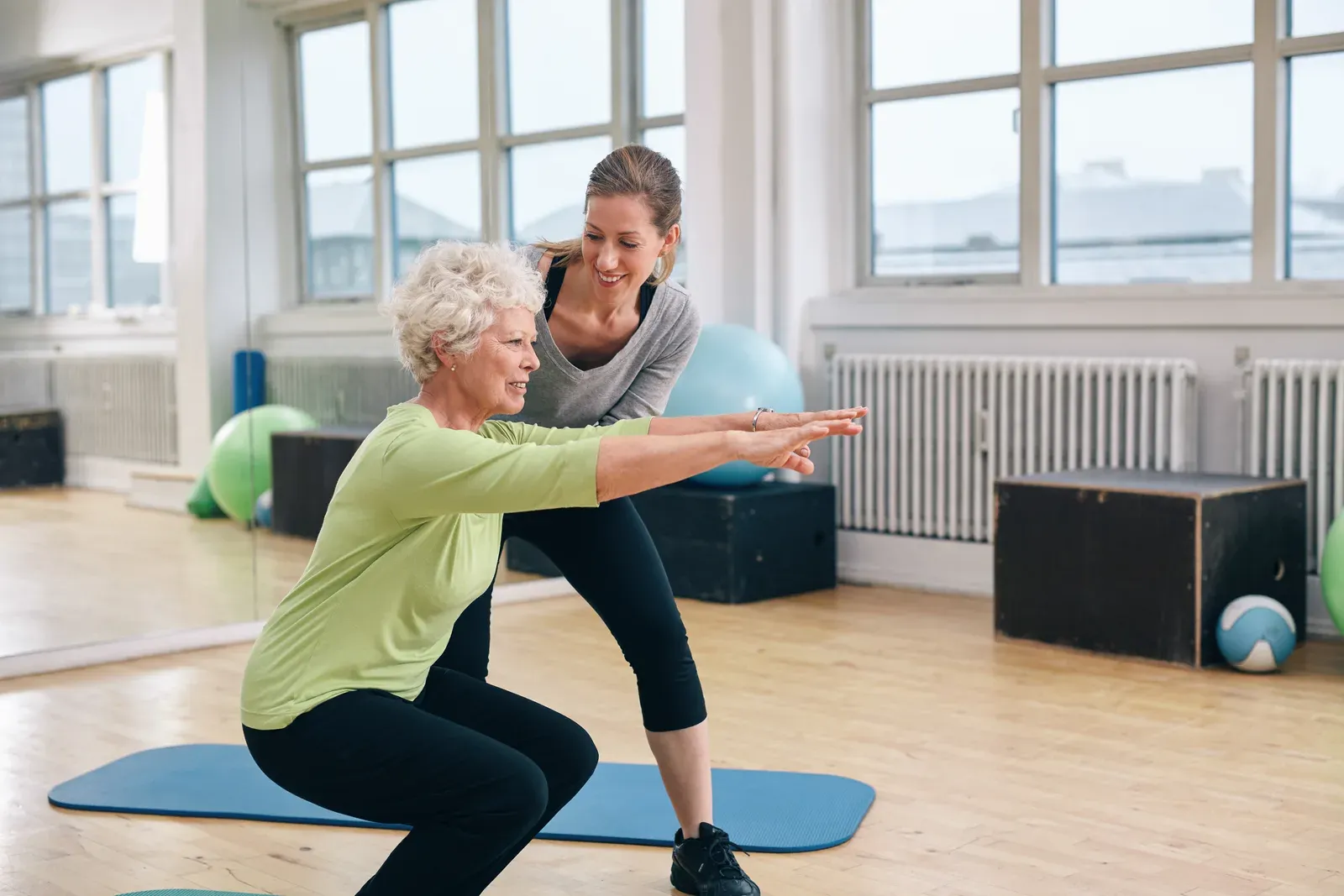
- The big patterns, taught first. Squats from a box, hinges from an elevated start, presses, rows, and loaded carries. Technique is the curriculum for the first stretch; load arrives gradually and keeps arriving, because progression is the point.
- A posture and extension bias. Plenty of pulling, upper-back work, and hip strength; caution with deep loaded spinal flexion, especially early and especially with a low-density diagnosis in hand.
- Impact, dosed to the person. For some, that is eventually low hops and jog intervals; for others, firm step-downs and brisk stair work. This is exactly the judgment call a coach is for.
- Balance woven throughout. Single-leg stances, split squats, carries. More on why in a moment.
Frequency and patience are the quiet variables. Bone remodeling is slow enough that researchers measure programs in months and years rather than weeks, so the plan is built to be sustainable instead of dramatic: the same handful of patterns, revisited two or three times weekly, at loads that creep upward as technique and confidence allow. The visible wins arrive much sooner, because strength and balance improve far faster than density does, and those early wins are what keep the years-long project funded.
If you are decades from your last barbell, or never had a first one, that is normal here; the 70-and-beyond question has an encouraging answer, and the same biology applies at every age before it.
The other half of fracture risk: not falling
A fracture needs two things: a vulnerable bone and a fall, and training is the rare intervention that addresses both. Leg strength, hip power, and practiced balance are what turn a slip into a stumble instead of an emergency. Simple screens like the one-leg stand, covered honestly in the balance test explainer, flag who needs this work most, though they diagnose nothing by themselves.
The local math makes the case on its own. Carmel averages around 22 inches of snow a year, and January highs sit near 33 degrees, which means months of freeze-thaw ice on driveways and sidewalks. A winter of icy parking lots is exactly the environment where trained legs and practiced balance quietly pay for themselves.
What progress honestly looks like
Strength moves first and fast; bone moves slowly and silently. Expect noticeable strength gains within the first couple of months, better balance not long after, and treat the bone side as a multi-year investment verified on whatever DEXA schedule your physician sets. No coach can promise a specific scan result, and none should try. What training reliably delivers in the meantime is the surrounding armor: more muscle, stronger legs, steadier feet, and a body that handles the icy-sidewalk months with margin.
At FlexWerk in Carmel City Center, this work happens one-on-one in a private suite, with a rack, cables, and dumbbells and no gym-floor audience while you learn, which matters to a lot of people starting this project in their 50s, 60s, or 70s.
If a recent scan put osteopenia on your radar, talk with your physician about training, then bring their guidance to a free consultation and let a coach build the loading plan your bones have been waiting for.
Related questions
Can lifting weights reverse osteopenia?
Training is a stimulus, not a treatment. Research consistently links progressive resistance and impact loading with better bone density outcomes, but diagnosis, DEXA monitoring, and any medication decisions stay with your physician.
Is lifting safe if my bone density is already low?
For most people, yes, inside a program built around your physician's guidance: controlled progression, well-taught positions, and no reckless loaded spinal flexion. That is precisely what coached one-on-one sessions exist for.
How long does bone take to respond to training?
Bone adapts slowly, on a many-months scale, which is why consistency beats intensity. Your DEXA re-scan schedule is your physician's call; your job is showing up two to three times a week in between.