
Golf Fitness Training for Noblesville Players: A Year-Round Plan for Your Game
A golf swing is a physical event: ground force, hip rotation, trunk speed, delivered in sequence in under a second, and the gym is where every one of those inputs gets bigger. For Noblesville golfers, that work runs one-on-one with a personal trainer serving Noblesville about 20 minutes south at Carmel City Center. What follows is the honest version of what training adds to a golf game, arranged the way a golf year actually unfolds.
What the gym adds, and what it never will
Start with the honest boundaries. Strength training will not fix your slice, read greens, or replace lessons; swing technique belongs to your golf instructor. What training controls is the hardware the swing runs on: how much force your legs put into the ground, how far your hips and mid-back rotate, how fast your trunk can deliver that force, and how many holes your body can play before it starts negotiating.
For most amateurs those qualities are completely untrained, which is exactly why the gym moves the needle. Speed leaks away with age unless it is built and maintained, mobility narrows with desk years, and the average player is swinging with a fraction of the force their frame could produce. Golfers north of 50 feel this first and should read our honest take on adding driving distance after 50; the mechanism is the same at every age, only the starting point differs.
The golf year, phase by phase
Training that ignores the calendar fails golfers twice: too hard in-season, too aimless in winter. A season-aware plan looks like this.
Offseason, November through February: build. Indiana shuts golf down for you, so use the closed window: two sessions a week, progressive lower-body and trunk strength, dedicated hip and thoracic mobility. This is when the engine gets bigger, and the offseason golf workout blueprint covers the block in detail. Simulator time keeps the pattern; the gym rebuilds the power behind it.
Pre-season, March into April: sharpen. Strength work stays but shrinks, and rotational speed takes over: medicine ball throws, cable rotations, intent-driven power work that converts winter strength into clubhead speed right as the courses reopen.
In-season, May through October: keep. One session a week, moderate and short, placed away from your competitive rounds. This is the phase most golfers skip, and it is why their spring gains are gone by the member-guest. Maintenance is cheap; rebuilding every year is not.
The calendar view has a second virtue: it makes progress legible. A baseline in November, a re-test in March, and a re-scan mid-season tell you exactly what the winter bought, in pounds lifted, degrees of rotation, and body composition, before the scorecard ever weighs in.
The durability dividend
Distance sells the training; durability is usually worth more. Golf repeats a one-sided, high-velocity rotation thousands of times a year, and the bill tends to arrive at the low back, the lead hip, and the elbows. A golf strength program is quietly a durability program: glute and core strength that shields the spine, mobility that lets rotation happen at the hips and mid-back instead of the lumbar spine, and general strength that turns 36 walking holes into a good day instead of a recovery project.
Boundaries again, because they matter: training reduces risk and load, but nothing makes a golfer injury-proof, and existing pain is a medical question first. See your physician or physical therapist before training around a cranky back or hip; a good coach will ask about exactly that at the first conversation and program with the answer, not around it.
Why one-on-one beats a printout
Golf training is everywhere online, and generic programs fail golfers for a specific reason: rotational power work is the most technique-sensitive training there is, and unsupervised speed work on a stiff or weak base is how gym injuries happen. The one-on-one format solves what the PDF cannot: an assessment first, a free consultation with a free InBody body composition scan and a mobility screen, then a program built for your body and coached rep by rep.
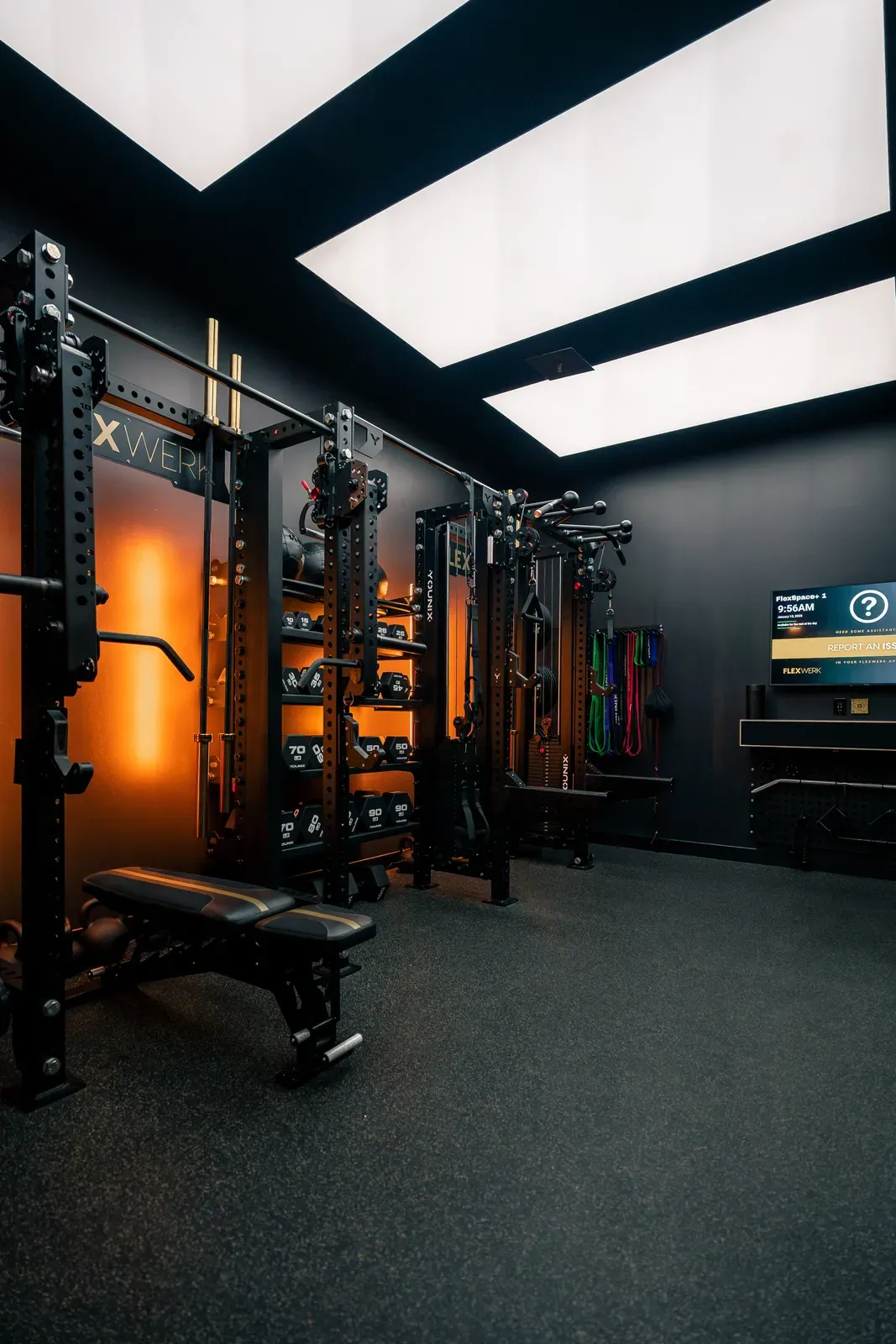
The setting helps more than golfers expect. Every session here runs in a reserved private suite, rack, cables, and dumbbells with nobody waiting, video review on the room’s monitor for rotational drills, your own music, and no audience while you learn to move fast. FlexConnect matches you to a coach from more than 40 independent professionals, so the person programming your rotation actually works with rotational athletes.
The Noblesville logistics, honestly
The drive south runs about 20 minutes, a podcast and a half, via 146th Street west then south or SR-37 and US-31 depending on your start point, with garage parking a short walk from the door. Weekday hours run 5 AM to 9 PM and weekends 7 AM to 4 PM, so winter sessions fit before work or alongside Saturday errands, and plenty of players attach them to trips already headed toward Carmel. In-season, that one weekly maintenance hour is the only trip the plan asks for.
If your last few seasons have been a slow negotiation with distance and a sore back, spend one free hour on the other approach: book the consultation, get the baseline, and let this winter be the one that shows up on the first tee in April.
Related questions
How much distance can training realistically add?
No honest coach promises yardage. What the evidence supports: most amateurs have untrained strength and mobility, and converting those into swing speed commonly shows up as measurable carry gains within a season.
Will lifting stiffen up my swing?
The opposite, when programmed for golf. Sessions pair strength with hip and thoracic mobility, so most players finish a block rotating further than when they started, not less.
Can I train during the season without wrecking my game?
Yes, one maintenance session a week, kept light and placed away from competitive rounds. The heavy building belongs to the offseason; the season is for keeping what you built.