
Fitness Training After a Stroke in Carmel: The Chapter After Discharge
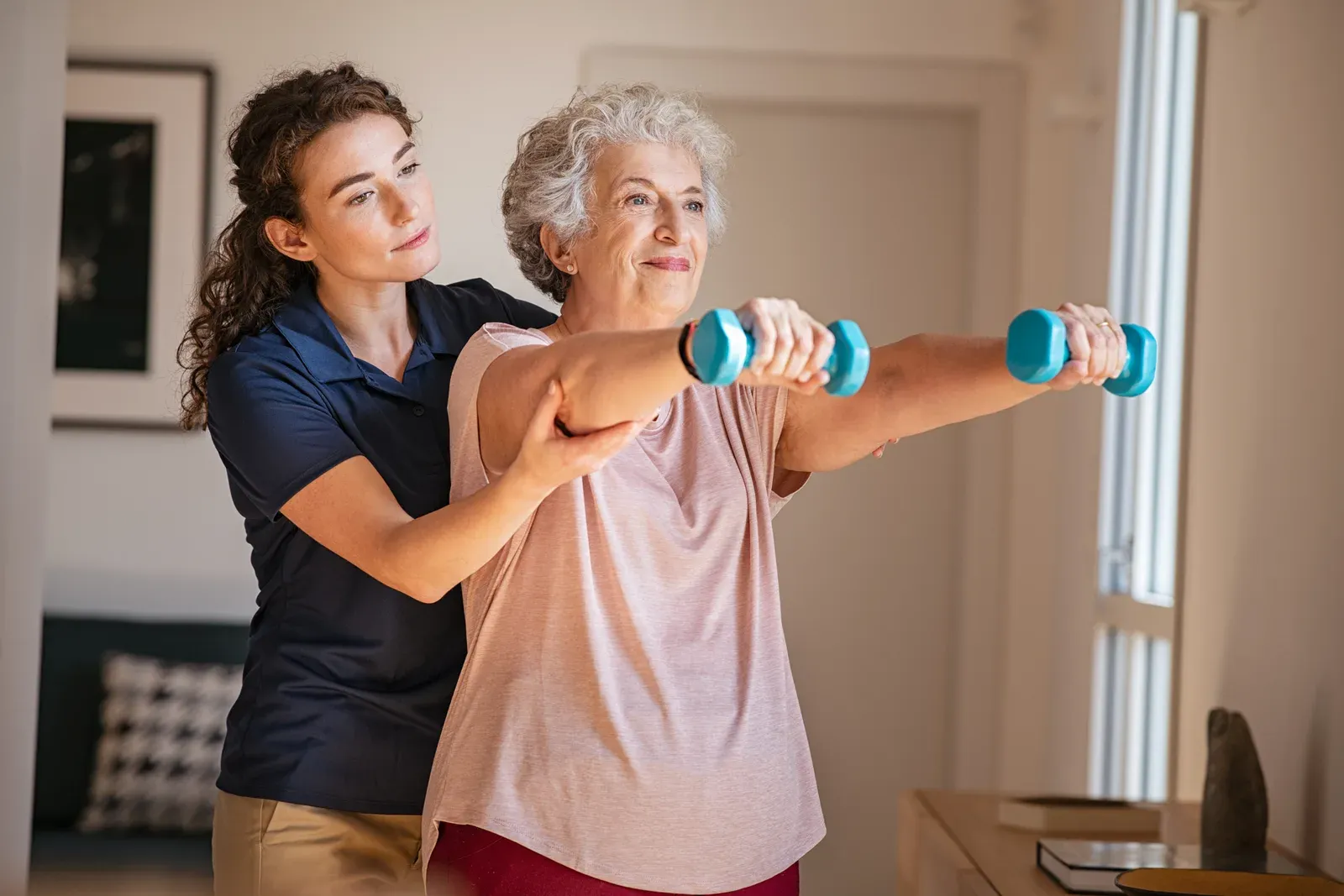
Stroke recovery runs on a clinical team: physicians, physical therapists, occupational therapists. Fitness training after a stroke belongs at the very end of that chain, and a personal trainer only enters the picture when your medical team and physical therapist agree the rehab chapter is complete and coached exercise is appropriate. If you or someone you love is anywhere before that point, the next conversation is with the clinical team, not a gym. This page is about what comes after they say yes.
Rehab first, always
Physical therapy after a stroke is skilled clinical care, and nothing a trainer does resembles or replaces it. The therapist owns recovery: restoring function, managing precautions, and deciding when formal rehabilitation has done its work. A personal trainer who offers to shortcut that process, or blur into it, is disqualifying themselves in real time.
The honest role for coaching starts at discharge, when many people hit an unexpected cliff: months of structured, supervised sessions end, and the calendar goes quiet exactly when consistency matters most. The bridge across that cliff is built on paperwork: ask your physical therapist and physician whether coached exercise is appropriate now, what should be continued, what should be avoided, and what intensity guidance applies. In Carmel, that written handoff is exactly what a coach will ask to see at the free consultation at FlexWerk in Carmel City Center, alongside a free InBody body composition baseline and a long, unhurried conversation about where things stand today. The discharge cliff is well documented in ordinary orthopedic recovery too, and our guide to after physical therapy, what comes next walks through it; after a stroke, the same gap simply carries higher stakes, which is why the paperwork step is not a formality.
What a good handoff contains
The difference between careful post-stroke coaching and guesswork is the quality of the handoff from your clinical team. Worth requesting before your last PT appointment:
- Movements to continue. The home program your therapist built, so the coach can keep it alive instead of replacing it.
- Precautions and hard limits. Anything about balance support, blood pressure guidance from your physician, positions to avoid, or fatigue rules.
- What progress should look like. The therapist’s sense of a reasonable next milestone, so nobody invents one.
- A reporting line. What changes should be flagged back to the clinical team, and how quickly.
A coach’s job is to follow this document faithfully and to send anything unusual straight back to your clinicians rather than interpret it. The division of labor is spelled out plainly in our answer on trainers versus physical therapists: different professions, different scopes, and a clean line between them.
What post-discharge sessions look like
Inside the handoff’s boundaries, coached sessions after a stroke tend to be patient, repetitive in the best sense, and closely supervised:
- Foundational strength. Sit-to-stand progressions, supported squats, presses, rows, and grip-and-carry work with the room’s rack, cables, and dumbbells, loaded in small, unhurried steps.
- Balance practice with a coach in arm’s reach. Stance work, weight shifts, and stepping drills, always spotted, always on a clear floor. The progressions mirror the ones in our coached balance training answer.
- Movement rehearsal. The therapist’s continued exercises, practiced with a second set of eyes on quality.
- Pacing with margins. Generous rest, shorter sessions when the day calls for it, and a full stop plus a call to the physician for anything that feels wrong. A trainer never plays through uncertainty.
Progress is counted in sessions attended and quality held, not in promises. Nobody can tell you what recovery will give back, and a coach who claims otherwise has left their scope.
Why the private room changes the experience
Relearning movement is personal work, and doing it in front of a big-box crowd is a cost many people quietly refuse to pay. At FlexWerk every session runs in a private reserved room: no audience, no waiting for equipment, no navigating a busy floor between exercises, and full control of music and lighting. A spouse or family member can be there too, since clients of trainers receive free guest access. For many families, that combination, privacy plus company, is what makes the difference between training happening and not happening. The same one-on-one structure serves people across neurological conditions, as our guide to training with Parkinson’s in Carmel describes.
The practical Carmel details
FlexWerk sits at 885 Monon Green Blvd at Carmel City Center, with garage parking a short walk from the door, an honest consideration when every outing takes planning. Hours run 5 AM to 9 PM on weekdays and 7 AM to 4 PM on weekends, so sessions can land whenever energy is best. Coach matching goes through FlexConnect, which pairs you with one of the more than 40 independent professionals here; name the requirement plainly, experience with post-stroke or neurological clients, and let the matching conversation do its job. And when Indiana winter puts ice on every sidewalk, with January highs around 33 degrees, an indoor, supervised place to keep building strength and balance stops being a luxury.
If the clinical team has signed off on the next chapter, ask them one last time whether coached exercise is appropriate and what the boundaries are, then bring their guidance to the free consultation and give the rebuilding work a schedule, a coach, and a room of its own.
Related questions
When can I start with a trainer after a stroke?
Only when your medical team and physical therapist say so. Rehabilitation belongs to your clinical team, and coached fitness training is a later chapter that begins at discharge, with their explicit clearance and guidance in hand.
Is a personal trainer a substitute for stroke rehabilitation?
No, never. Physical, occupational, and speech therapy are clinical care. A trainer's scope is general strength, balance, and consistency after rehab ends, inside whatever boundaries your clinical team sets.
Can a family member join the sessions?
Yes. Clients of FlexWerk trainers receive free guest access, so a spouse or family member can be in the private room for every session if that makes training feel safer and more comfortable.