
After Physical Therapy Ends: What's Next for Your Training?
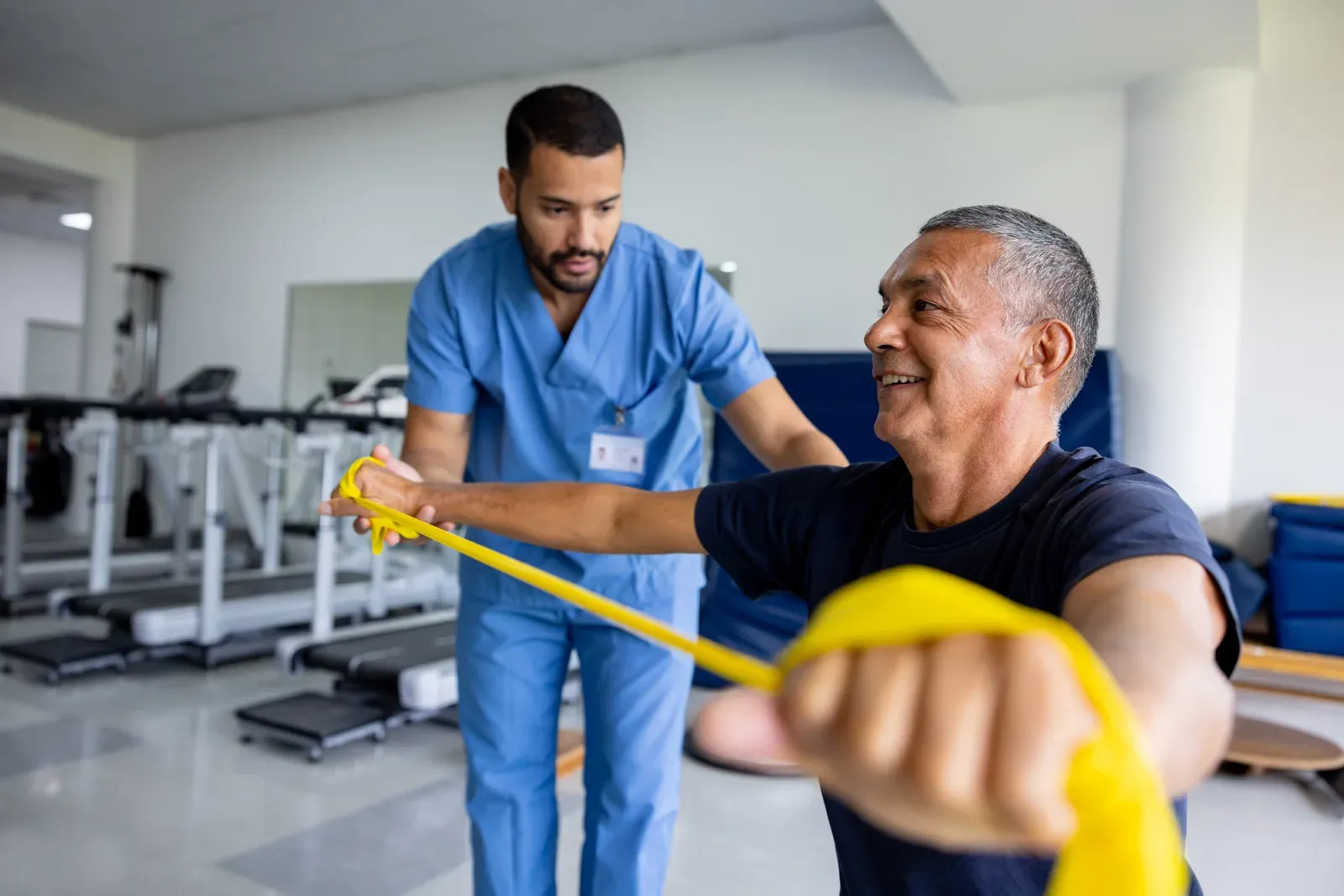
When physical therapy ends, you are cleared, not finished: discharge means you met your rehab milestones, and the next step is structured strength training that keeps building on what PT restored. The weeks right after discharge are a fork in the road. Handled well, they turn a healed injury into the start of the strongest stretch of your adult life. Handled badly, they are where re-injury and quiet decline live.
What discharge actually means
Discharge means function, not full capacity. Physical therapy exists to restore you to a defined threshold: the shoulder reaches overhead, the knee handles stairs, the back tolerates daily life. Once you hit those marks, and often once insurance-covered visits run out, you are done with PT. But “done with PT” and “back to where you were” are different places. Strength, work capacity, and confidence in the injured area typically sit well below your pre-injury baseline at discharge, and the home exercise sheet you leave with was designed to maintain the rehab, not to keep progressing you.
Your PT knows this, which is why so many discharge conversations end with some version of “keep strengthening it.” What most people never get is a concrete answer to the obvious next question: with whom, doing what, starting when?
The risky middle, where most people stall
The gap after PT usually resolves in one of two bad directions. Some people return straight to their old routine at their old loads, as if the intervening months never happened; the injured area, still the weakest link, gets asked to do last year’s job on this year’s capacity. Others, burned once and cautious, do essentially nothing beyond the home exercises, which they retire within a month; the area stays fragile because nothing is asking it to get stronger, and general fitness erodes around it.
Both paths share the same flaw: no progression and nobody watching. Re-injury risk is commonly highest not during rehab, when everything is supervised, but in the unsupervised months after it, and the fear that follows a setback is often what turns one injury into the end of someone’s training life. The middle path, progressive load under experienced eyes, is exactly what a good trainer sells.
The home exercise sheet deserves its own mention, because its fate is so predictable: done faithfully for two weeks, then three days a week, then found under a magazine in March. That is not a discipline failure; it is what happens to any program with no progression, no appointment, and no witness. Attaching those exercises to a coached plan is usually what saves them.
How a trainer bridges from rehab to strength
The bridge starts with a conversation, not a barbell. At a free consultation, a coach walks through your injury history, your PT home program, and any restrictions your providers set, then takes an InBody body-composition baseline so the rebuild is measured, not guessed. From there the division of labor is clean, and worth being explicit about: your physician and PT own clearance and medical guidance, and your trainer works inside those lines. If you are unsure where one role ends and the next begins, the boundary is laid out plainly in trainer vs physical therapist. Keep your providers in the loop, especially early; a trainer who discourages that is the wrong trainer.
What the bridge work actually looks like:
- Your home program, graduated. Those PT exercises become warm-up and accessory work, finally attached to a plan that goes somewhere.
- Progression around the area, not through it. Everything trainable gets trained hard while the healing area advances on its own conservative track, the same logic that governs training around an injury generally.
- Movement quality before load. Patterns get rebuilt and watched every rep before weight climbs, which is precisely the supervision the post-PT months otherwise lack.
- Objective checkpoints. Strength benchmarks and re-scans, so “is it working?” gets answered with data.
A common post-PT arc
Every rebuild moves at its own pace, so treat this as a common shape rather than a schedule. Weeks one through four usually center on movement quality: grooving patterns, graduating the home program, finding honest starting loads. Weeks five through eight bring progressive loading, with the formerly injured area on a deliberately patient curve while the rest of you trains like an athlete. By weeks nine through twelve, most people are running what looks like normal programming with a watchful eye and a few permanent intelligent modifications, the same approach that lets people with a history of back pain train hard for decades. Milestones, not dates, decide each step up.
Why the environment matters more after an injury
Post-rehab confidence is fragile, and a crowded gym floor is a hard place to rebuild it: waiting for equipment tempts you to improvise, an audience tempts you to load faster than you should, and nobody is watching the one movement that matters. A private suite removes all three failure modes. At FlexWerk in Carmel, sessions run one-on-one in a fully equipped FlexSpace, rack, cables, dumbbells, with your coach’s full attention on the exact patterns PT spent months restoring. For most of Hamilton County it is a short drive to Carmel City Center, and the Monon Trail out the front door is a ready-made venue for the walking volume most post-rehab programs prescribe between sessions.
If you are in your last weeks of PT, or discharged and drifting, the move is simple: get your provider’s blessing, bring the home program, and book the consultation so the bridge starts before the gap does.
Related questions
Can a personal trainer continue my physical therapy?
No. Trainers train; they do not treat, diagnose, or rehab. What a good trainer does is build strength and capacity on top of what PT restored, inside the guidelines your PT and physician set.
How soon after discharge can I start with a trainer?
Often right away, with your provider's go-ahead. Many people book the consultation during their final weeks of PT so the handoff has no gap.
What should I bring from PT to my trainer?
Your home exercise program, any movement restrictions, and your provider's guidance in writing if you have it. The more your trainer knows, the better the program protects the work you paid for in rehab.