
What Does Coached Balance Training in Carmel Look Like?
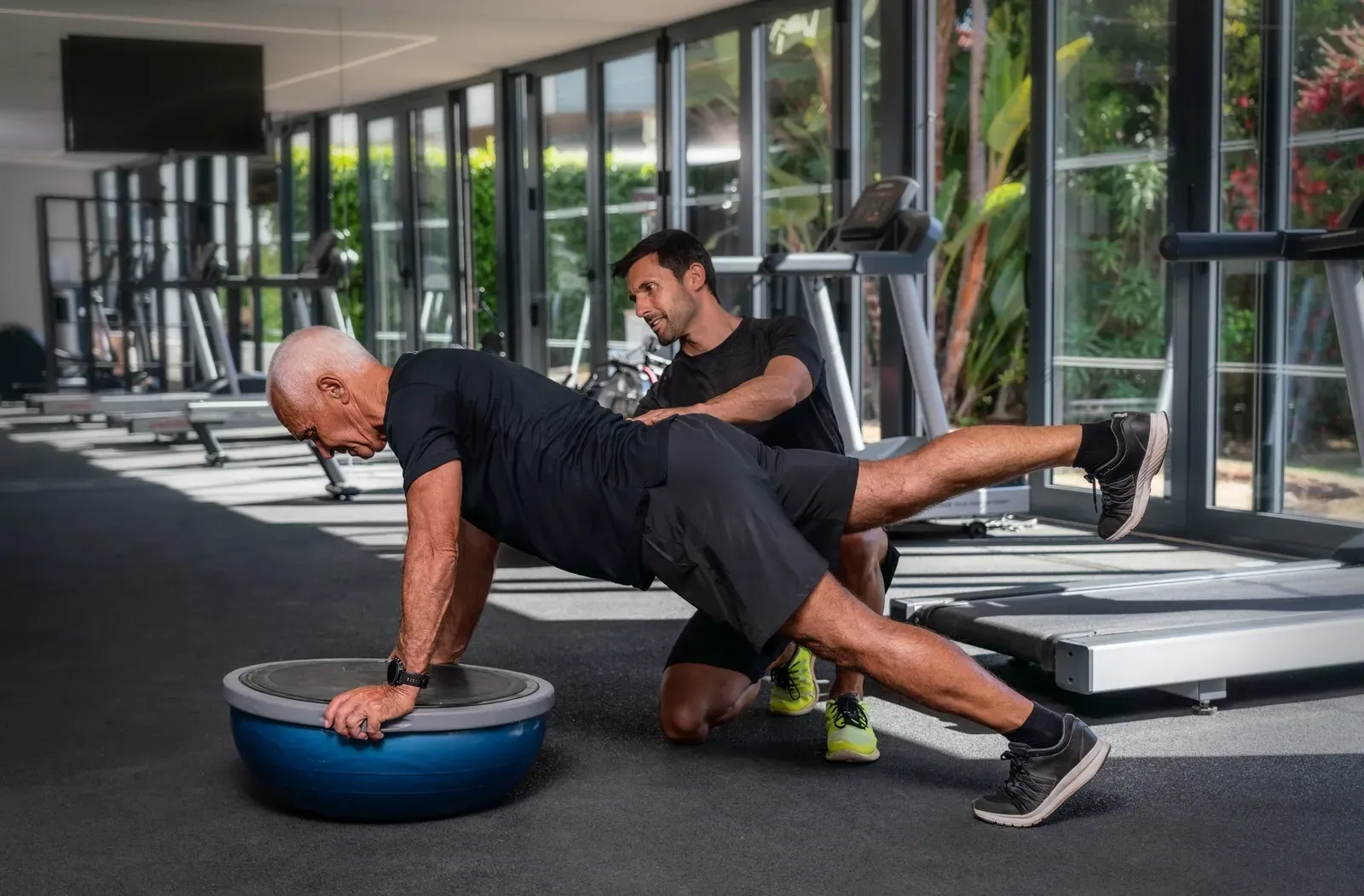
Balance is trainable at any age, and coached balance training pairs two things most people only do one of: progressively harder balance practice, and the leg and hip strength that actually catches you when you wobble. Feeling less steady than you used to is a signal to train, not a reason to move less, and moving less is precisely what makes it worse. In Carmel, this work runs one on one in a private room at FlexWerk in Carmel City Center, and it starts with a free consultation that includes a free body composition scan.
One thing before any of it: if your unsteadiness arrived suddenly, comes with dizziness, vertigo, or vision changes, or began after a medication change, that is a physician conversation first, not a training one. Coaching is for balance that has quietly eroded with age and inactivity, and a good coach will insist on medical clearance for anything that looks like a symptom rather than a pattern.
What coached balance work actually looks like
Forget wobble-board circus tricks. A real balance program progresses through stages, each slightly harder than comfortable and none dangerous, because a coach stands within arm’s reach the entire time:
- Static holds. Narrow stances, then single-leg stands, then the same with eyes moving or head turning, because real life never lets you stare at a fixed point.
- Dynamic control. Step-ups, controlled step-downs, walking heel to toe, reaching outside your base of support and returning.
- Reactive work. Gentle nudges, quick direction changes, and stepping drills that train the fast catch-step that prevents a stumble from becoming a fall.
- Strength underneath it all. Sit-to-stand progressions, split squats, calf and hip work on the room’s rack, cables, and dumbbells. This is the half most balance advice skips, and it is the half that does the catching.
Progress is measured, not guessed: timed single-leg stands and sit-to-stand counts at the start, then re-tested. The longevity balance tests explain what those numbers predict, and they predict a lot.
Why strength is half of balance
Standing steady is quiet strength work: muscles making constant small corrections. Recovering from a wobble is loud strength work: a fast, forceful step that has to arrive in a fraction of a second. Both fade with age faster than balance sense itself does, which is why balance practice alone, without loading, plateaus early. The pairing is the program.
Why train it privately in Carmel
Balance work involves wobbling, and nobody enjoys wobbling in front of a gym crowd. At FlexWerk every session runs behind your own door, in a reserved private room with your coach, your music, and no audience, which is exactly the setting where people stop guarding and start progressing. Coaches come matched through FlexConnect from more than 40 independent professionals, and you can ask specifically for experience with older adults; the broader picture for that stage of training lives in training for your 80s.
The practical details help too. The building sits at 885 Monon Green Blvd at Carmel City Center with garage parking a short walk from the door, midday appointments are easy against the 5 AM to 9 PM weekday hours, and Indiana supplies the motivation every winter: with January highs around 33 degrees and roughly 22 inches of snow a year, icy driveways are an annual test you can actually train for. If your deeper concern is preventing falls outright, the fall prevention guide takes this the rest of the way.
Steadiness is not something you had once and lost forever. Book the free consultation, get a baseline, and start rebuilding it on purpose.
Related questions
Can balance really improve at 60 or 70?
Yes. Balance responds to practice at every age, and the strength component responds even faster. Most people notice steadier footing within weeks of consistent, properly progressed work.
Why does a balance program include strength training?
Because staying upright is a strength act. Catching a stumble requires leg and hip power, and standing on one foot requires muscles that can hold you there. Practice alone, without strength, leaves half the problem untrained.
When should I see a doctor instead of a trainer?
If unsteadiness came on suddenly, involves dizziness or vertigo, or started after a medication change, see your physician first. Coaches train steady-but-weakening balance; new or unexplained symptoms need a medical answer.