
Perimenopause Strength Training: Start in Your 40s
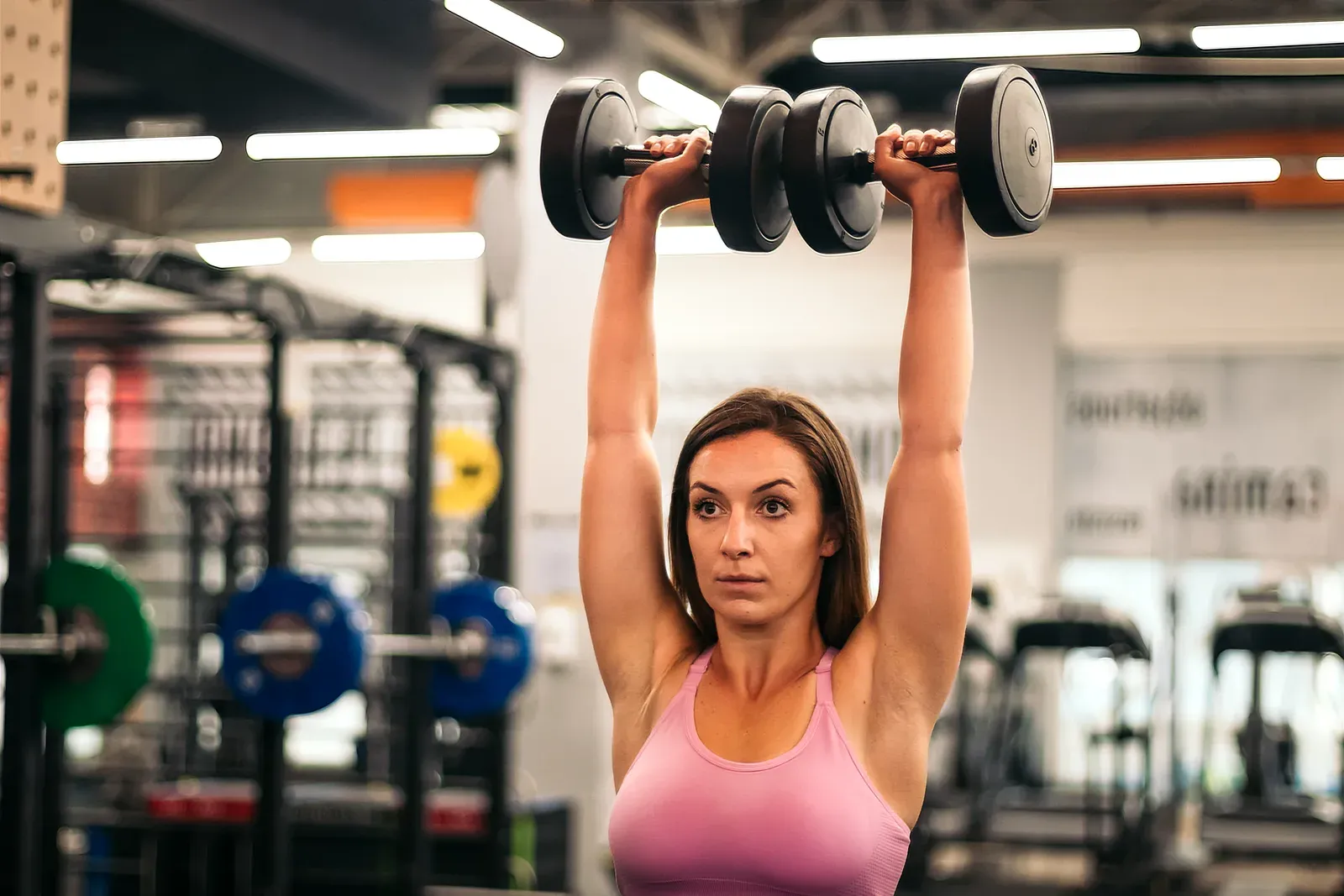
Perimenopause usually announces itself sometime in your 40s: cycles change, sleep turns unreliable, and the body composition math that worked for two decades quietly stops working. The most protective habit you can build during perimenopause is progressive strength training, because the transition puts muscle and bone under pressure for years, and women who start lifting in their 40s enter menopause with reserves instead of deficits. This page is about the transition years specifically: what changes, what lifting actually answers, and how to start without a gym-floor audience.
Why your 40s are the decade that decides
Because perimenopause is when the losses start, not when they finish. Estrogen does not fall off a cliff; it fluctuates and trends downward across several years, and along the way muscle becomes harder to keep and bone density decline commonly accelerates in the window around the final period. Waiting until “after things settle” means starting the rebuild from a lower floor.
Training through the transition flips that. Strength built now is capacity you carry into your 50s and 60s, and the habit itself is easier to establish while energy is still mostly cooperative. The practical starting point is a free consultation with an InBody body composition scan, so you know your actual muscle and fat numbers instead of guessing from a bathroom scale that hides both.
What changes in perimenopause, and what lifting answers
The transition tends to show up in four places, and strength training speaks to each of them in its own lane:
- Body composition drift. Many women notice fat storage shifting and muscle quietly thinning even at a stable weight. Progressive lifting is the counter-signal: it tells the body the muscle is still needed.
- Bone. The years around menopause are commonly when bone density decline speeds up. Loading is the stimulus bone responds to, which is why lifting and bone belong in the same sentence; the fuller case lives in strength training for bone density.
- Sleep. Regular resistance training is commonly associated with better sleep quality, and many women in the transition report that a well-dosed session helps them sleep deeper than another cardio hour does.
- Stress and mood. A hard set is a legitimate pressure valve, and visible strength progress is a steady source of wins during a stage that can feel like losing ground.
None of that is a cure for hot flashes or cycle chaos, and it is not meant to be. It is the trainable side of the transition, which happens to be a big side.
What a perimenopause-smart program looks like
It looks like patient, progressive lifting, not punishment. Two to three sessions a week built on the big patterns: squat, hinge, press, pull, carry, with loads that genuinely challenge you and creep upward over months. Add daily-ish walking, protein at every meal, and enough recovery to absorb the work.
A concrete week, for shape: Monday, a coached full-body session built around a squat pattern, a press, and a row; Thursday, a second session around a hinge, a pull, and loaded carries; brisk 30-minute walks on two or three of the days between. Each lift moves up a notch every week or two, some weeks deliberately hold steady, and the whole thing fits inside about two and a half hours. Nobody needs six workouts a week; women in this stage mostly need two they never skip.
The perimenopause-specific part is flexibility inside the structure. Sleep-wrecked weeks happen, and a good coach adjusts the day’s load to the body that shows up rather than the plan on paper. That is also the argument against all-intensity group formats during this stage: when every workout is a max-effort sweat contest, rough weeks turn into skipped weeks. Coached strength has a dial; classes mostly have a switch.
If lifting is new territory, the learning curve is short with someone watching: technique first, load later, and the heavier loading question answered honestly when you get there.
What strength training will not do
It will not treat symptoms, and it does not replace your physician. Hot flashes, cycle changes, mood swings that worry you, and any question about hormone therapy or medication belong in a medical conversation, and a good coach will say so on day one. Training complements that care by handling the piece medicine cannot: the muscle, bone, and habits that respond only to work.
Honest expectations matter too. Composition change is a months-scale project at any age, and hormones in flux do not speed it up. What you can expect early is strength, energy, and sleep improvements within weeks, with the visible changes following behind. Anyone promising faster is selling something.
Starting in Carmel without the gym-floor part
For a lot of women in their 40s, the barrier was never motivation; it was the venue. At FlexWerk in Carmel City Center, sessions run one-on-one inside a private suite: your own rack, cables, and dumbbells, your coach’s full attention, a door, and nobody watching you learn. FlexConnect matches you with a coach by goals, schedule, personality, and specialties, and “perimenopause-aware programming” is exactly the kind of specialty to name in that conversation.
The logistics suit this stage of life, too. With 23.3 percent of Hamilton County working from home as of 2024, a late-morning or lunchtime session is a realistic calendar block for many Carmel professionals, and the facility’s 5 AM weekday opening covers everyone else. If you are already past the transition and thinking about the decades ahead, strong after 50 picks up where this page ends.
The version of you that reaches menopause strong is built in the years before it; a free consultation and a baseline scan is how she gets started.
Related questions
Is it too late to start strength training in my late 40s?
No. Muscle and bone respond to progressive training at every age, and starting during perimenopause means you enter menopause with reserves instead of deficits. The best time was your 30s; the second best time is this week.
Will strength training fix my perimenopause symptoms?
Training is not a treatment, and no honest coach claims otherwise. Many women find lifting helps sleep, mood, and body composition, but symptom management and any hormone therapy questions belong with your physician.
How often should I lift during perimenopause?
Two to three coached sessions a week is the commonly effective range, with walking or easy cardio between them. Consistency across months matters far more than any single heroic week.