
Should Women Lift Heavy After Menopause?
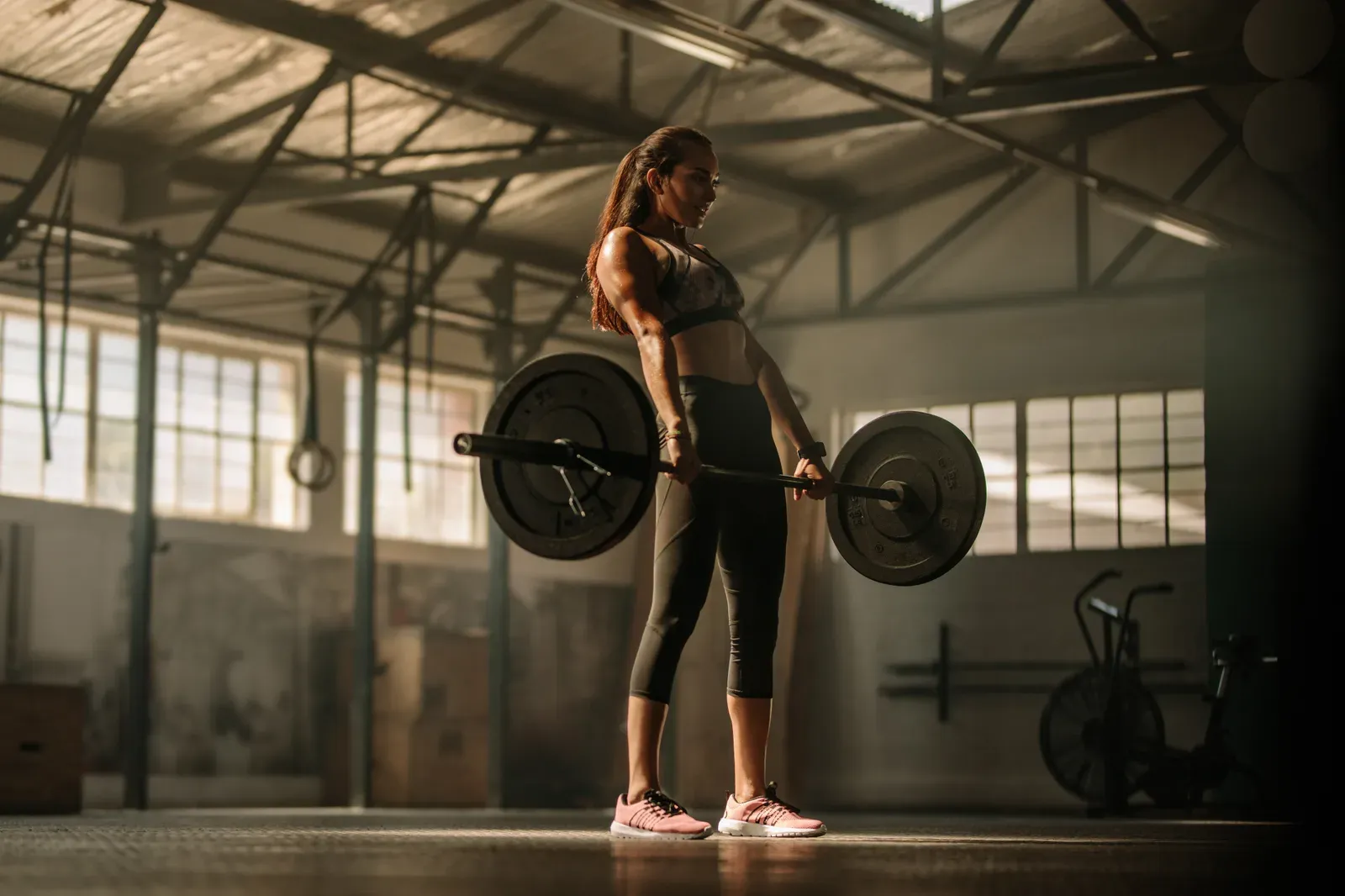
Yes: for most women past menopause, progressively heavier lifting is not just safe, it is the point, because lower estrogen makes muscle and bone harder to keep, and light weights repeated forever do not send a strong enough signal to keep them. “Heavy” here means heavy for you, reached gradually and coached well, not a barbell max on day one.
Why the signal matters more after menopause
Because the body’s default settings changed. After menopause, the hormonal environment that once helped maintain muscle and bone steps back, and both tissues become more insistent about one question: is this still needed? Challenging resistance is how you answer yes. Research on postmenopausal women and strength training consistently favors meaningful loads over token ones, for strength, for body composition, and for the loading stimulus bone responds to.
The common advice aimed at women in this stage, “light weights, high reps, be careful,” is not dangerous; it is insufficient. Muscle and bone adapt to challenge that increases. A program that never gets heavier is a program that stops working, usually within months, and the years after menopause are exactly when you cannot afford a program that stops working. The good news inside the physiology: the response to training itself stays robust, with studies of postmenopausal lifters consistently showing meaningful gains in strength and lean mass. The lever still works; it simply has to be pulled harder and more regularly than it did at 35. An InBody baseline at a free consultation makes this concrete: muscle mass is the number you are defending, and you get to watch it on re-tests instead of guessing.
What heavy looks like in practice
It looks polite at first, and that is by design. Heavy is defined by effort, not by the plate math: a weight where the last couple of reps of a set take real focus while your form holds. Early sessions establish positions with loads that feel almost easy; then the load climbs a little at a time, for months, and eventually the weights are objectively substantial while still feeling appropriate, because you grew into them.
Rep ranges make the idea concrete. Much of the work lives in sets of five to ten repetitions, where loads are substantial enough to signal muscle and bone but controlled enough to coach well, with the last rep or two of each set requiring honest focus. Recovery gets equal billing: sessions are spaced across the week, sleep is treated as part of the program, and protein at each meal supports the rebuilding the lifting requests. None of it is complicated; all of it is deliberate.
A typical coached week is two or three sessions built on squats, hinges, presses, pulls, and carries. Nothing exotic, everything progressive. The transformation stories that come out of this stage of life are rarely about clever exercises; they are about ordinary lifts done consistently at loads that kept inching up.
The safety question, answered honestly
Coached heavy lifting is generally among the safer things a postmenopausal woman can do in a gym, and the risk calculation runs opposite to instinct: the greater long-term danger is usually staying weak, not getting strong. That said, the caveats are real. A diagnosis of osteoporosis, heart disease, joint replacements, or medications that affect training all mean your physician goes first, and your coach programs inside whatever guidance comes back. Aches along the way are normal and manageable; the menopause joint pain question covers how training adapts rather than stops.
A bone-density diagnosis changes the route, not the destination. With osteoporosis in the picture, your physician’s guidance shapes exercise selection, loaded spinal flexion gets treated conservatively, and progress leans on well-supported patterns like goblet squats, supported hinges, and carries. Women in that situation are often the ones with the most to gain from getting stronger, which is exactly why the medical-first ordering matters.
It is also worth retiring the bulk fear permanently: visible muscle mass takes years of deliberate specialization, and it does not happen by accident after menopause. Will lifting make me bulky performs the full autopsy on that myth.
Strength also buys margin for the life you actually live. Around Carmel that life increasingly includes pickleball, from Meadowlark Park’s courts to the giant indoor facility one town over in Fishers, and orthopedic clinic data indicates 91 percent of pickleball injuries occur in players 50 and up. Reserve strength is what turns an awkward lunge for a drop shot into a story instead of an injury.
How to start if you have never lifted heavy
Start with a coach, in private, from a real baseline. The learning curve on the big lifts is short when someone is watching every rep and long when nobody is, and the most common self-taught failure after menopause is underloading out of caution, which quietly forfeits the whole benefit. A coach’s job is to progress you assertively at the pace your joints, history, and confidence allow.
Environment does real work here too. At FlexWerk in Carmel City Center, sessions run one-on-one inside a private suite with its own rack, cables, and dumbbells: no gym floor, no audience for your learning curve, no waiting for equipment. FlexConnect matches you to a coach by goals, schedule, personality, and specialties, and postmenopausal strength is a specialty worth naming out loud in that conversation.
The honest summary: lifting heavy after menopause is less a permission question than a priority question, and the sooner the loads start politely climbing, the more muscle and bone you carry into the decades that matter. A free consultation with a baseline scan is the low-stakes way to find your starting weight.
Related questions
What does lifting heavy actually mean for me?
Heavy is relative: a load that makes the last two or three reps of a set genuinely challenging with good form. For one woman that is a 15-pound goblet squat, for another a loaded barbell, and it scales up as you do.
Will heavy lifting make me bulky after menopause?
No. Building conspicuous muscle takes years of specialized training and eating, and the post-menopause hormonal environment makes accidental bulk even less likely. What heavier lifting builds is strength, bone stimulus, and the look most women describe as toned.
Do I need my doctor's OK before lifting heavy?
If you have osteoporosis, heart or joint conditions, or medication questions, yes, start there. Your coach then programs inside that guidance, which is the safest and fastest path anyway.