
Boxing Workout for Beginners: What a First Session Covers
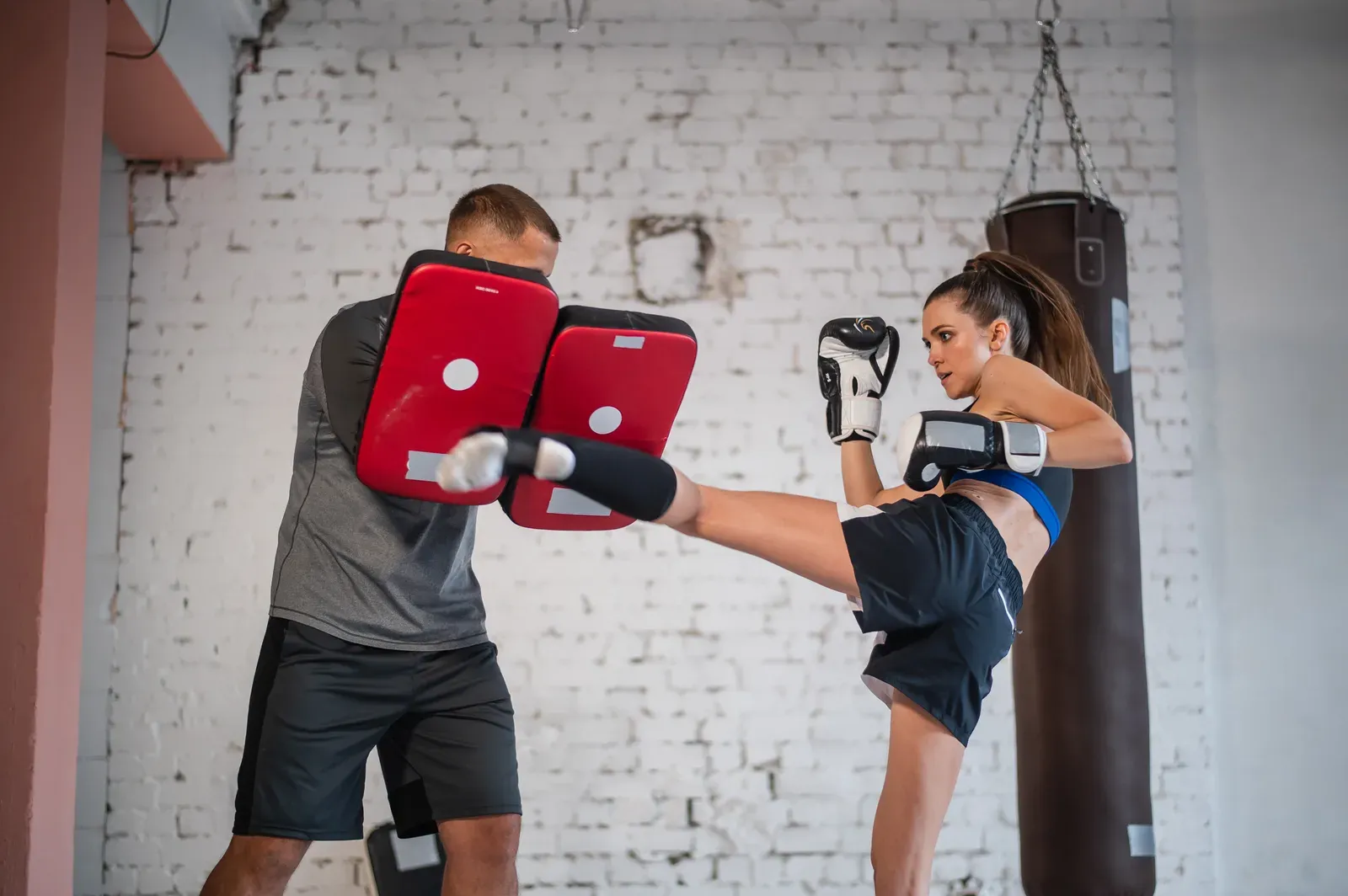
A good boxing workout for beginners is built around three things: a balanced stance, a handful of punches thrown with correct form, and short rounds with generous rest. You do not spar, you do not get hit, and you do not need to be fit already. This guide walks through what a first session usually covers, so the room feels familiar before you step into it. When you are ready to begin, the starting point is personal training for beginners.
Why a first session feels different from a class
Walking into a crowded boxing class as a beginner often means copying people who have trained for years. A coached one-on-one session reverses that: the coach sets the pace, breaks every move into pieces and corrects one thing at a time. You can read how this format works in more detail in our guide to boxing conditioning one on one, and how strike-based work differs in private kickboxing.
If you are comparing styles first, boxing vs kickboxing for fitness is a short read.
Stance: where every punch starts
Boxing stance is a staggered position, roughly shoulder-width side to side with one foot a step ahead of the other.
- Orthodox (right-handed) puts the left foot forward. Southpaw reverses it.
- Weight sits slightly forward on the balls of the feet, knees soft.
- Hands rest near the cheeks, elbows tucked against the ribs, chin down.
- Your back heel is lifted a little so you can pivot.
Most beginners stand too square or too wide. A coach nudges your feet until you can shift weight without losing balance, because power travels from the ground up.
The first three punches
- The jab. A straight punch with the lead hand. Extend, rotate the fist so the palm faces down at the end, and snap it back to the cheek.
- The cross. A straight punch with the rear hand, driven by pushing off the back foot and turning the hips.
- The lead hook. A bent-arm punch that travels around, powered by rotation, with the elbow level to the fist.
You will practice each slowly in front of a mirror or the coach, then in pairs: jab-cross, jab-jab-cross, jab-cross-hook. Coaches commonly add footwork early, stepping forward, back and side to side, so you learn to move before you load a bag.
Round timing for beginners
Competitive boxing uses three-minute rounds, but beginner workouts commonly begin shorter.
| Phase | Typical beginner structure |
|---|---|
| Warm-up | A few minutes of light movement and shadowboxing |
| Technique rounds | Two-minute rounds, with a minute or more to rest and reset |
| Pad or bag work | Added after form is steady, in short bursts |
| Cooldown | Easy walking and stretching |
The point of short rounds is clean repetition. When fatigue turns punches into arm-flailing, a coach shortens the round or lengthens the rest.
A first-session timeline
A first session often runs in this order: a conversation about goals and any injuries, a warm-up, stance and footwork, the jab, the cross, a combination, a few easy rounds, and a cooldown. If you have a shoulder, wrist or back condition, say so up front and consider checking with your physician first.
Gloves and wraps checklist
Bring or confirm these before your first session:
- Hand wraps, because they stabilize the wrist and protect the knuckles.
- Gloves sized by your body weight and hand, with general fitness commonly using 12 to 16 ounces.
- Shoes with flat soles that let you pivot.
- A water bottle and clothes that let your shoulders move.
- A plan for your hair and anything that dangles.
Ask your coach what they provide, because each coach sets their own arrangements.
A sample beginner week
Boxing is demanding on the shoulders, calves and forearms, so most beginners do best with two or three sessions a week and rest days between them.
| Day | Plan |
|---|---|
| Day 1 | Coached session: stance, jab, cross, six or so easy rounds |
| Day 2 | Rest, or a walk |
| Day 3 | Coached session: add the lead hook and footwork patterns |
| Day 4 | Rest |
| Day 5 | Optional shadowboxing at home, three short rounds |
After a few weeks, a coach typically introduces pad work, where the coach holds pads and calls combinations, then a heavy bag. If bag work is your goal, do you need a coach for heavy bag workouts explains when it makes sense. For weight goals, boxing for weight loss covers what to expect.
How to know it is working
Look for process signs before outcome signs. Your balance holds when you throw a punch. Your shoulders stay relaxed until the last second of the punch. You can breathe out on every strike. Your rounds feel shorter, not because they are, but because you recover faster in the rests. Those changes usually arrive before any change on the scale.
Common beginner mistakes
- Throwing every punch with the arm alone, instead of turning the hips.
- Holding the breath. Exhale sharply with each punch.
- Dropping the rear hand after the cross.
- Wanting to hit the bag before the form is ready.
Where FlexWerk fits
At Carmel City Center, FlexWerk rents private suites by the hour to independent coaches, which means a beginner trains without a class schedule or onlookers: a room, a coach and your own playlist. During the free consultation, which includes an InBody body composition scan, ask which coaches currently offer boxing-style training and what a first session would include.
What to do this week
Practice your stance for two minutes a day, in front of a mirror, without throwing a punch. Then schedule the consultation and tell the coach that you have never thrown one. That sentence is the best possible starting point.
Related questions
Do I need to be fit before starting boxing?
No. Early sessions are paced to your fitness, with plenty of rest between rounds. Boxing builds the conditioning it asks for, and a coach adjusts round length to your recovery.
Will I get hit in a beginner boxing workout?
Not in a fitness setting. You throw punches at pads, a bag or the air, and any partner work is controlled and non-contact unless you choose otherwise.
How many sessions until the punches feel natural?
Most adults feel the jab and cross settle within a handful of sessions, while footwork and the hook take longer. Expect steady improvement rather than a single breakthrough week.