
Boxing vs Kickboxing for Fitness: How to Choose
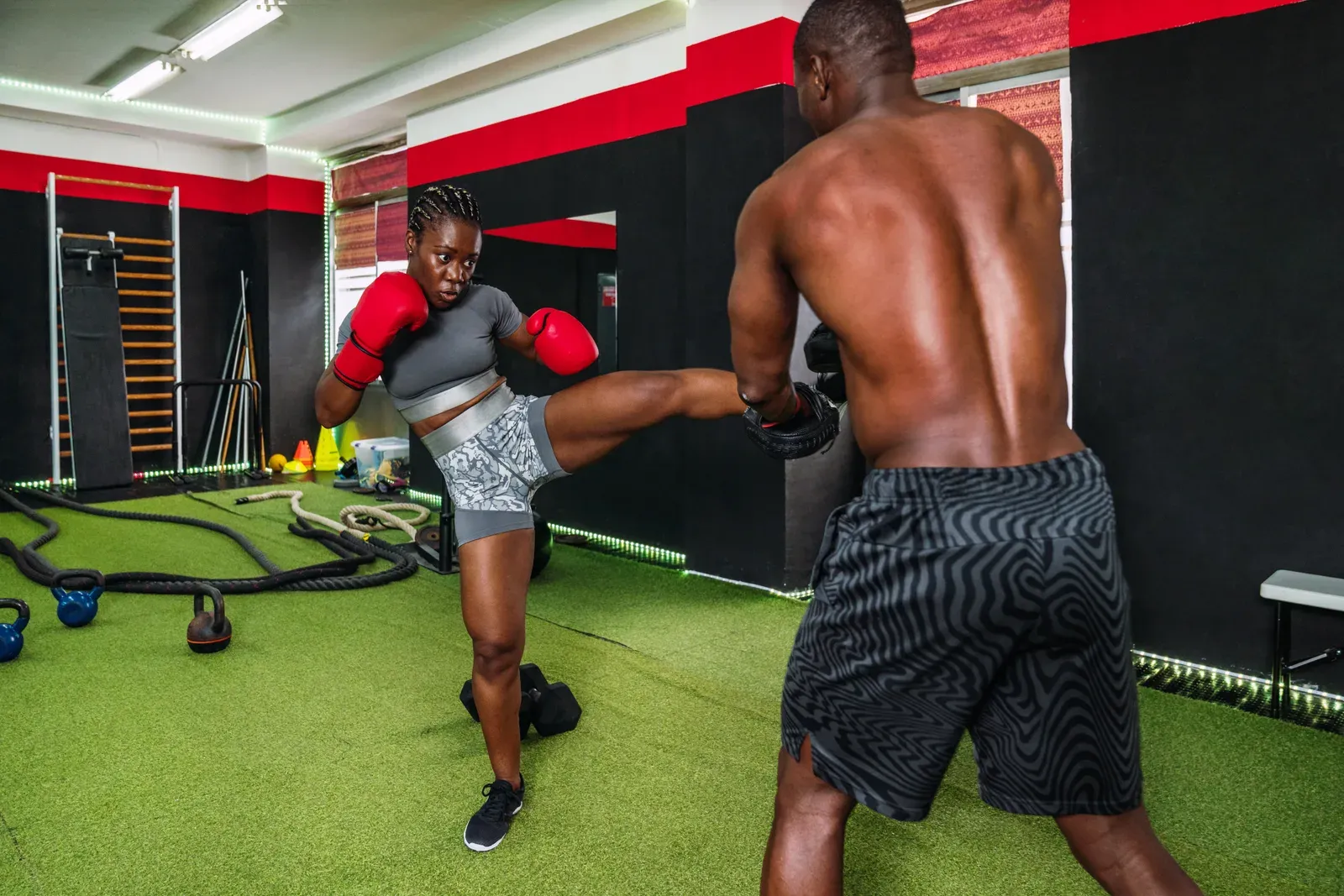
For fitness, choose boxing if you want simpler coordination and lighter demands on the hips and knees, and choose kickboxing if you want more leg work, a higher heart rate and a bigger coordination challenge. Neither requires contact. In a private one-on-one setting, both are bag and pad workouts built around rounds, which makes the decision about how your joints and attention span feel, not about fighting. A free consultation lets you try both formats’ basics before you pick.
The core difference in one line
Boxing uses the fists and the upper body with footwork underneath. Kickboxing adds kicks, and often knees, to the same base. That one change shifts three things: joint load, coordination demand and conditioning.
Side by side
| Factor | Boxing | Kickboxing |
|---|---|---|
| Tools you use | Fists, shoulders, trunk rotation | Fists plus shins and feet |
| Joint load | Mostly shoulders, wrists, trunk | Adds hip, knee and ankle pivots |
| Coordination demand | Moderate, combinations of four or five punches | Higher, kicks need balance and timing |
| Conditioning feel | Steady, rhythmic, upper-body burn | Higher heart rate peaks, leg fatigue |
| Space needed | Small, a bag and a few feet | More room for kick range |
| Easiest to scale down | Yes, by reducing speed | Yes, by lowering kick height |
Joint load, plainly
Punching mostly loads the shoulders, the wrists and the rotational muscles of the trunk. Good wrist alignment and wraps matter more than height or flexibility. If wrists are a worry, see wrist pain during push-ups for preparation that carries over. Kickboxing adds twisting at the hip and knee, and the standing leg takes the pivot. People with sensitive knees or hips often start with boxing and add low kicks after a few weeks, once the movement feels solid.
Coordination and learning curve
Boxing combinations are built from a handful of punches, such as the jab, cross and hook, and a beginner can string together a flowing combination within a couple of sessions. Kickboxing needs the same punches plus balance on one leg and a hip turn that feels strange at first. If you enjoy learning a new skill, that challenge is a feature. If you want to work hard without thinking too much, boxing gets you there faster.
Conditioning and results
Both styles are round-based, typically three minutes on and one off, which makes them effective interval training. Kickboxing usually recruits more muscle per round, so many people finish more tired. Boxing can be just as hard when the combinations are fast. For the numbers behind weight loss goals, the boxing for weight loss answer puts honest limits on calorie claims.
The private session angle
The usual objection to striking workouts is feeling self-conscious on a floor full of strangers. In a private suite at FlexWerk in Carmel City Center, you work one on one with a coach and nobody watches the awkward first week. The coach can swap styles mid-session, keep everything non-contact and scale the pace to you. Each coach sets their own formats, so ask who currently teaches which style. For detail on each, read boxing conditioning and private kickboxing workouts.
A quick decision list
- If your knees or hips are sensitive, start with boxing.
- If you love leg days and balance work, try kickboxing.
- If you have limited space at home, boxing needs less room.
- If you get bored easily, kickboxing offers more variety.
- If you are unsure, do two sessions of each and compare how you recover.
Do you need a coach?
Technique matters for both, and a few coached sessions prevent habits that are hard to unlearn. The question is covered at length in do you need a coach for heavy bag workouts. Bring your joint history and your goal, and a coach can match you to a style in one session.
Related questions
Which burns more, boxing or kickboxing?
Kickboxing often asks for more total muscle work because kicks recruit the legs, so many people find it more tiring. How hard you work matters more than the label, and both can be scaled to your fitness.
Is kickboxing harder on the knees?
Kicks and pivots put more twisting load through the hips and knees than punching alone, which is why people with sensitive joints often start with boxing. A coach can adjust the kick height and pivot.
Do I have to spar?
No. Fitness-focused sessions usually involve bags, pads and combinations with no contact. Sparring is optional and not part of a fitness goal.