
Do You Need a Coach for Heavy Bag Workouts?
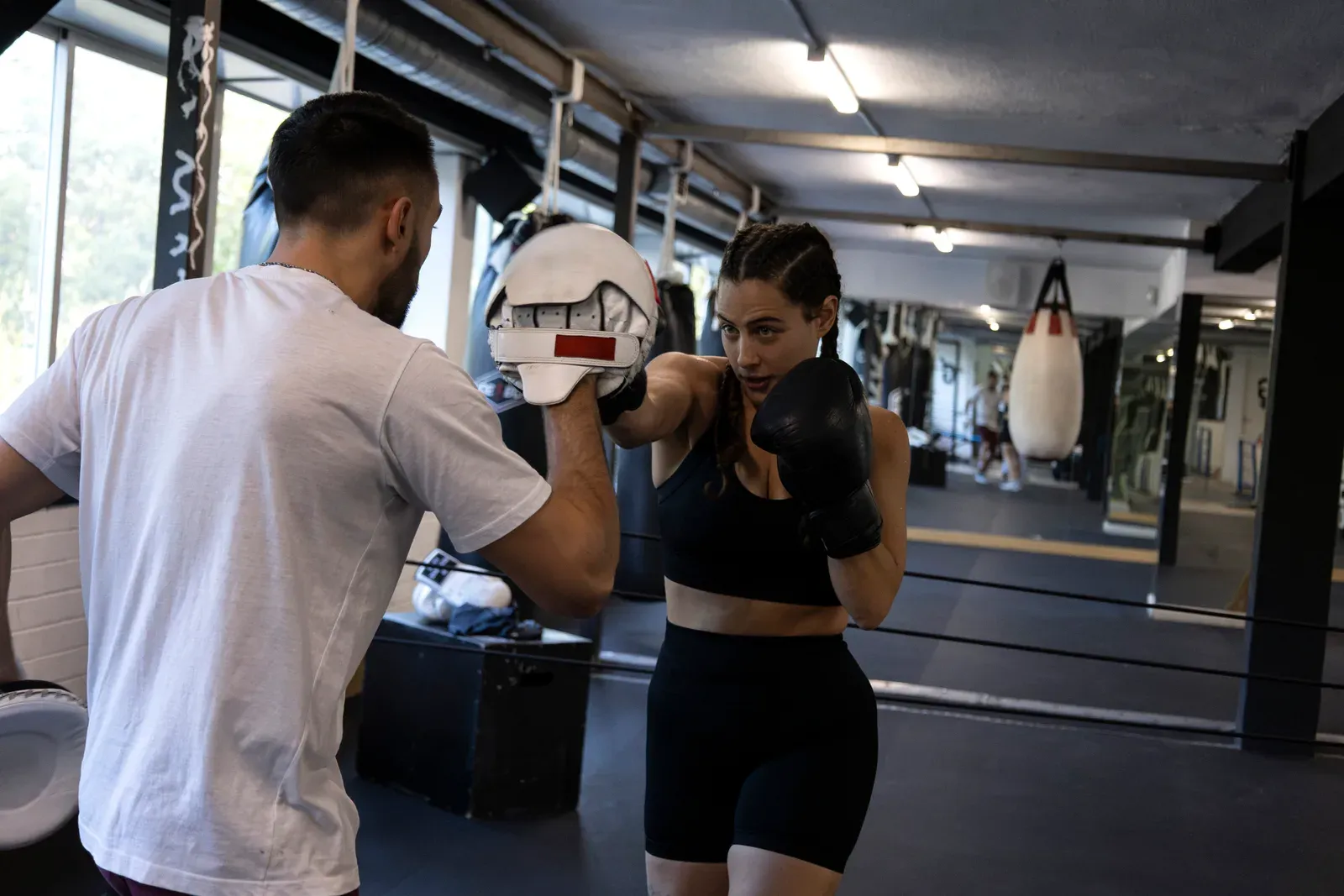
You do not strictly need a coach to hit a heavy bag, but one or two coached sessions are worth it because the common beginner problems, which are wrist angles, shoulder strain and arm-only punching, are hard to see on your own. A bag gives no feedback except the feeling in your hands, and by the time something hurts, a habit has formed. Think of a coach as a short tune-up before you train solo. A free consultation is an easy way to arrange one.
What tends to go wrong alone
Solo bag work is simple to start and easy to do badly. Four problems appear again and again.
- Loose or poorly placed wraps. Wraps that bunch or leave the knuckles unprotected make the hand and wrist bear the impact.
- A bent wrist at impact. The fist should line up with the forearm. If the wrist folds on contact, it takes strain every punch.
- Arm-only punching. Power comes from the legs and trunk. Punching with the arm alone tires the shoulder and slows you down.
- Hitting too hard, too soon. A heavy bag is unforgiving, and full-power shots with fresh technique are a common route to sore hands.
Wrists
The wrist is the most frequent complaint. A coach checks your wraps, your fist shape and your alignment on each punch type, and slows things down until the wrist stays straight. If wrists already trouble you in push-ups, read wrist pain during push-ups for preparation that applies to the bag too, and talk to a physician about any pain that lingers.
Shoulders
Repeated punching without a trunk rotation overloads the shoulder, and so does hitting with the elbow flaring. A coach can show you how to rotate the hips, keep the elbow close and return the hand to guard. Many people notice that the shoulder gets quieter and the punches get quicker once the legs join in.
Mechanics and stance
A coach looks at your stance width, your weight shift and how you recover after each punch. Small errors, such as standing too square or leaning in, cost balance and speed. They are easy to fix in the first session and tedious to unlearn after a year.
What one or two coached sessions can fix
| Session | Focus | What you leave with |
|---|---|---|
| 1 | Wraps, stance, jab and cross, wrist alignment | A safe setup and two clean punches |
| 2 | Hook, basic defense, combinations, round structure | A 3 round routine you can run alone |
| Check-in after a month | Review technique and progress | Fixes for any habits that crept in |
That is a modest investment compared with weeks of sore hands, and the routine is yours afterwards.
When you can skip the coach
- You have trained striking before and know your technique.
- You are using a light bag at a modest effort for general movement.
- You have a trusted friend with experience who can watch you.
Even then, filming a round from the side and from the front lets you check your wrist and stance.
What a private session looks like
At FlexWerk in Carmel City Center, a bag session happens one on one in a private suite, so your first awkward rounds have no audience. Coaches set their own formats, so ask who teaches striking and how they structure a short skills block. The private kickboxing workouts article shows what a session can include, and boxing vs kickboxing helps you pick a style first.
Next step
If you plan to lose weight with the bag, bring that goal along, and see boxing for weight loss for realistic expectations. Book one session, learn the setup, then train on your own with confidence.
Related questions
Can I teach myself on videos?
Videos teach the shapes, but they cannot see your wrist angle or your weight shift. A short coached session gives feedback on what the video cannot show.
How many sessions are enough?
Many beginners get what they need from one or two sessions, followed by a check-in after a month. More sessions help if you want to build speed, combinations or defense.
Which bag should I use?
A bag that matches your size and goal. Too heavy a bag invites hand injury, too light a bag swings away from you. A coach can match the weight in a minute.