
Beginner Gym Workout Plan for Women: Three Days a Week
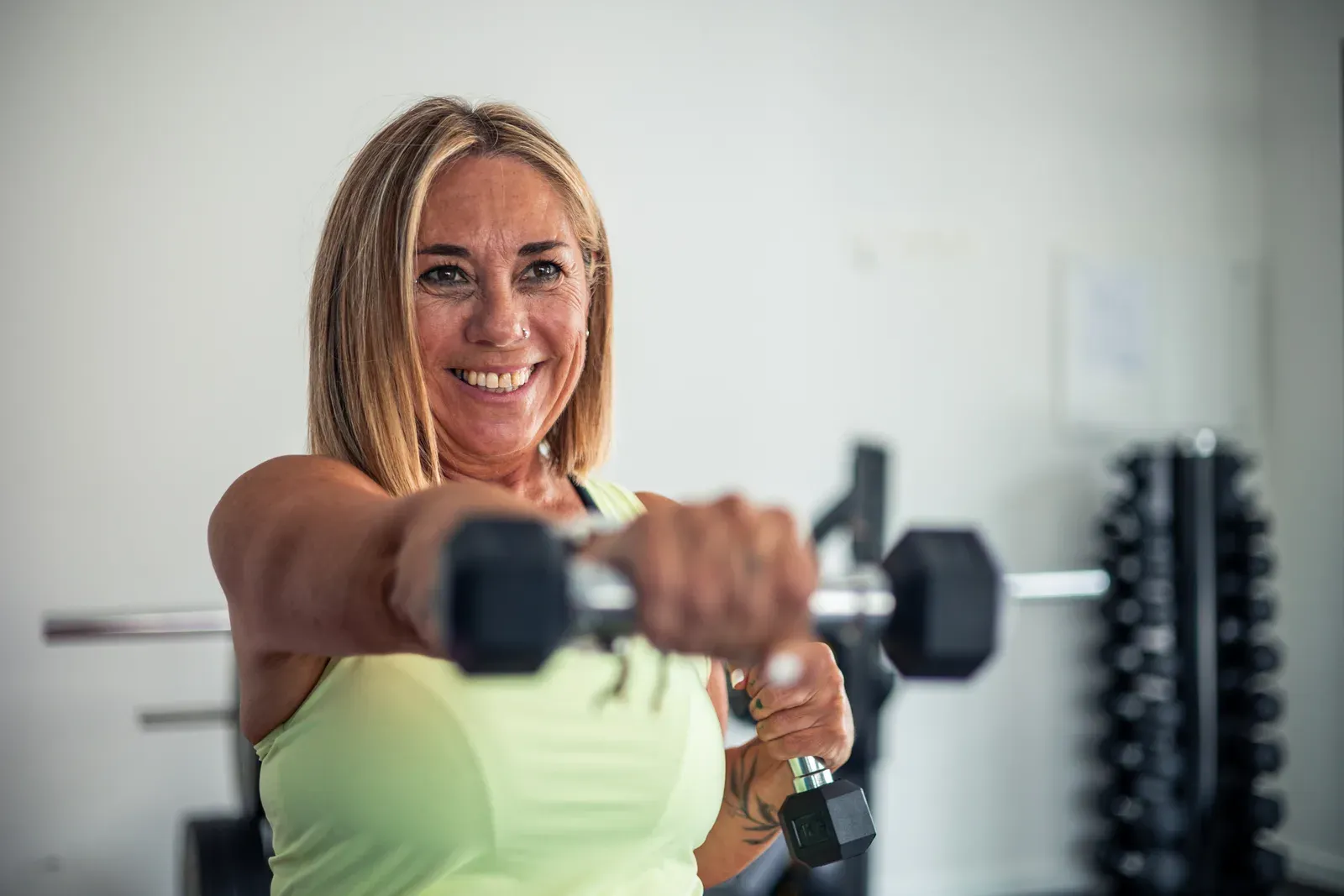
A good beginner gym workout plan for women is three full-body sessions a week, each built from six simple exercises on machines and dumbbells, with two or three sets of 10 to 12 reps and a small weight increase every week or two. This page gives the exact plan for eight weeks. It is meant to be boring on purpose: repeat the same days, learn the movements, and watch your numbers climb. If you would like someone to check your form in person, a personal trainer for women can walk you through week one.
Before you start
Pick three non-consecutive days, such as Monday, Wednesday and Friday. Arrive with water and a small notebook or phone note for logging. Warm up for five minutes on a bike or treadmill, then do a lighter first set of each exercise. If you have a medical condition, are pregnant or have recent injuries, ask your physician before starting.
The three sessions
Sessions A and B alternate, with a third day that repeats whichever came first.
Session A
| Exercise | Equipment | Sets x reps |
|---|---|---|
| Leg press | Machine | 3 x 12 |
| Dumbbell chest press | Bench | 3 x 10 |
| Seated cable row | Machine | 3 x 12 |
| Dumbbell Romanian deadlift | Dumbbells | 2 x 10 |
| Dumbbell shoulder press, seated | Bench | 2 x 10 |
| Plank | Floor | 3 x 20 seconds |
Session B
| Exercise | Equipment | Sets x reps |
|---|---|---|
| Goblet squat | One dumbbell | 3 x 10 |
| Lat pull-down | Machine | 3 x 12 |
| Incline push-up or machine press | Bench or machine | 3 x 10 |
| Glute bridge | Floor or bench | 3 x 12 |
| Dumbbell biceps curl and triceps press | Dumbbells | 2 x 12 each |
| Farmer carry | Two dumbbells | 3 x 30 steps |
Week one runs A, B, A. Week two runs B, A, B. Keep alternating.
How to find your starting weights
For each exercise, choose a weight you can lift 12 times with the last two reps feeling hard. That is your week one load. Rest 60 to 90 seconds between sets. If a movement feels awkward, use a lighter weight and focus on a smooth, controlled lowering phase of about two seconds.
The eight-week progression
| Weeks | Goal | What changes |
|---|---|---|
| 1 and 2 | Learn the movements | Same weights, light effort; stop with 3 reps left |
| 3 and 4 | Build consistency | Add a rep per set until you reach the top of the range |
| 5 and 6 | Add load | Increase weights by the smallest step when all sets hit the top rep |
| 7 | Push | Last set of each lift goes to 1 or 2 reps in reserve |
| 8 | Deload and retest | Drop sets by one, then retest your starting weights to see the gain |
Log every session. A pattern of small, repeated gains is the whole method, and the guide to choosing heavy versus light weights explains why effort rather than the number on the dumbbell is what matters.
Making the gym less intimidating
The machines are the easy way in because they guide the path of the movement. Look at the instruction placard, adjust the seat so the handles line up with your chest or shoulders, and start well below your limit. If a free rack or bench is occupied, rotate to the next exercise and return. Going at a quieter time, such as early morning or mid-afternoon, takes most of the pressure off. A private training suite goes further, with no audience at all, which the beginner weight training guide describes for Carmel.
One form cue per lift
Beginners do better with a single focus per exercise than with a list of twelve rules.
- Leg press: push through the whole foot and stop before your lower back lifts off the pad.
- Chest press: keep the shoulder blades gently pinched back and down.
- Seated row: lead with the elbows, not the hands, and pause for a beat at the chest.
- Romanian deadlift: push the hips back as if closing a car door with them, spine long.
- Shoulder press: ribs down, so the bar or dumbbells travel straight over the shoulders.
- Goblet squat: elbows inside the knees at the bottom, chest tall.
- Lat pull-down: pull the elbows toward your back pockets rather than yanking with the arms.
- Glute bridge: squeeze at the top for a full second and keep the ribs stacked over the hips.
Troubleshooting the first month
| What you notice | Likely fix |
|---|---|
| Sore all week after session one | Cut sets by one for the next two sessions |
| Weights feel too easy by week three | Raise load in the smallest step available |
| Scale unchanged at week four | Check waist and strength log; muscle gain can offset early fat loss |
| Hard to finish in 45 minutes | Rest 60 seconds instead of 90, or drop the accessory work |
| Boredom | Swap one exercise per session for a similar one, keep the pattern |
Adding cardio and food
Walk on non-lifting days for 20 to 40 minutes. Aim for protein at each meal, such as eggs, yogurt, fish, chicken, beans or tofu, to support recovery. You do not need to overhaul your diet in week one; add protein, drink water and sleep enough.
When to stop and ask
Muscle soreness for a day or two is normal. Sharp joint pain, dizziness, chest pain or soreness lasting more than three days means you should back off and check with a professional. Bring your log to a coach and they can adjust the plan.
After eight weeks
Repeat the cycle at higher weights for another eight weeks, or move to a plan with a push-pull-legs split once your technique is solid. For women over 50, the five-lift template offers a related structure with more focus on bone and balance.
Related questions
Can I do this plan at home with dumbbells?
Mostly yes. Swap the machines for dumbbell versions: goblet squats for leg press, bent-over rows for the seated row, and a floor or incline press instead of the chest press.
What if I miss a day?
Do not double up. Pick up with the next scheduled session. Three days a week gives you a buffer, and missing one in a week still leaves you with two good sessions.
How do I know the weight is right?
The last two reps of each set should feel hard but controlled. If you could easily do five more, increase the load; if your form falls apart, reduce it.