
Best Strength Training for Women Over 50: Five Lifts
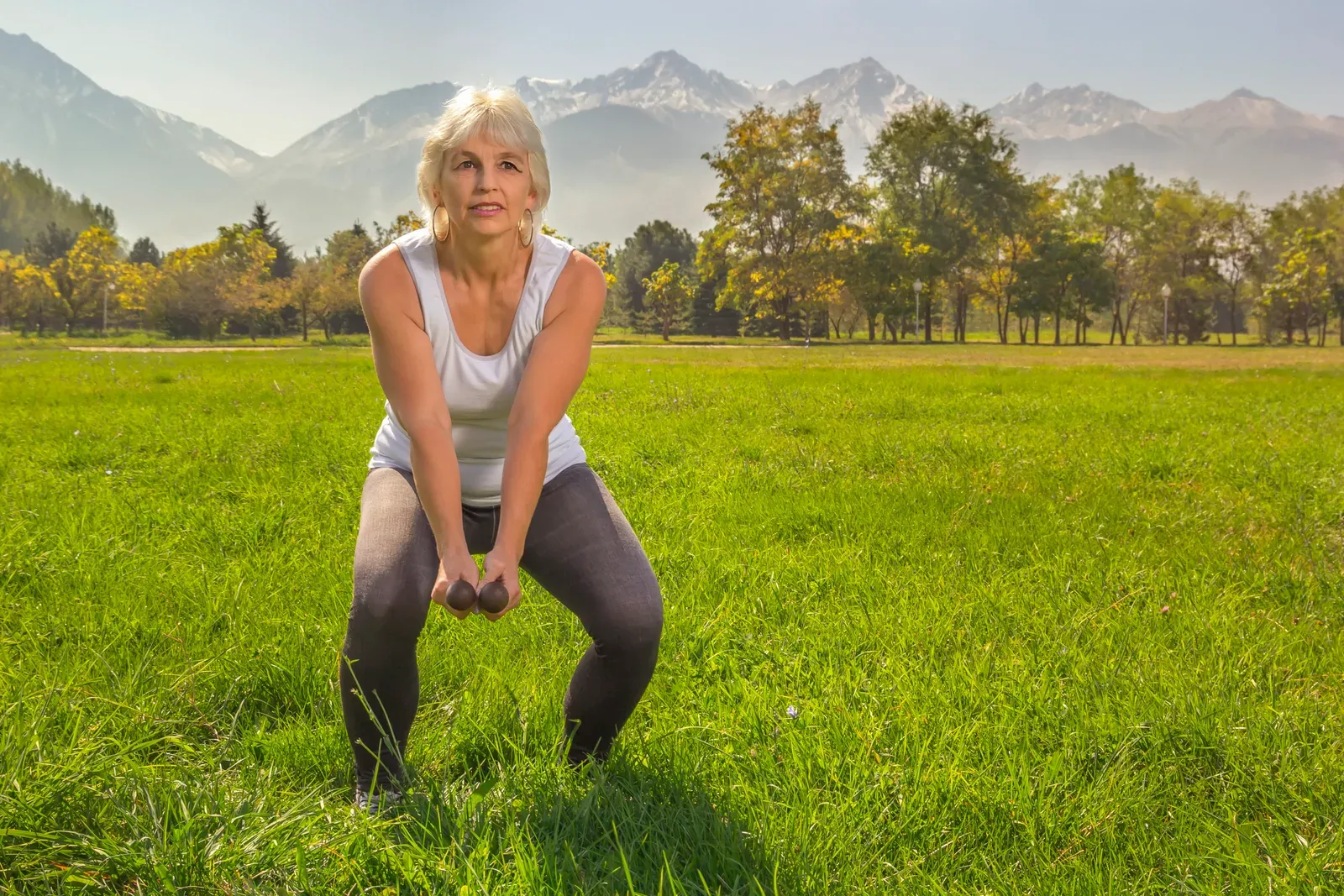
The best strength training for women over 50 is a full-body routine of five movement patterns, squat, hinge, push, pull and carry, done two to three days a week with loads that make the last few reps hard. You do not need a long list of exercises. You need these patterns, trained consistently, with slow and measured increases. This guide gives the five lifts, a weekly template and the loading rules. If you want hands-on form coaching, a trainer who works with the over 50 crowd can check your positions in the first sessions.
Why these five patterns cover almost everything
Daily life is a sequence of the same few moves: sitting and standing, picking things up, pushing doors or yourself off the floor, pulling things toward you, and carrying groceries. Train those patterns and the strength shows up when you climb stairs, lift a suitcase or catch yourself on an icy step. They also load the large muscles and bones most affected by the years after menopause.
The five lifts
1. Squat pattern. Start with a sit-to-stand from a box or bench, then a goblet squat holding one dumbbell at your chest. Progress to a heavier goblet or a leg press. This builds thighs and hips for stairs and getting out of chairs.
2. Hinge pattern. A hip hinge moves the hips back with a flat back, as in a Romanian deadlift with dumbbells or a cable pull-through. It trains the glutes and hamstrings and teaches safe picking up from the floor.
3. Push pattern. Incline push-ups on a bench, dumbbell presses, or a seated machine press. If your shoulders object overhead, press at a slight angle rather than straight up. The first push-up guide is a good ladder for beginners.
4. Pull pattern. Seated cable rows, one-arm dumbbell rows with a hand on a bench, or a lat pull-down. Pulling counters rounded shoulders from desk life and protects the upper back.
5. Carry pattern. Farmer carries with a dumbbell in each hand, or a single suitcase carry. Walk 20 to 40 steps with tall posture. Carries train grip, core and balance together and mimic real-world loads.
A weekly template
| Day | Focus | Sets and reps |
|---|---|---|
| Day 1 | Squat, push, pull, carry | 3 sets of 8 to 10 for each lift, carry 3 trips |
| Day 2 | Walk or easy cardio | 30 to 40 minutes |
| Day 3 | Hinge, pull, push, core | 3 sets of 8 to 10, plus a plank or dead bug |
| Day 4 | Rest or mobility | Gentle stretching |
| Day 5 | Optional third lift day | One lift from each pattern, lighter |
If you can only get two lifting days, make each a full-body session so every pattern shows up twice a week or close to it.
Loading rules that keep you moving forward
- Effort target: most working sets finish with about two good reps in reserve. Test days with one rep in reserve are rare.
- Progression: when you hit the top of the rep range on every set with clean form, add the smallest weight jump next time.
- Rest: one to two minutes between sets for the main lifts, long enough to breathe normally.
- Tempo: lower for two to three seconds, press or stand with control.
- Deload: every fourth or fifth week, cut sets by a third to let joints settle.
The lifting heavy after menopause answer explains why moving toward heavier work is worthwhile when your body is ready.
Safety notes worth taking seriously
Warm up with five minutes of easy movement and a lighter set of each lift. Stop a set if you feel sharp joint pain, dizziness, chest discomfort or a new numbness, and mention it to your physician. If you have osteoporosis or osteopenia, ask your physician which positions to avoid, as deep forward flexion and twisting under load are often restricted. A good coach follows those limits and modifies, for example, swapping a deadlift for a supported hinge.
Swaps for the limits people actually have
Almost nobody arrives with a blank slate. These substitutions keep the pattern while respecting the body in front of you.
| If this is the issue | Keep the pattern, change the version |
|---|---|
| Knee pain on deep bends | Box squat to a higher bench, or leg press with a shorter range |
| Low back sensitivity | Hip hinge with a kettlebell raised on a block, or a cable pull-through |
| Shoulder pinching overhead | Landmine press or incline dumbbell press |
| Wrist pain in push-ups | Dumbbell handles or a bench incline |
| Poor balance | Carries with a wall nearby, split squats holding a rail |
| Short on time | Superset a push with a pull and a squat with a carry |
Treat these as starting points to discuss with whoever coaches you, not as medical advice. Pain that lingers more than a day after a session means the choice or the load needs another look.
Warm-up that takes eight minutes
Begin with two minutes of easy marching or cycling, then run through hip circles, a cat-cow on hands and knees, ten bodyweight sit-to-stands and ten wall push-ups. Finish with one light set of your first lift. Women in their 50s often feel stiff for the first few minutes and loose after, which is exactly why skipping the warm-up shows up later as nagging aches.
Fueling and recovery
Protein at each meal, a commonly cited 1.2 to 1.6 grams per kilogram of body weight daily for adults who lift, supports the whole plan. Sleep and daily walking carry the rest. If fat loss is also on your list, pair this routine with the approach in the lose weight after 50 guide.
Tracking over a year
Month one is about technique. Months two and three bring noticeable gains on the main lifts. By month six you should be doing things that felt impossible: rows with real load, deeper squats and farmer carries with a dumbbell in each hand that would once have felt heavy. Record your top sets in a notebook and re-scan body composition every two months. You will see more from that discipline than from any single clever program.
Where a coach helps
Form on the hinge and the squat are the two lifts most people get wrong alone. A few coached sessions can set the pattern, then you can train semi-independently with periodic check-ins. If you want company on the journey, strong after 50 women describes what that coaching looks like week to week.
Related questions
How many days a week should a woman over 50 lift?
Two to three full-body days work well for most. Two is enough to maintain and make slow progress; three speeds things up if recovery allows. Leave at least a day between sessions.
Are machines or free weights better?
Both. Machines let you load a movement safely while you learn it, and free weights train balance and stabilizers. A blend, led by what your joints tolerate, is typical.
What if I have arthritis or osteoporosis?
Ask your physician which loads and positions are safe before starting. Strength training is often encouraged for both conditions, but spinal flexion and impact may need to be limited.