
Sports Performance Training for Adults in Carmel
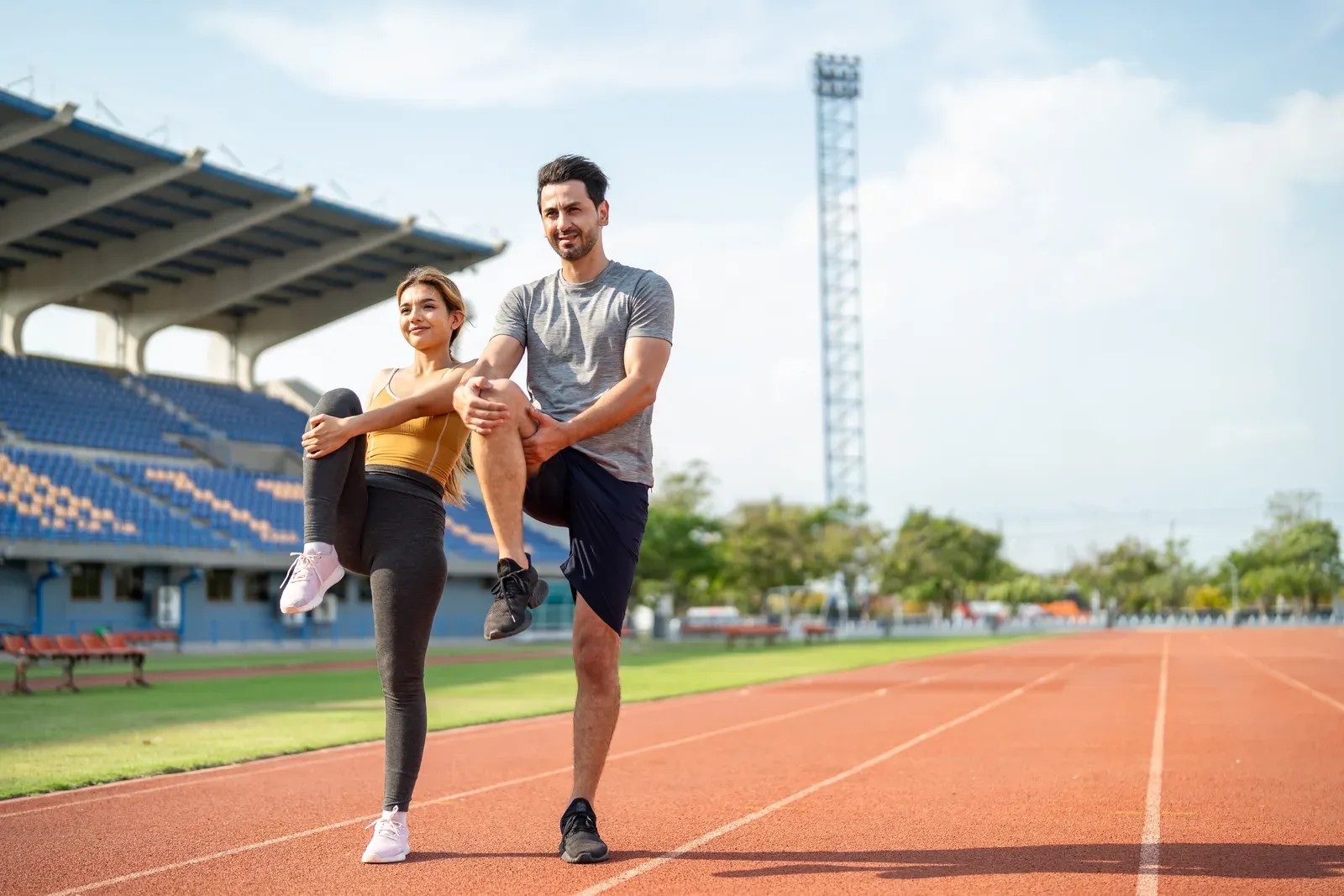
Somewhere along the way, “sports performance” became a youth product, and adults got handed treadmills. That is backwards: the speed, power, and strength that athlete-style coaching develops are exactly the qualities adults lose fastest, and they respond to training at every age. In Carmel, adults train these one on one with a performance coach in a private suite, and the local market’s youth focus means the adult version of this coaching is the underserved half.
Adults are athletes with worse programming
Look at what Carmel’s adults actually do on weekends: pickleball leagues, tennis ladders, golf matches, spring half marathons, rec basketball and soccer, ski trips south to the slopes in winter. Those are athletic demands: sprinting, cutting, rotating, jumping, decelerating. Yet the typical adult gym program trains none of it, defaulting to steady cardio and machine circuits that leave the athletic qualities untouched.
The physiology makes this worse. Power, the fast expression of strength, declines with age faster than strength itself, which is why the first thing former athletes notice in their 40s is not weakness but slowness: the step that used to be there, the jump that isn’t. The encouraging half of the science is that power is highly trainable in adults; it just has to actually be trained.
What adult performance training looks like
It starts with the free consultation: a free InBody body composition scan, a movement assessment, and an honest conversation about your sport, your history, and the joints you have accumulated. The structure that follows mirrors what a high school athlete gets, scaled to an adult body and calendar:
- Strength first. Squats, hinges, presses, rows, carries. Force is the floor under every athletic quality, and most adults returning to sport are force-limited before they are skill-limited.
- Power reintroduced progressively. Medicine-ball style throws, jump and landing progressions, and speed work scaled to your tissue tolerance. This is the layer generic gym programs skip and adults miss most, whether the goal is first-step quickness or a few honest miles per hour of clubhead or serve speed.
- Sport-calendar programming. Heavier in your off-months, sharper and lighter in season, the same in-season versus off-season logic college programs run, applied to a league schedule and a job.
The one-on-one, private-suite format earns its keep here. Relearning to sprint or land at 45 involves an awkward phase, and doing it in a reserved FlexSpace, one coach, your music, nobody watching, beats doing it beside the college kids on a commercial gym floor. The room’s monitor makes quick video review normal, so mechanics get fixed with evidence instead of feel.
Who this serves in Carmel
Four groups keep showing up in performance coaches’ books here. Racket and paddle athletes, the pickleball and tennis boom, who need rotational power and the deceleration strength that protects knees and Achilles tendons. Runners chasing spring race goals, from the Carmel Marathon’s Carter Green finish line to the big Indianapolis half, who need the strength and stiffness work that miles alone never build; dedicated runners should start with the running coach guide. Golfers, whose speed question is its own discipline covered in our golf fitness guide. And former athletes, five or twenty-five years out, who do not want a weight-loss program so much as they want their athleticism back, which is a legitimate and highly trainable goal.
One honest boundary: adult tissues carry adult mileage. If you have cardiac risk factors, uncontrolled blood pressure, or a surgical history, get your physician’s clearance before adding sprint or power work, and tell your coach everything; the program will be built alongside that guidance. This is also why adult performance work is scaled rather than softened: the qualities are the same, the on-ramps are longer.
What the first twelve weeks look like
A realistic opening block, for a 45-year-old joining a winter pickleball league or eyeing a spring race, runs roughly like this. Weeks one to four are assessment and base: two suite sessions a week rebuilding squat, hinge, and press patterns, easy tempo work, and landing mechanics rehearsed at low heights. Weeks five to eight add intent: loads climb, throws and low-level jumps appear, and short acceleration work starts if the joints are ready. Weeks nine to twelve turn toward the sport: change-of-direction patterns, fuller-speed work, and a re-test against the baseline, including the InBody re-scan.
Two sessions a week is the deliberate dose. Adults recover more slowly than teenagers and are usually stacking this on a job, a family, and the sport itself, so the program’s discipline is mostly about what it leaves out. Scheduling rarely blocks it: weekday hours run 5 AM to 9 PM and weekends 7 AM to 4 PM, so the 6 AM pre-work slot and the Saturday morning slot both work, with the suite reserved either way.
The payoff beyond the scoreboard
Training like an athlete quietly solves the problems adults usually go to the gym for anyway. Power work preserves the fast-twitch muscle that ordinary aging strips first; strength work protects bone and joint health; and chasing a performance goal sustains motivation in a way mirror goals rarely do. Recent industry surveys keep finding that living longer and healthier has become the main reason adults train; performance training serves that goal while being considerably more interesting than a treadmill.
If some version of “I used to be fast” has crossed your mind this year, that is the starting line. Book the free consultation, take the baseline, and get matched with a coach who trains adults like the athletes they still are.
Related questions
Am I too old for performance training?
No. Speed, power, and strength are trainable at every adult age; the loading just gets scaled to your training history and joints. Power responds to training well into the 60s and beyond.
How is this different from regular personal training?
The goal is output, not just health or appearance: sprint faster, hit harder, move better in your sport. That changes the programming toward strength, power, and speed qualities, though body composition usually improves along the way.
Do I need to be in shape before starting?
No. The program starts from an assessment of where you actually are, and the early phase builds the base. Showing up unfit to a well-scaled program is exactly what the first phase is for.