
Speed and Agility Training in Carmel That Actually Transfers
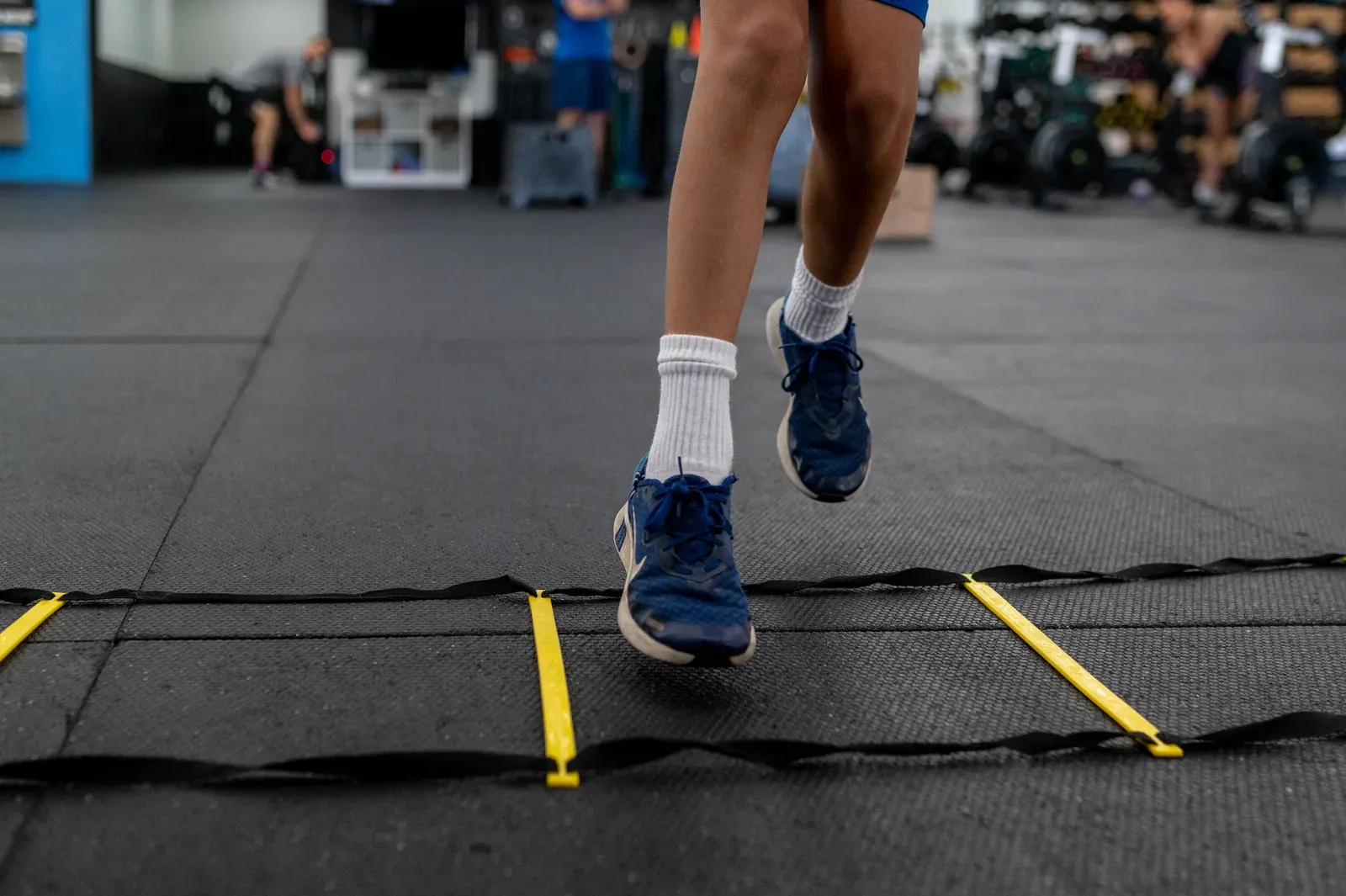
Speed has a physiology, and it is blunt: athletes get faster by putting more force into the ground in less time, with mechanics clean enough to use it. That is why the fastest path to a quicker athlete in Carmel runs through coached strength, sprint mechanics, and deceleration work, one on one, and why the cone-and-ladder circuits sold as speed training so often produce athletes who are sweatier but not faster.
What actually makes athletes fast
Sprint research keeps arriving at the same conclusion: the difference between fast and slow athletes is chiefly how much force they apply to the ground relative to body weight, and how quickly they can apply it. Stride frequency, arm action, and foot placement matter, but they are the delivery system, not the engine. The engine is force, and everything in a good speed program exists either to build that engine or to stop it leaking.
Agility has the same skeleton. A quick change of direction is really three abilities stacked: the eccentric strength to decelerate under control, the positional mechanics to redirect without leaking force, and the power to reaccelerate. Notice that two of the three are strength qualities. This is why the strongest athlete on the field so often looks the “quickest,” and why agility work that never touches strength is decoration.
None of this means drills are useless; it means drills have a job. Ladders and cones sharpen rhythm and coordination in a warm-up. They cannot add force an athlete does not have.
Why the camp format fails at speed
Speed development has an awkward property for group businesses: it requires full recovery and individual technical correction. True speed work is brief and maximal, a few seconds of all-out effort followed by minutes of rest, and a group of thirty cannot be given minutes of rest, so camps quietly convert speed sessions into conditioning: lines of athletes running tired reps with unexamined mechanics. Everyone finishes gassed, which feels like progress and trains the wrong quality. Six weeks later the stopwatch has not moved, and the athlete concludes they are just not fast, when nothing fast was ever actually trained.
The individual format inverts every one of those compromises. One coach watches every rep, corrects the mechanics that are actually yours, times efforts, enforces real rest, and, crucially, builds the strength base alongside the sprint work in the same program. Skills need coached reps, and speed is a skill sitting on top of a strength quality; a format that cannot coach the rep cannot build the skill.
How speed work runs in a private suite
At FlexWerk in Carmel City Center, a speed block starts where everything starts: the free consultation, with a free InBody body composition scan and an assessment of strength, mechanics, and training age. From there the weekly work splits into layers, and the private FlexSpace handles more of them than people expect:
- Strength and power, the engine room: squats, hinges, split-squat and hip work, coached in a reserved room with a rack, cables, and dumbbells and no waiting between sets, because rest quality matters in power training.
- Acceleration mechanics: wall drills, resisted starts, and the first-steps pattern where most game speed lives. These are short-space skills, and the suite’s privacy plus its monitor make film-and-fix loops a thirty-second habit rather than a special occasion.
- Top-speed and conditioning work on curved treadmills, which self-power with the athlete’s own force and are honest to a fault about output.
- Deceleration and landing strength, the injury-relevant half of agility, trained progressively; it shares most of its plumbing with vertical jump development, which is why the two programs travel together.
Where a sport truly needs long free sprinting, coaches program it around field and turf access; for younger athletes the long-view developmental sequence is laid out in our youth athlete training guide.
Progress gets measured, not guessed. Timed starts, jump testing as a power proxy, and load progressions in the strength work give the block a scoreboard, and the InBody re-scan tracks whether the athlete is adding the lean mass that force production rides on. When a parent asks whether eight weeks of speed work did anything, the answer should be numbers.
The Carmel context, and an honest caveat
Around here the speed market is dominated by youth team settings, and for good reason: this county’s competitive bar is brutal, with the local high school just crowned the country’s top athletic program and club seasons at Grand Park running nearly year-round. But that same year-round calendar is exactly why individualized speed work matters. An athlete carrying a full season needs speed doses programmed around competition, not stacked on top of it, and a tired athlete sprinting tired is how hamstrings end seasons. Adults chasing first-step quickness for rec sports get the same physiology with longer on-ramps, and the broader case for coached individual work in both cases sits in our athlete development overview.
Two honest limits. Measurable force-production gains take weeks, not sessions; a coach can clean mechanics quickly, but the engine is built over an 8-to-12-week block. And maximal sprinting is a high-demand activity: an athlete coming off a hamstring, knee, or ankle injury should be cleared by their physician or physical therapist first, and any competent coach will insist on it.
If your athlete’s game report keeps coming back “needs to get faster,” or your own first step has gone missing, start with the free consultation and let a speed coach find where the force is leaking.
Related questions
Do agility ladders make athletes faster?
Not meaningfully. Ladders train fast feet in place, while game speed comes from force put into the ground and clean acceleration and deceleration mechanics. Ladders make fine warm-ups and poor centerpieces.
How long before an athlete gets measurably faster?
Mechanical fixes can show up in a session or two; real force-production gains typically build over 8 to 12 weeks of consistent strength and sprint work. Beware anyone promising tenths off a dash time by next month.
Where does sprint work happen in a private suite?
Acceleration mechanics, wall drills, resisted starts, and strength and power work all fit the suite, and curved treadmills handle top-speed and conditioning work. Coaches program longer free sprinting around field access when a sport needs it.