
ACL Return to Sport Training in Carmel: After PT Ends
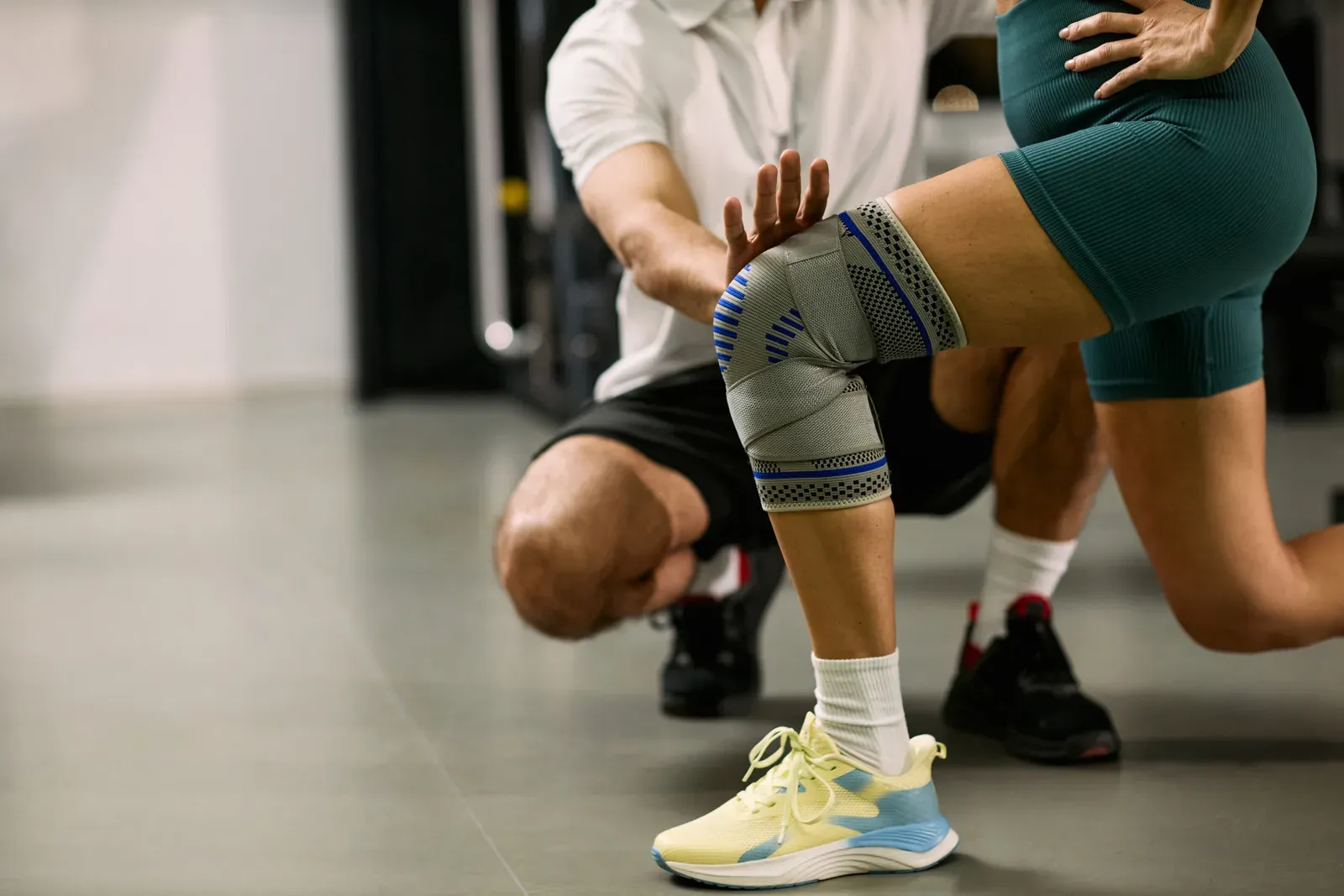
ACL recovery has a famous gap: physical therapy ends when you are cleared for daily life, but sport demands far more than daily life, and the months between discharge and confident play are exactly what return-to-sport training covers. In Carmel, that bridge is built by performance coaches working after, and within, the clearance your physician and physical therapist provide: never instead of them. If you or your athlete is approaching discharge, the starting point is a free consultation, clearance in hand.
Where PT ends and why that is not the finish line
Physical therapy after ACL reconstruction is clinical care with a clinical endpoint: restore range of motion, rebuild baseline strength, normalize walking and daily function. It ends when those criteria, and often insurance coverage, are satisfied.
But think about what your sport actually asks of the knee: sprinting, cutting at speed, landing from a jump beside another body, decelerating hard on imperfect ground. The distance between “cleared for daily activity” and “prepared for that” is large, and rushing across it is where setbacks commonly happen. Sports-medicine professionals widely emphasize criteria over calendars for exactly this reason: readiness is something you demonstrate, not something you wait out.
That principle shapes everything a good bridge program does. Nothing below applies until your physician and physical therapist have cleared you for progressive training, and everything below stays inside whatever restrictions they set.
What the bridge phase actually trains
Post-clearance training picks up the thread PT started and extends it toward sport, typically in this order:
- Strength symmetry. Rebuilding the surgical leg until it pulls its share in squats, hinges, and single-leg work, measured side against side rather than assumed.
- Landing mechanics. Controlled jump-and-land progressions that restore stiffness, alignment, and trust, long before anything reactive happens.
- Deceleration. The skill most floors never train and most re-injuries involve: slowing down well. Coached braking work precedes any cutting.
- Change of direction, then speed. Planned cuts before reactive ones, straight-line speed before chaos, each layer earned before the next.
- Confidence. The quiet half of the program. Hesitation on the repaired leg is normal and trainable; a progression that never asks for more than the athlete can prove tends to dissolve it.
Alongside the knee, the program keeps the rest of the athlete: upper-body strength, the healthy leg, conditioning. Months of rehab shrink more than a quadriceps, and the general post-PT roadmap covers that wider rebuild.
How the handoff works with your clinical team
The best version of this is a relay, not a leap. Practical mechanics for the Carmel athlete:
- Get explicit clearance from your physician and physical therapist for progressive strength and plyometric training, and ask what is off the table.
- Carry the paperwork forward. A discharge summary or home-exercise program tells your coach exactly where PT left the thread.
- Keep the loop open. Good coaches encourage check-backs with your clinical team at milestones, and send you back to them at the first sign of swelling, instability, or pain beyond normal training soreness.
That division of labor is the whole model: clinicians own the medical questions, the coach owns programming within their limits, and the athlete never has to guess whose advice wins. It also frames what a coach is for generally when a joint has history, covered in training around an injury.
Worth naming the boundary from the other side too: a performance coach is not a discount physical therapist, and a family shopping on price for the rehab phase itself should not be here yet. The bridge phase begins where the clinical phase genuinely ends, and a coach who accepts an uncleared athlete is telling you something about their judgment.
Why a private room fits this phase
Return-to-sport work is a poor match for a crowded floor. Early landing drills look unimpressive and feel vulnerable; deceleration work needs clear space; and an athlete rebuilding trust in a knee does not need an audience.
At FlexWerk’s Carmel City Center facility, every session runs in a reserved private FlexSpace: one coach, one athlete, a rack and open floor, your music, a closed door. The suite’s monitor makes video review routine, so landing and cutting mechanics get corrected with evidence instead of feel. FlexConnect matches athletes to one of more than 40 independent professionals by specialty, which for this work means coaches who program strength and change of direction, and who respect the line where coaching ends and medicine begins. The broader athletic development context lives in the sports performance training guide.
Who this serves locally
Carmel produces athletes at scale: the high school’s program was named the nation’s best this past school year, and the county’s club soccer, basketball, and volleyball pipelines run year-round, which means a steady stream of teenage knees working back from ACL repairs toward tryout dates. The bridge phase is where their timelines are protected or squandered.
The other half of this audience is adults. Pickleball, tennis, rec soccer, and ski trips produce their own share of reconstructed knees, and an adult’s return runs on the same physiology with more mileage on it, closer in spirit to speed and agility work scaled for grown-ups. For both groups, the honest promise is identical: no timeline promises, no shortcuts past your clinical team, just a structured path from cleared to confident.
If discharge day is on your calendar, bring your clearance to the free consultation, take the InBody baseline, and let the bridge back to your sport be built as carefully as the repair was.
Related questions
Can a personal trainer replace ACL physical therapy?
No. Physical therapy is clinical care and comes first. A performance coach enters only after your physician and physical therapist clear you, and works within the limits they set.
How long does the bridge phase take?
There is no honest fixed answer; it depends on your surgery, your sport, and the criteria your clinical team sets. Coaches program against those benchmarks rather than a calendar.
What should I bring to a first session after PT?
Your clearance, your discharge or home-exercise summary, and any restrictions your clinical team gave you. A good coach builds the program around those documents, not around guesswork.