
What Does Lacrosse Strength Training in Carmel Involve?
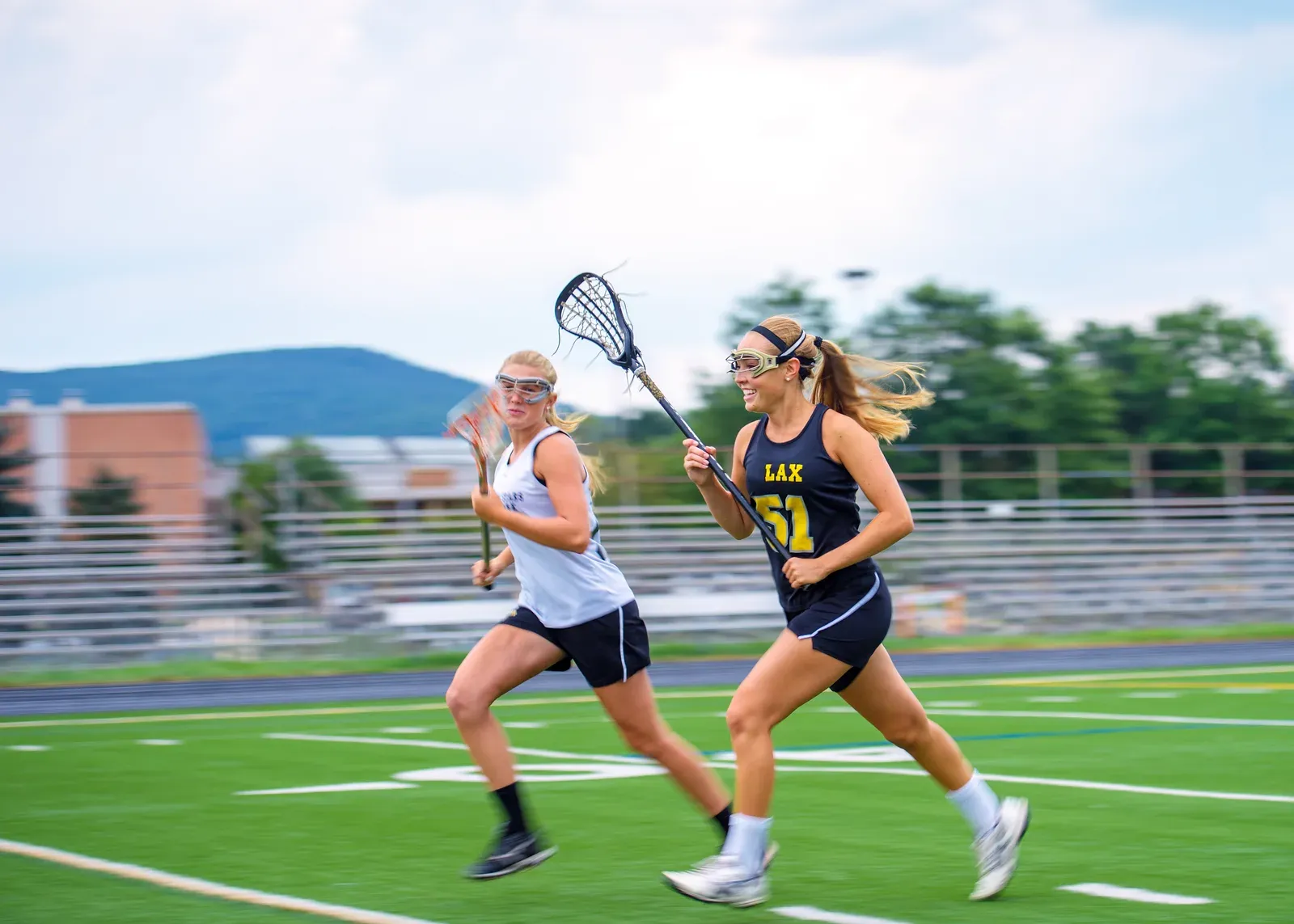
Lacrosse strength training answers the sport’s two defining demands: a repeat-sprint engine, the ability to sprint, half-recover, and sprint again for four quarters, and contact-ready strength through the trunk, hips, and shoulders for a game played through checks and collisions. Lacrosse is one of the fastest-growing youth sports in the Indianapolis suburbs, and its training culture has not caught up with its participation: plenty of Hamilton County athletes now play a sprint-collision sport on jogging-and-wall-ball preparation.
The way to close that gap is a free consultation: a free InBody body composition scan, a look at the athlete’s schedule, and a plan built backward from the spring season.
The engine: sprint-repeat, not mileage
Watch a midfielder’s game through a stopwatch and the pattern is unmistakable: six seconds of maximal sprint, twenty of incomplete recovery, again, for quarters at a time. That quality, repeat-sprint ability, is specific and trainable. It is built on two layers: an aerobic base that speeds recovery between bursts, and short maximal sprint work that raises the ceiling each burst comes off of. What does not build it is distance running, the default conditioning too many young players are handed. A coached block replaces guess-conditioning with measured sprint work, progressed like any other load.
The chassis: contact-ready strength
Lacrosse is polite about it, but it is a collision sport. Body checks, box-outs at ground balls, stick checks absorbed mid-stride: all of it rewards the same qualities football calls contact readiness, scaled to lacrosse’s speed. That means squat and hinge strength for drive through contact, single-leg stability for cutting at full speed, trunk stiffness that keeps a check from becoming a turnover, and upper-back and shoulder work that armors the checking game. The overlap with football strength training is real and useful; the difference is lacrosse’s heavier bias toward change of direction and sustained tempo, closer in spirit to hockey’s off-ice demands than to a lineman’s sheet.
For growing athletes, all of it runs under the standard supervision rules: technique first, loads earned, no maxing for kids, and any existing injury cleared by a physician or physical therapist before programming begins. Coaches here train alongside clinical guidance, never instead of it.
The Carmel calendar and the room
Indiana lacrosse lives in spring, which hands the sport a clean training year: fall and winter are the building window, when cold months move athletes indoors anyway, and the humid spring-into-summer season flips training to short maintenance sessions. At FlexWerk in Carmel City Center, sessions run one-on-one in a reserved private suite, lifting rack, cable system, dumbbells, and a coach’s undivided attention, with a parent welcome to stay. Booking is by the hour around practice: 5 AM to 9 PM weekdays, 7 AM to 4 PM weekends, at 885 Monon Green Blvd with garage parking a short walk away. FlexConnect matches your athlete with one of the more than 40 independent professionals based here, so ask for field-sport or youth performance experience, and point the summer at the building block laid out in our summer training guide.
If your lacrosse player is fast in the first quarter and ordinary in the fourth, book the free consultation and let a coach build the engine the sport actually runs on.
Related questions
What makes lacrosse conditioning different from just running?
Lacrosse is repeat sprints with incomplete rest, not steady mileage. Training the ability to sprint, briefly recover, and sprint again transfers to the game; long slow runs mostly build the wrong quality.
How much strength work does a lacrosse player need in spring season?
One or two short maintenance sessions a week. The building happens in fall and winter; in season, the job is keeping strength and staying fresh for games.
Is lacrosse training safe for a middle schooler picking up the sport?
Yes, with the standard caveats: qualified supervision, technique before load, and progression earned over weeks, which is what pediatric sports medicine guidance asks and what one-on-one coaching provides.