
How Should Football Strength Training in Carmel Work?
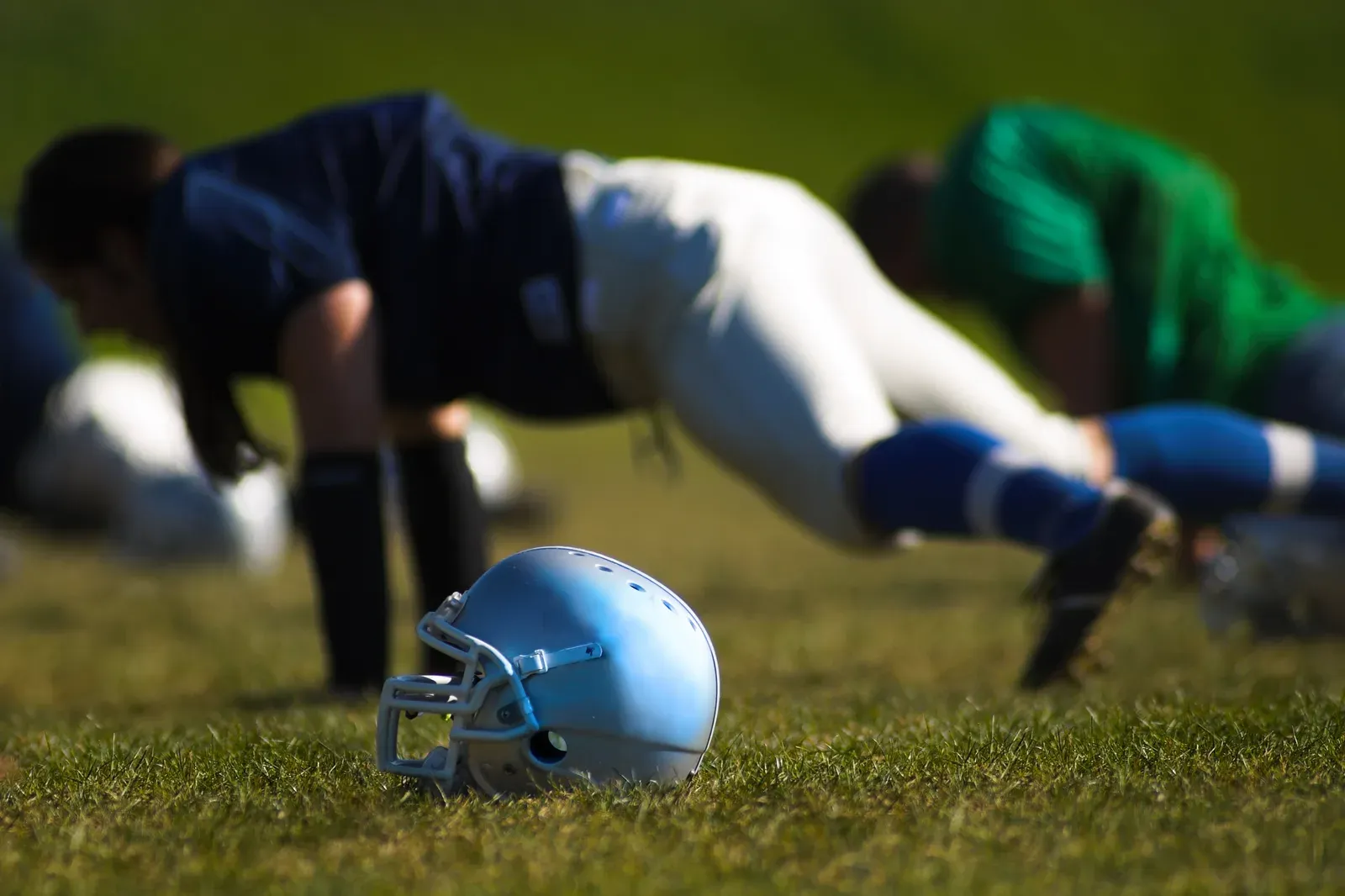
Football strength training done right is position-appropriate, progressive, and, for teenagers, supervised on every rep: a lineman’s program biases absolute strength and drive, a skill player’s biases speed and cutting, and both are built on the same squat, hinge, press, pull, and sprint foundation. Football is the most weight-room-dependent sport American kids play, which is exactly why it collects the most weight-room mistakes: maxing before technique, loading before movement, and teenagers coaching each other.
In Carmel, where the local high school was named the nation’s top athletic program for 2025-26 and roster competition is real, the fix starts with a free consultation: a free InBody body composition scan, an honest movement screen, and a plan matched to position and age.
Position-appropriate, not position-obsessed
Every football athlete needs the same base: leg and hip strength from squat and hinge patterns, pressing and pulling balance, trunk strength that survives contact, and sprint mechanics, because every position is measured in bursts. On top of that base, emphasis splits sensibly. Bigger athletes spend more of the week under progressively heavier loads and drive work. Skill players spend more of it converting strength into acceleration and change of direction. What no position needs is the folklore version of football training: endless maxing, grinding reps with collapsing technique, and the biggest kid in the room setting the standard for everyone.
The teenage loading question
Here is where a private setting earns its place. Pediatric sports medicine guidance supports resistance training for adolescents under specific conditions: qualified supervision, technique before load, progression earned over weeks, and no maximal attempts for athletes still learning to move. A crowded weight room with one coach and forty athletes cannot honor that consistently. A one-on-one session in a reserved private suite can, and does, every rep. That is the case for supplementing a school program rather than replacing it, and for younger athletes not yet in high school, the age-specific version is covered in strength training for middle school athletes.
The medical boundary stays bright at every age: existing injuries, concussion history, or anything a physician is monitoring gets cleared with the doctor first, and the coach trains alongside that guidance without exception.
The calendar and the room
Football’s year has clean windows. Winter and spring are for building: the progressive strength and speed blocks that change a player. Summer sharpens toward camp, and the way to use that stretch is laid out in our summer training guide for high school athletes. In season, training drops to short maintenance sessions that keep strength from eroding by October, the standard split explained in in-season versus offseason training.
At FlexWerk in Carmel City Center, those sessions run in a private suite with a custom lifting rack, cable system, and dumbbells, booked by the hour around school and practice: 5 AM to 9 PM weekdays, 7 AM to 4 PM weekends, at 885 Monon Green Blvd with garage parking a short walk away. FlexConnect matches your athlete with one of the more than 40 independent professionals based here; ask specifically for football or athletic performance experience, and a parent is welcome in the room.
If your player’s effort deserves better than folklore programming, book the free consultation and give them a coach who builds football strength the right way.
Related questions
Should a freshman be maxing out?
No. Pediatric sports medicine guidance is consistent: technique-first training with earned progression, not one-rep maxes, is what builds young football players. Testing strength has cheaper, safer forms than a max attempt.
Does private training replace the school lifting program?
No, it supplements it. School programs deliver team-wide volume; a private coach fixes individual technique, addresses your athlete's specific weaknesses, and keeps the offseason honest when school sessions pause.
What about linemen versus skill players?
The foundation is shared, squat, hinge, press, pull, sprint, but the emphasis splits: linemen bias absolute strength and drive, skill players bias speed and change of direction. Position-appropriate means the ratio, not a different sport.