
What Should Volleyball Strength Training in Carmel Include?
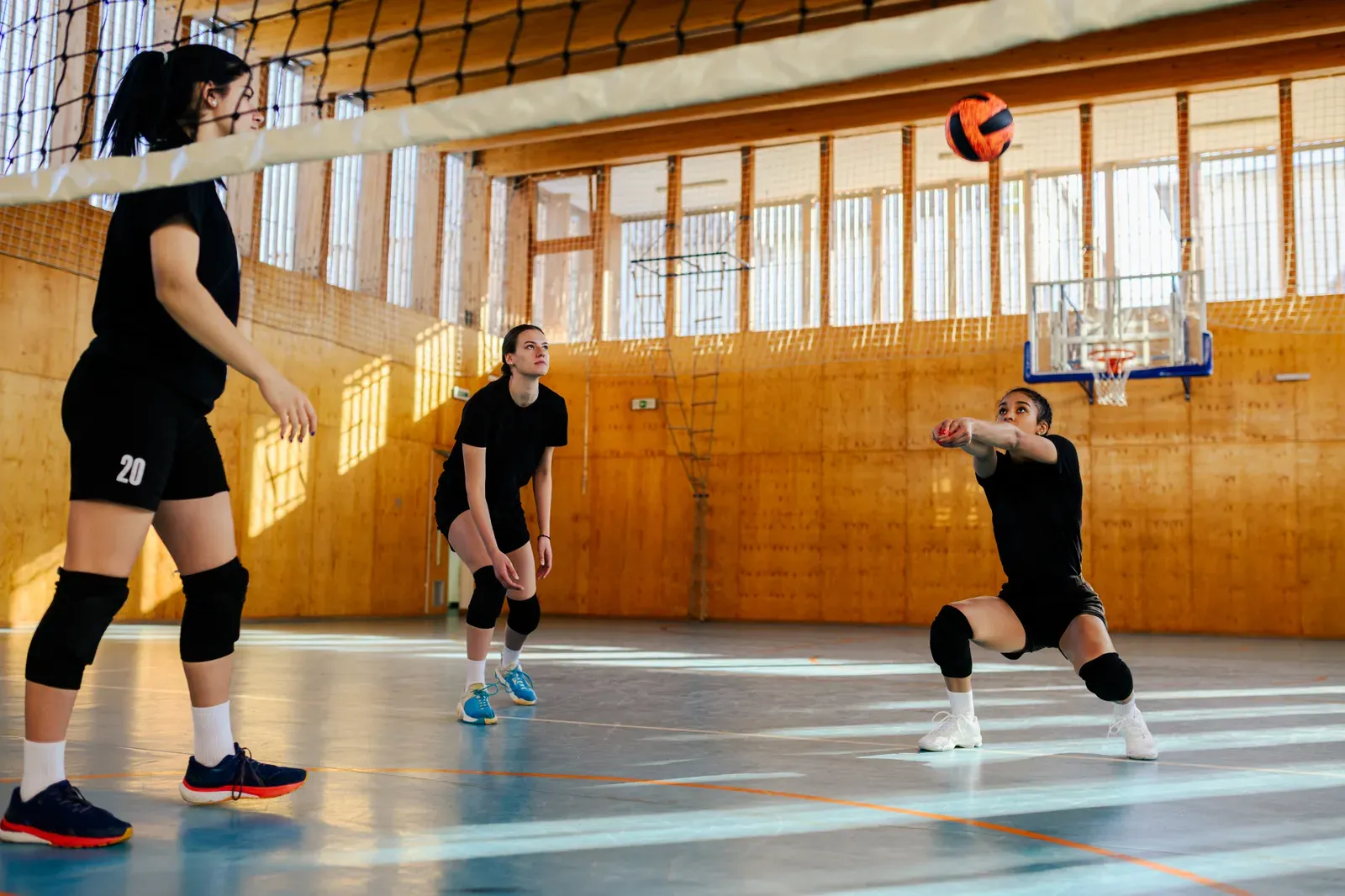
Volleyball strength training should do three jobs, in this order: manage the enormous jumping load the sport already imposes, protect the hitting shoulder, and then add the leg power that raises the attack. Most young players get offered only the third job, more jumping, which is exactly backward. A club volleyball season already contains hundreds of maximal jumps a week; the weight room’s first gift is making each one cheaper.
In Carmel, that work runs one-on-one, and it starts with a free consultation that includes a free InBody body composition scan, so the program begins from a measured baseline rather than a guess.
Jump load is the hidden variable
A volleyball jump is trivial. The 400th one that week is not. Club schedules stack practices, privates, and weekend tournaments from late fall into summer, and jumping volume is the load nobody counts. Strength training answers it two ways. Stronger legs mean every jump uses a smaller fraction of maximum capacity, which is what fatigue-resistance actually is. And taught landing mechanics, absorbing force through hips rather than collapsing knees, turns the sport’s most repeated event into its safest. In heavy tournament stretches, a good coach also trims gym volume on purpose, because managing total load is the program, not an interruption to it.
The shoulder deserves its own program
The hitting shoulder lives on repetitive overhead violence, and like every overhead athlete’s shoulder, it thrives on balance work: rowing patterns, upper-back volume, rotator cuff and scapular control, with overhead pressing progressed carefully rather than assumed. This is the same shoulder-first logic that governs training for swimmers and throwers. What it is not is a treatment plan: a shoulder that already hurts belongs with a physician or physical therapist before it belongs in a program, and coached training then runs alongside the clinical guidance, a division of labor covered in training around an injury.
Then build the power
With load managed and the shoulder supported, the fun part works: squat and hinge strength, single-leg work for the one-foot takeoffs and awkward landings the sport is full of, trunk stiffness for hitting through contact with the air, and jump conversion work that turns new strength into attack height. For athletes on both sides of the net, the blocking game benefits just as much; lateral quickness along the net is trainable the same way, and the broader jump-sport logic overlaps heavily with basketball strength training.
How it fits a Carmel club calendar
Sessions at FlexWerk book by the hour in a reserved private suite at Carmel City Center: lifting rack, cable system, dumbbells, and a coach whose attention never leaves the athlete, with a parent welcome to stay. That one-on-one supervision is what pediatric sports medicine guidance asks of youth strength training, and it is the practical answer for a sport whose club season devours evenings and weekends. Hours run 5 AM to 9 PM weekdays and 7 AM to 4 PM weekends at 885 Monon Green Blvd, garage parking a short walk away. FlexConnect matches your athlete with one of the more than 40 independent professionals here, so ask specifically for jump-sport or youth performance experience, and use the summer break the way it deserves, as laid out in our summer training guide for high school athletes.
If your volleyball player’s jumping already works hard, book the free consultation and let a coach make it work smart.
Related questions
How much can strength training add to a volleyball vertical?
No coach can promise inches, but for athletes who have never trained, stronger legs plus taught jumping and landing mechanics is the most reliable path a vertical has. The gains come from force, not from jumping more.
Should volleyball players lift during club season?
Yes, briefly. One or two short maintenance sessions a week preserve strength and jump height across a season that runs from November into summer. Stopping entirely means peaking in December and fading by nationals.
My daughter's knees ache from jumping. Train through it?
No. Persistent knee or shoulder pain goes to a physician or physical therapist first. Once cleared, a coach builds the landing mechanics and leg strength that address why the pain showed up, alongside the clinical plan.