
Is Yoga Enough Strength Training?
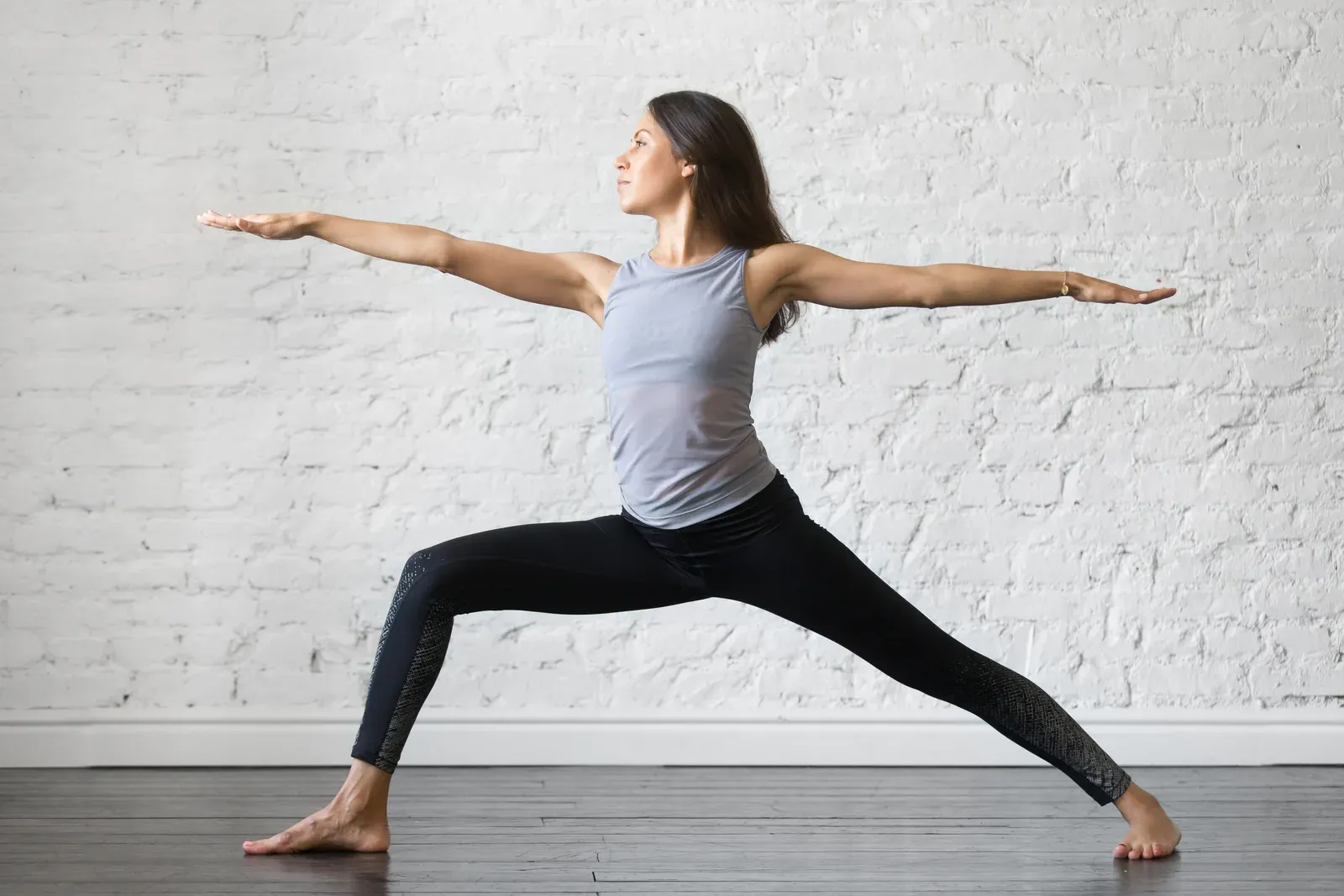
Yoga is genuine strength training for beginners, and it stops being enough: holding and moving your body weight builds real strength for the first several months, but without a way to keep adding load, the stimulus plateaus and so do the gains. That is not a criticism of yoga, which delivers things a barbell never will. It is a statement about how muscle and bone adapt, and about where a practice needs a partner.
The strength yoga genuinely builds
Give yoga its full due, because it earns it. Chaturangas, crow pose, warrior holds, and slow single-leg transitions are legitimately hard work, and someone starting from sedentary will gain noticeable strength, especially through the shoulders, core, and hips, in their first months of consistent practice. Yoga also builds capacities most gym programs neglect: long-range mobility, balance, body awareness, breath control under strain, and time under tension in positions daily life actually uses.
The practice’s consistency advantage is real too. People keep yoga habits for decades, through seasons when every gym membership lapsed, and a habit you keep beats a program you quit. If you love your practice, nothing here argues for giving it up; the argument is about what to add, and the right additions are personal enough that a free consultation with a coach who respects your practice is the efficient way to find them.
Where yoga hits its ceiling
The ceiling is progressive overload, and it is structural, not a matter of trying harder. Muscles grow and bones strengthen when loading increases over time, and yoga’s load is capped at your body weight, distributed across poses designed for control rather than maximal tension. You can make poses harder with slower transitions and longer holds, which buys months of progress, but eventually your tissues adapt to everything a mat can ask of them. Advanced practitioners are enormously skilled, and skill is not the same adaptation as strength.
Three gaps matter most as you age. Pulling strength: yoga contains almost no rowing or pulling pattern, so the upper back, the posture muscles, goes undertrained. Heavy hinge strength: picking substantial weight up off the floor is the most consequential real-world pattern, and no pose replicates it. And bone density: the evidence for maintaining bone is strongest for progressive resistance and impact loading; if osteoporosis runs in your family or bone loss is on your radar, that is a physician conversation plus a loading plan, and lifting heavy after menopause explains why the “heavy” part matters more than most women have been told.
The pattern here echoes other single-modality questions, like whether walking is enough exercise: excellent foundation, incomplete building.
What “enough” looks like in practice
The test is not philosophical; it is functional. Enough strength means you can pull your body toward things and things toward you, lift heavy objects off the ground with confidence, carry loads without drama, and keep enough reserve capacity that an off-balance moment on the pickleball courts at Meadowlark Park is a story instead of an injury. Yoga alone will carry some naturally strong people to that line. Most adults over 40, honestly assessed, need loading to get there and stay there, because the decade-by-decade default is losing muscle, and defense requires a stimulus the mat cannot supply.
A useful self-check: has your practice gotten harder for you in the past year, or have you gotten better at the same difficulty? If the challenge stopped rising, the adaptations stopped too, no matter how excellent the hour feels.
Age sharpens the question. Muscle loss compounds quietly from the 40s onward, and the deficit announces itself only years later, in a heavier-feeling suitcase or a hip that no longer trusts a curb in the dark. Strength is insurance that must be bought before the claim, and the premium is two hours a week.
How yoga and lifting fit together
The combination is better than either alone, and it is simpler than people expect: keep your practice, add two strength sessions a week built on the loaded patterns yoga skips, rows and pulls, deadlifts and hinges, weighted squats and presses, and carries. Two focused sessions is genuinely enough, because your yoga already covers mobility, balance, and much of the core work that lifters have to program separately. Yogis typically make unusually fast progress in the gym for exactly that reason: body awareness and breath control are the hard-to-teach half of lifting, and they arrive with both.
The reverse flow happens too: lifting strength shows up on the mat, in steadier arm balances and transitions that used to wobble. The disciplines are complements in the same way strength and Pilates are, each covering the other’s blind spot. Scheduling is easier than expected, too: strength on two weekday mornings leaves every evening class untouched, and neither practice has to shrink for the other to fit.
For yoga devotees, the usual barrier to starting is the big-box weight room itself, which can feel like the anti-studio: loud, crowded, watched. That barrier is worth naming because it is removable. At FlexWerk in Carmel, strength sessions happen one-on-one with a coach in a completely private suite, your own room, your own music, no audience, which practitioners tend to find far closer to studio energy than gym energy. The free consultation starts with an InBody body-composition scan, giving you a muscle and bone-adjacent baseline your mat has never measured, and a coach builds the two sessions that complete what your practice started.
Related questions
Can you build muscle with yoga alone?
In your first months, yes, especially if you start relatively untrained. After that, bodyweight poses stop being enough stimulus, and building further muscle requires progressively heavier resistance.
Should I quit yoga if I start lifting?
No, keep it. Yoga's mobility, balance, and stress benefits make lifting better, and two strength sessions a week alongside your practice covers what yoga cannot.
Is yoga enough to protect bone density?
The evidence is much stronger for progressive resistance and impact loading than for yoga. If bone density is a concern for you, talk with your physician and prioritize loaded strength work alongside your practice.