
Farmer Carry Benefits: Why Coaches Program Them
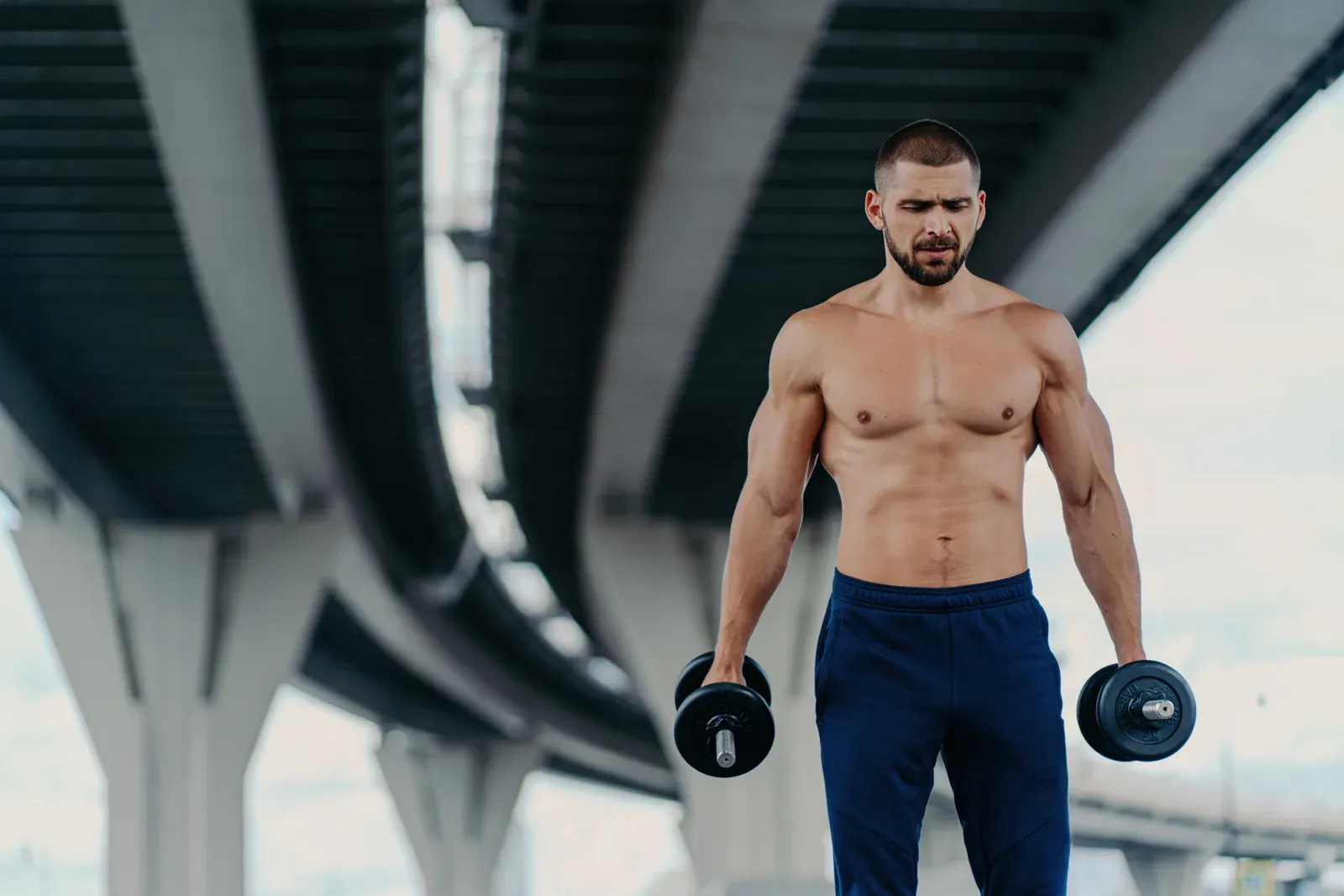
The farmer carry builds grip, trunk stiffness and walking posture in one simple movement: you pick up two heavy objects, stand tall, and walk. That is why coaches program it for beginners, older adults and obstacle racers alike. It asks for little technique and rewards patience. If you want carries built into a plan, start with a free consultation.
What the carry trains
- Grip and forearms. The load pulls on your fingers the whole time, which builds endurance in your hands. See grip strength and longevity for why that matters.
- Trunk. Your midsection resists leaning and twisting while you walk, a role often called anti-lateral flexion when the load is on one side.
- Upper back and shoulders. The shoulders stay down and back, which supports posture.
- Gait. Legs and hips keep walking under load, which carries over to stairs, hills and daily errands.
Typical loads and distances by experience
These are common coaching starting points, not rules. Total load means both hands combined.
| Experience | Typical total load | Typical distance or time |
|---|---|---|
| New to lifting | Roughly a third to a half of body weight | Short walks of 10 to 20 steps, a few rounds |
| Some training | Around half to three quarters of body weight | 20 to 40 steps, with rests |
| Experienced | Body weight or more | Longer walks or timed carries |
The way to progress is to change one thing per week: a heavier load, a longer walk, or a slower tempo. Stop when posture fails.
Carries that suit a one-on-one suite
A FlexSpace Standard suite is 150 square feet, and a Plus suite is 200 square feet, so long runways are rare. Fortunately, carries are flexible:
- Suitcase carry. One heavy bell or dumbbell in one hand, the other hand free. Walk short laps without leaning.
- Short shuttle. Carry out, turn, carry back, and repeat for time.
- Marching hold. Stand in place with the weights, lifting one knee at a time.
- Rack carry. Hold weights at your shoulders, which trains the trunk and upper back.
Coaches set their own formats, so ask during the consultation which carries they would use in a suite and what equipment is available.
Technique cues
- Stand tall before you lift. Do not collapse into the weights.
- Pick up with a hinge, not a rounded back.
- Keep your ribs down and your shoulders level.
- Walk with short, quick, controlled steps.
- Set the weights down the same way you picked them up.
Who should be careful
If you have a hand, wrist, shoulder or back condition, or high blood pressure, talk to your physician before heavy carries. Straining and holding your breath is not the point; breathe steadily throughout.
Where carries pay off
Racers use them to hold up on hanging obstacles and long hauls, as in obstacle race training in Indiana. Everyone else uses them to carry groceries, bags and children more easily. To go deeper on hands, see how to improve grip strength.
Pick a carry, set a modest load, and book a session to have a coach check your posture. A good first test is whether you can walk tall for twenty steps without leaning.
Related questions
How heavy should a farmer carry be?
Heavy enough that your grip and posture are challenged by the end, but light enough that you can stand tall and walk smoothly. Many coaches start beginners with a total load of roughly a third to a half of body weight and adjust from there.
Are farmer carries good for your back?
They train the muscles that hold your trunk steady, which many people find useful. If you have a back condition, ask your physician first and let your coach adapt the load.
Do I need a long hallway?
No. A short out-and-back or a slow shuttle in a small room works well, and a marching hold in one spot adds variety.