
Obstacle Race Training in Indiana: Grip and Carry Prep
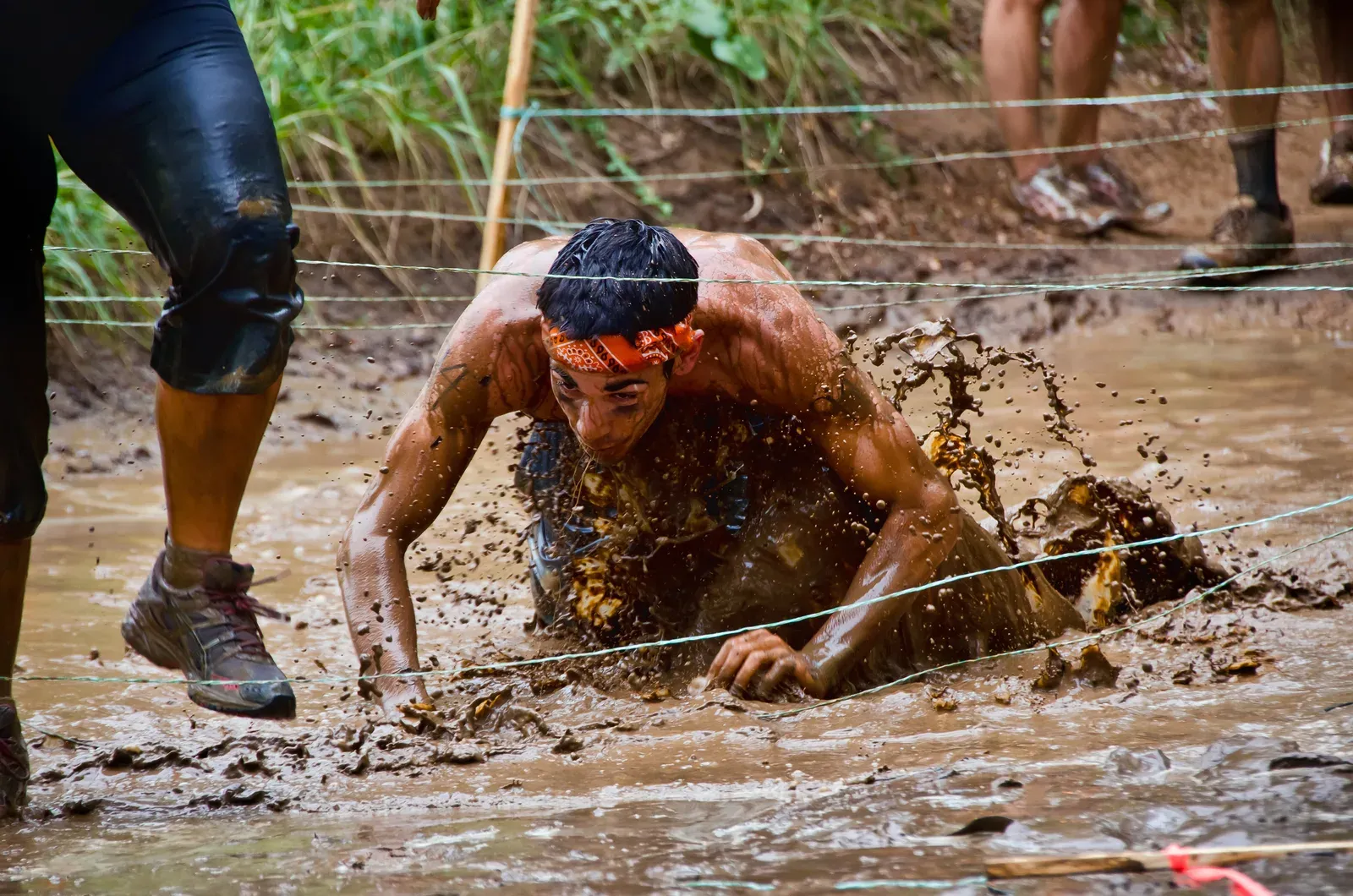
Obstacle race training in Indiana is a grip and carry problem wrapped around a trail run: the athletes who get pulled off the hanging obstacles almost never lacked fitness, they lacked the hands and forearms to hold their own bodyweight after five miles of mud. Summer 2027 offers two drivable targets, an obstacle trifecta weekend near Cincinnati in June and an obstacle race in Columbus, Indiana in August, and whether your entry says Tough Mudder or something else, the preparation is the same. It starts sensibly with a free consultation and a free InBody body composition scan, since carrying your own bodyweight over walls is a body composition question as much as a strength one.
Grip is the obstacle most people fail
Monkey bars, rings, rope climbs, and traverse walls all ask the same thing: hang your entire weight from your hands, often while wet, and move. Nothing in ordinary gym training builds that, because machines and dumbbells with knurled handles hand you the grip for free. Three tools fix it. Dead hangs from a bar, built up to 60 seconds and beyond, teach the forearms to hold. Heavy farmer carries, two dumbbells walked for distance, build the crushing grip and the trunk stiffness that keep a carry honest. And rope or thick-handle pulls, progressed slowly, prepare the hands for the climbing obstacles that end more races than any wall. Grip work happens at the end of a session so it does not steal from the lifts before it, and it responds quickly: a few months of consistent hanging changes what an obstacle course can do to you. The longevity side of the same quality is covered in grip strength and longevity, which explains why the work pays off long after the race.
Carries, crawls, and the trunk that holds them
The second obstacle family is loaded movement: sandbag carries up hills, log carries, bucket carries, and long crawls under wire through mud. Loaded carries in the gym are the direct rehearsal, and the progression is simple: heavier objects, longer distances, awkward shapes. Bear crawls and plank variations build the trunk endurance the crawls demand, and a hip hinge pattern under load prepares the back for picking heavy things off wet ground. Walls are a vertical jump plus a press, so squats, box jumps, and push-ups cover them, and a few practice climbs on any playground structure in the final month handle the technique.
The running is most of the day
A course of three to ten miles on trail, with hills, mud, and water crossings, is a running event first, and the obstacles are interruptions. Two or three runs a week on soft, uneven ground, one of them with hills, prepare the ankles and the engine; the Hamilton County trail loop, about 28 miles linking the Monon, Midland Trace, Nickel Plate, and The 106, supplies the mileage but not the hills, so hill repeats get manufactured on whatever rise you can find or on a curved treadmill’s incline effort. The hybrid fitness race format asks for a similar blend of running and loaded work in a cleaner package, and the Carmel hybrid race preparation guide covers that version; the obstacle version trades the ergs for mud and the sleds for walls.
A calendar for June and August 2027
Sixteen weeks is the comfortable runway, which means a June trifecta weekend starts its block in February and an August Columbus race starts in late April. Both builds share a shape: eight weeks of strength, grip, and easy trail running; six weeks where the runs get hilly and the carries get heavy; two weeks of taper with grip work kept light. The August race adds one Indiana-specific chapter: heat. Humid summers in the upper 80s and 90s, plus the occasional Air Quality Action Day when the state advises limiting outdoor exertion, mean June and July runs move to early mornings and the strength work stays indoors. The Indiana summer training guide covers the acclimation tactics.
At FlexWerk in Carmel, the strength, grip, and carry sessions run one on one in a reserved private suite with a lifting rack, cable system, and dumbbells, booked by the hour from 5 AM on weekdays, and a coach programs them around your trail runs so the two do not collide. If your first race is the Chicago hybrid event in February, the same grip and carry base transfers straight into summer.
Pick the race, count back sixteen weeks, and start hanging from a bar this week; the mud will still be there in June.
Related questions
How much grip strength do I need for an obstacle race?
Enough to hang from a bar for 60 seconds or more and carry heavy objects for a couple of minutes without letting go. Most people who train grip two or three times a week for twelve weeks get there, and the hanging obstacles stop being the wall they were.
Can I train for a mud run without any obstacles?
Mostly, yes. Walls are a jump and a press, monkey bars are hanging strength, carries are carries, and crawls are trunk endurance. A private room with a rack, dumbbells, and a cable system covers all of it; a few practice sessions on a playground or climbing wall in the final month supply the familiarity.
When should I start training for an August obstacle race?
Sixteen weeks out is comfortable, so late April for August, and earlier if the running is starting from scratch. A June event needs the block to begin in February. Anyone with heart, joint, or blood pressure history should clear the goal with their physician before pointing training at it.