
Body Fat Mass vs Body Fat Percentage on an InBody
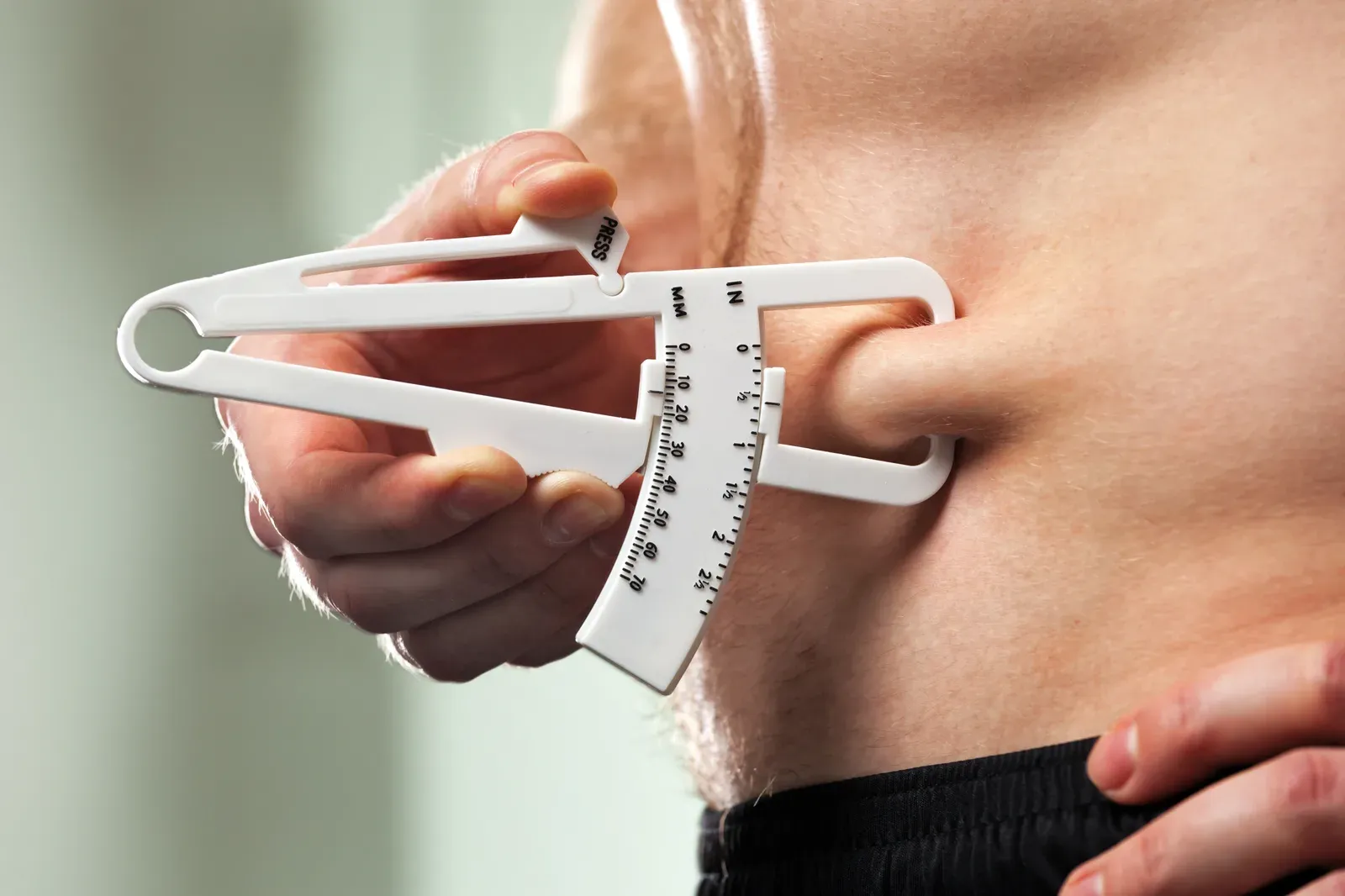
Body fat mass is how many pounds of fat you carry; body fat percentage is that mass divided by your total weight, and because it depends on two moving parts, the percentage can fall while fat mass rises, or the reverse. When your scale weight is changing, follow fat mass for the real story about fat and use the percentage for broad comparisons. Both print on every scan in a free consultation, and a coach can show you which one your goal should ride on.
The arithmetic in two lines
Percentage equals fat mass divided by body weight. That is all, and it explains every confusing result. Change the top number, the bottom number, or both, and the percentage moves. Muscle gain raises the bottom number. Muscle loss lowers it. Fat loss lowers both, but not in step.
Four worked examples
Here are four hypothetical people, with round numbers for clarity.
| Starting point | Later scan | What happened | Percentage | Fat mass |
|---|---|---|---|---|
| 160 lb, 40 lb fat (25.0%) | 170 lb, 42 lb fat (24.7%) | Added about 9 lb muscle | Down | Up by 2 lb |
| 140 lb, 42 lb fat (30.0%) | 128 lb, 39 lb fat (30.5%) | Lost 3 lb fat and 9 lb muscle | Up | Down |
| 200 lb, 60 lb fat (30.0%) | 190 lb, 50 lb fat (26.3%) | Lost 10 lb fat, kept muscle | Down | Down |
| 180 lb, 45 lb fat (25.0%) | 180 lb, 36 lb fat (20.0%) | Swapped 9 lb fat for 9 lb muscle | Down | Down |
Row one is a gaining phase that looks like a loss in percentage. Row two is the diet trap: the scale is lighter and the percentage got worse. Rows three and four are the goal states, and only row four shows nothing on the scale.
Which one to follow, by situation
Use this if-then list when you read a new printout:
- Weight is dropping. Read fat mass first, then check that skeletal muscle mass held.
- Weight is flat but clothes fit differently. Read the percentage and muscle together; this is the recomposition pattern covered in body fat change that is real versus noise.
- You are deliberately gaining. Let fat mass rise slowly and watch that the percentage does not climb over the whole block.
- You want a health reference. Use percentage, and compare it with the age ranges in healthy body fat percentage by age.
Why the scale and BMI miss this
Neither a bathroom scale nor BMI separates fat from everything else, so both are blind to the four rows above. The comparison of body fat percentage and BMI goes into why a composition number is the better yardstick, and the full InBody walkthrough places both lines on the sheet.
How a coach sets your tracking line
Coaches typically write one goal in pounds of fat mass and one in skeletal muscle mass, then check percentage only as a summary. That keeps the plan from reacting to a percentage that moved because your weight did. Rescan every four to six weeks under matched conditions, record both lines, and treat a single odd percentage as a question about timing, not about effort. Bring your last two printouts to a conversation with a coach and ask which line your current phase should be judged on.
Related questions
Can body fat percentage go down while fat mass goes up?
Yes. If you add more lean tissue than fat, the denominator grows faster than the numerator and the percentage falls even though the pounds of fat crept up. It happens in deliberate gaining phases and with new lifters.
Which number should I put on a goal?
Use fat mass in pounds for a loss goal, and percentage for a long term health or performance target. Percentage is easier to compare with general reference ranges, while fat mass tells you what the diet is actually doing.
Why does my percentage barely move when I lose weight?
If some of the weight you lost was muscle or water, the percentage stays high even though fat mass fell. Look at the skeletal muscle line on the same sheet before deciding the diet is failing.