
InBody Scan Results Explained: Every Number, Plain English
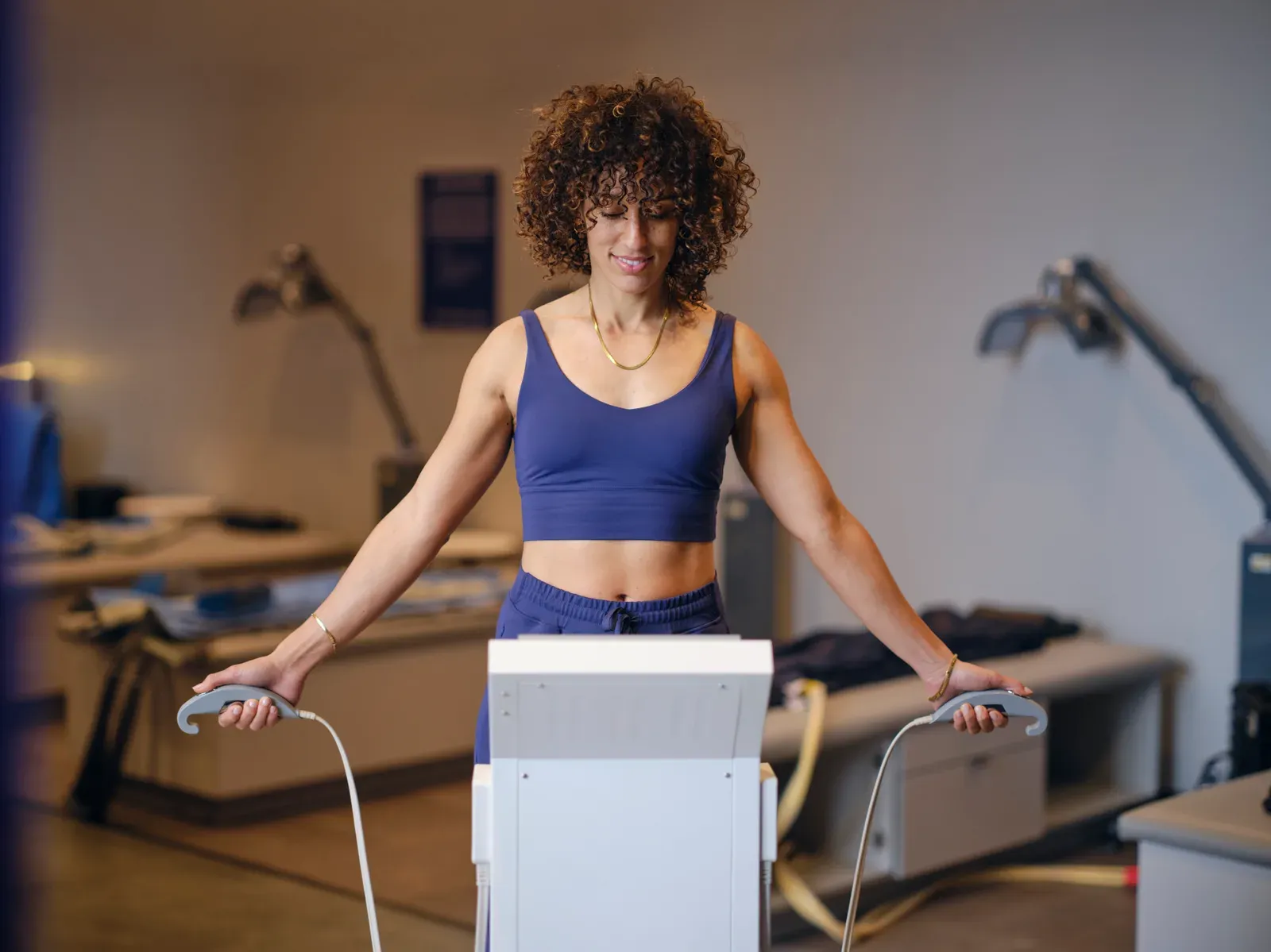
An InBody scan takes the number on your bathroom scale and splits it into what that weight is actually made of: muscle, fat, and water. Most of the report comes down to four numbers: skeletal muscle mass, body fat mass, percent body fat, and visceral fat level, and the trend in those numbers across weeks tells you more than any single reading ever will. Everything else on the page is supporting detail. If you would rather see your own numbers than read about someone else’s, the free consultation at FlexWerk includes a free InBody scan and a coach who translates the printout in real time.
How the scan works, and why it takes one minute
The InBody estimates body composition by passing a gentle, imperceptible electrical signal through your body from electrodes under your bare feet and in the hand grips. Water conducts electricity easily, and lean tissue is mostly water, while fat resists the current. By measuring that resistance at multiple frequencies through each arm, each leg, and your trunk, the device estimates how much of you is lean mass, how much is fat, and how much is water. The whole test takes about sixty seconds: shoes and socks off, stand still, hold the grips, done. No calipers, no pinching, no dunk tank, no radiation.
The method is called bioelectrical impedance analysis, or BIA. Its strengths are speed and repeatability, which is exactly what a training baseline needs. Its weakness is that readings shift with hydration and timing, and that caveat shapes how every number below should be read.
The big three: weight, muscle, and fat
Weight leads the report only because every other number is a slice of it; on its own it is the least informative figure on the page. The value is in the split:
- Skeletal muscle mass (SMM). The muscle attached to your skeleton, the kind training builds. This is the number a coach most wants to see rise, or at least hold steady, while fat comes off.
- Body fat mass. Your fat in pounds rather than a percentage. Watching it in pounds matters because it can drop meaningfully while total weight barely moves.
- Percent body fat (PBF). Body fat mass divided by weight. As a single summary, this is the number to remember, because it captures both sides of the equation at once.
Why the split matters has a name: body recomposition. A consistent strength program commonly adds muscle while losing fat, and a bathroom scale reads that as nothing happening. The InBody reads it as two lines moving in the right directions, which is why coaches trust re-scans over the scale.
The numbers people skim past, and should not
Four smaller figures earn their place on the report:
- Visceral fat level. An estimate of the deep abdominal fat stored around your organs, the kind research links most strongly to metabolic health. It gets a full explanation in what visceral fat is and why it matters; what your level means for your health specifically is a conversation for your physician.
- Segmental lean analysis. Lean mass broken out by each arm, each leg, and your trunk. It surfaces imbalances a total number hides, like a left leg still lagging years after an old injury, and gives a coach something concrete to program around.
- Basal metabolic rate (BMR). An estimate of the calories your body burns at rest, driven largely by how much lean mass you carry. More muscle nudges it upward. Treat it as a planning estimate, not a standalone license for a calorie target.
- ECW ratio. The share of your body water sitting outside your cells. It typically rises temporarily after a salty meal, a hard session, or minor swelling. A reading that stays unusual across multiple scans is worth mentioning to your physician, not diagnosing from a gym printout.
How accurate is an InBody, honestly?
Accurate enough to steer training, and not a laboratory measurement: both halves of that sentence matter. Consumer body-composition devices are trend instruments. Hydration, a salty dinner, a hard run on the Monon an hour earlier, or a full stomach can each nudge a single reading by a real margin. Clinical DEXA scans are the usual reference standard, and that comparison gets a fair hearing in InBody vs DEXA accuracy, but the short version is that the two tools do different jobs. You do not need a perfect absolute number to know whether eight weeks of work moved muscle up and fat down. You need the same device, similar conditions, and enough time between tests, which is why coaches typically space re-scans about 4-6 weeks apart.
Treat scan one as a starting line, not a verdict, and treat every scan after it as a data point in a trend.
What your first scan is for
At FlexWerk’s Carmel City Center location, a few steps from the Monon Greenway, the first InBody scan happens during the free consultation, and its job is placement, not judgment. Your numbers, your goals, and your honest schedule determine where you begin in the phased 30/60/90 system: Reset for habits, calories, and baseline; Build for strength, metabolism, and body composition; Refine for nutrition, details, and visual change. From then on the re-scan, not the mirror and not the bathroom scale, referees whether the plan is working.
Nobody is graded on a baseline. The fastest way to understand an InBody report is to stand on the machine with a coach beside you, and the consultation that includes it costs nothing.
Related questions
How should I prepare for an InBody scan?
Come normally hydrated, skip the big meal and the hard workout right beforehand, and scan at a similar time of day each visit. Matched conditions are what make the trend trustworthy.
Is the InBody scan at FlexWerk really free?
Yes. The scan is included in the free consultation, along with a coach who walks you through every number and what it means for your starting plan.
Which number on the report matters most?
For most people, percent body fat as the summary and skeletal muscle mass as the engine. Watch those two move across re-scans and you are reading the report like a coach.