
What Does the One Leg Balance Test Predict?
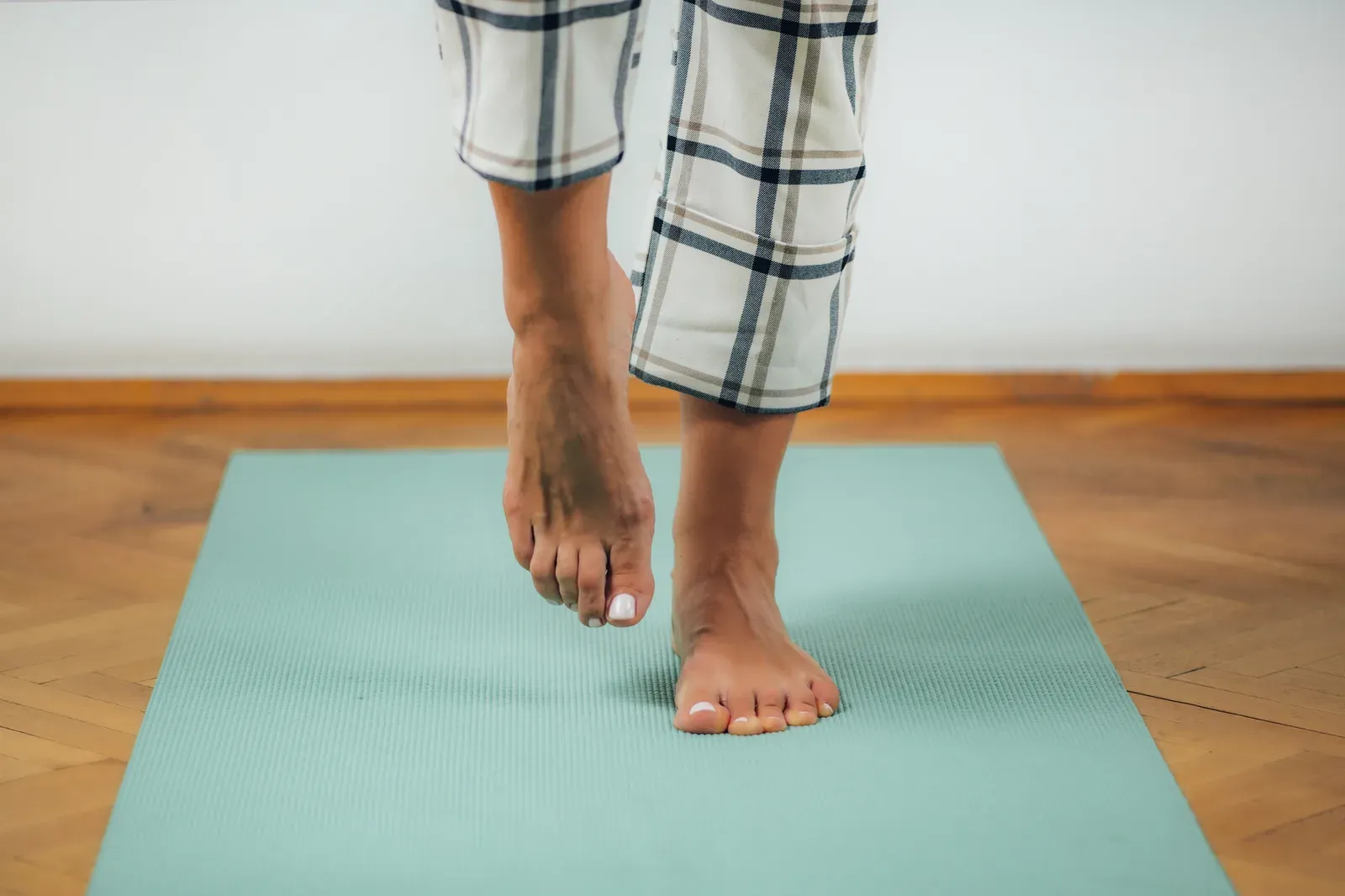
The one-leg balance test predicts risk, not fate: in widely reported research on adults in midlife and beyond, people who could not stand on one leg for 10 seconds showed meaningfully higher mortality risk over the following decade, and the honest reading is that the test is a screen that flags trainable weaknesses, not a diagnosis of anything. Fail it today and the correct response is a training plan, not a will.
What the test does and does not tell you
It tells you how your balance system is doing, and balance turns out to be a surprisingly rich summary of physical aging: it draws on leg strength, joint function, reaction speed, and the nervous system’s moment-to-moment control all at once. That breadth is why a ten-second stand correlates with long-term outcomes in the research, and it is also why the correlation is not spooky. People who cannot balance tend to be people whose strength and mobility have quietly eroded, and that erosion, not the wobble itself, is what carries the risk.
What it does not tell you: anything certain about you as an individual. The findings are population-level associations; the studies could not fully separate balance from everything traveling with it, and no field test diagnoses a disease. Its equally famous sibling, the grip strength screen, works the same way: cheap screen, honest flag, terrible fortune teller. That is also why improving the underlying strength, rather than rehearsing the party trick, is the response the research actually supports. The sit-to-stand family of tests, rising from a chair or the floor with minimal support, belongs in the same drawer.
How to take it, and when it is a medical question first
Take it safely and it costs one minute: stand near a counter, arms relaxed, lift one foot, and time yourself until the foot touches down or you grab support; then test the other side. Fresh is fair; exhausted is not. The commonly used benchmark from the research is 10 seconds per side for adults in middle age and beyond.
Two companion screens round out the home picture: the 30-second chair stand, counting how many times you can rise from a seated position without using your hands, and the floor sit-and-rise, simply getting down to the floor and back up with as little support as possible. The same rules apply to all of them: screens, not verdicts.
One important detour: if attempting this makes you dizzy, or you have a history of falls, vertigo, neuropathy, or medications that affect balance, put the phone timer away and talk with your physician first. Dizziness and repeated falls are medical symptoms with medical causes, and screening them with a stopwatch is the wrong tool. Training resumes after that conversation, built inside whatever guidance comes back.
Why balance fades, and how fast it comes back
Balance fades because adult life stops practicing it. Somewhere after the last pickup game, single-leg moments quietly vanish from the average day, leg strength drifts down, and the fast-twitch quickness that catches a stumble fades faster than strength itself. The system is not broken; it is unpracticed. Age is not the only thief, either: desk years, old ankle sprains, and plain disuse all chip at it, which is why plenty of forty-somethings wobble worse than active seventy-year-olds.
Which is the good news, because unpracticed skills respond quickly. Balance work is famously fast to improve: single-leg stands while the coffee brews, split squats, step-downs, loaded carries, and eventually quick, light footwork to retrain the catch reflex. Folded into two normal strength sessions a week, most wobbly testers see their ten seconds arrive within weeks, with leg strength compounding behind it for years. A free consultation is the practical starting point: an InBody baseline, a coach’s eyes on how you actually move, and a program where balance is an ingredient rather than an afterthought, practiced in a private suite where nobody watches you wobble through week one.
Progression is refreshingly concrete. Week one might be ten-second supported stands while the coffee brews; a month in, unsupported stands with head turns; two months in, single-leg reaches and controlled step-downs from a low box. Each stage earns the next, and the stopwatch keeps score honestly.
Balance in real Indiana life
Around Carmel, this capacity gets an annual exam whether you study for it or not. Winters average about 22 inches of snow, which means months of icy driveways, slick parking lots, and frozen sidewalk mornings where a trained catch reflex is the difference between a slide and a fall. The recreational calendar tests it too: weekend ski runs at Perfect North, about an hour and a half away, are single-leg strength and reactive balance wearing a lift ticket. Add icy porch steps and a dog on a leash, and winter becomes a season-long pop quiz.
The bigger picture is that balance is one leg of a three-legged longevity stool, alongside strength and aerobic capacity, and the full framework lives in training for your 80s. Grip strength, the other headline screen, gets the same honest treatment in the grip strength question. Screens like these exist to tell you which leg of the stool needs the work; they are the beginning of a plan, never the end of one.
If your ten seconds did not go the way you hoped, take it as the useful, fixable flag it is and book the consultation; wobble is one of the fastest things training repairs.
Related questions
How do I do the one-leg balance test safely?
Stand near a counter or wall with support in easy reach, and time how long you can stand on one leg without the other foot touching down. Test both sides, fresh, not after a workout. Stop if you feel dizzy, and mention dizziness to your physician.
What counts as a good score?
The commonly used benchmark from the research is holding 10 seconds per side in middle age and beyond. Falling short is not a verdict; it is a flag that balance and leg strength deserve training attention.
Can balance really be improved at my age?
Yes, and often within weeks. Balance is a skill riding on leg strength and practice, both of which respond to training at every age, which is exactly why a poor screen is useful rather than scary.