
Sports Performance Training for Fishers Athletes, One on One
Fishers athletes do not lack effort, competition, or opportunity; what most of them never get is individual attention: one coach, one athlete, and a program built for the body in the room. That format lives 15 to 20 minutes from Fishers via 116th Street, in private training suites at Carmel City Center, and the Fishers personal training page covers the drive-and-logistics picture in full. This page covers what the athlete actually gets when they arrive.
The team weight room is not a development program
Team lifting has a place, and good high school programs run it well. But a team program is written for forty athletes at once, which means it is written for none of them in particular. The sophomore with a shaky landing pattern, the pitcher whose hips have no rotation left, and the strong-but-slow lineman all get the same spreadsheet. Technique gets watched in aggregate, weak links go unaddressed, and the athletes who plateau are usually the ones whose specific limiter was never anyone’s job to find.
One-on-one performance training inverts that. It starts with assessment: movement screening, training history, a free InBody body composition scan at the free consultation, and an honest conversation about the sport calendar. Then the program targets what actually limits this athlete, whether that is maximal strength, sprint mechanics, landing quality, or simply a body that has never been taught to produce force.
The difference shows up fastest in the athletes the team model serves worst: the late-developing freshman who needs eighteen months of patient strength work, not a varsity spreadsheet; the multi-sport kid whose three coaches each assume the other two are managing workload; the athlete coming back from a lost season who needs a bridge between the physical therapist’s clearance and full team training. Each of those is an individual programming problem, and individual programming is the entire product here.
What the private suite changes for an athlete
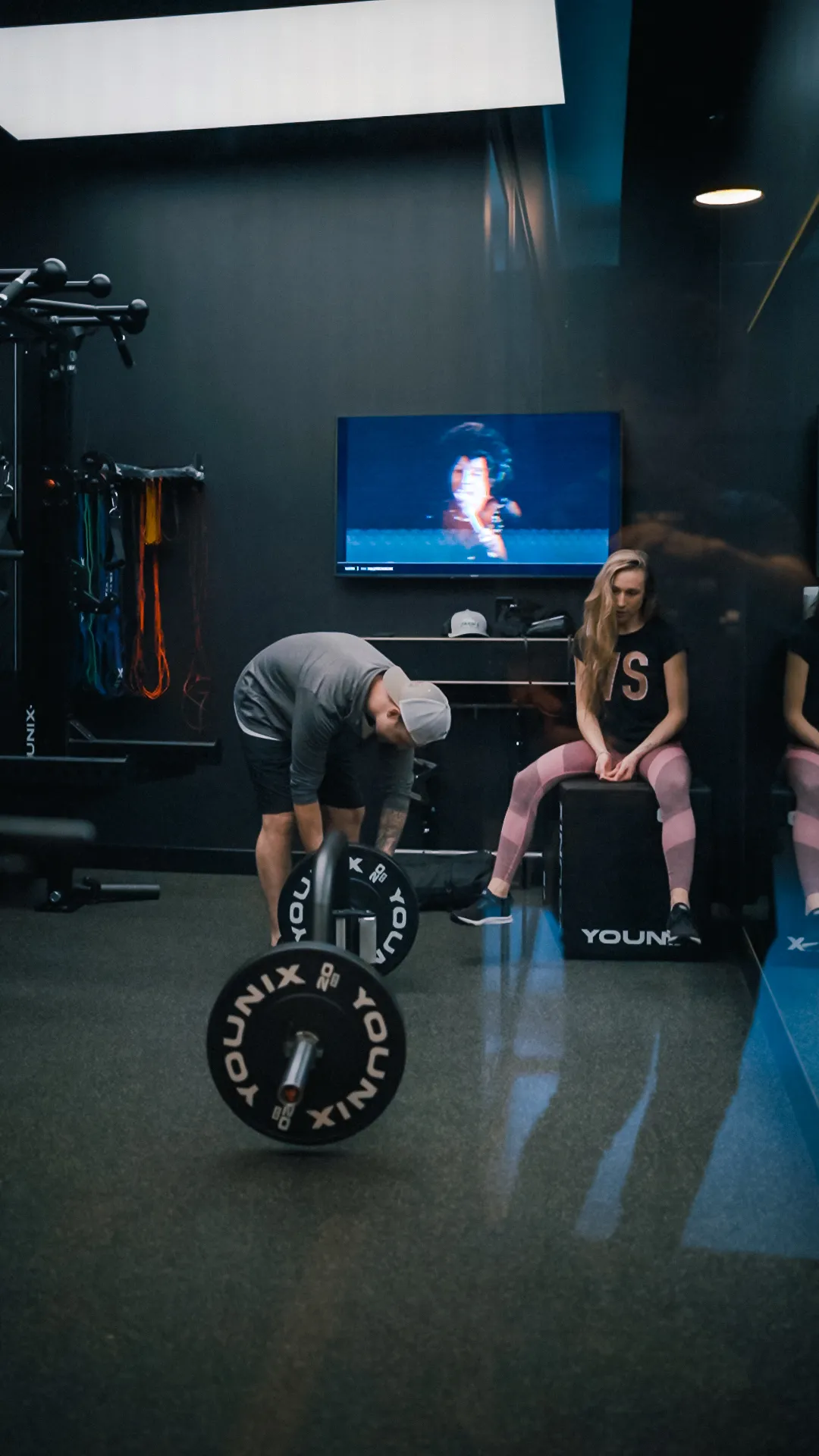
Every session at FlexWerk runs in a reserved FlexSpace: a custom lifting rack, cable system, and dumbbells that belong to the athlete for the hour, with no one waiting on the equipment and no crowd to perform for. Three things follow from that setup.
- Technique coached every rep. Sprint mechanics, landing positions, and barbell skills are motor skills, and motor skills need immediate individual correction. One coach, one athlete, zero distractions is the environment where that correction actually lands.
- Video feedback on the spot. The suites are deliberately filming-friendly, with a monitor in the room, so a coach can capture a jump or a pull, review it with the athlete thirty seconds later, and rebuild the pattern in the same session. On a shared floor that loop simply does not happen.
- No audience. Teens learning to lift do it without a gym floor watching, which is quietly where much of the confidence, and most of the honest effort, comes from.
For the deeper dive into what performance training develops, the five physical qualities and how a block periodizes them, the Carmel performance training guide walks through it in detail; everything there applies to a Fishers athlete making the drive.
Built around the Fishers sports calendar
Fishers families already live a commuter athletic life: club weekends at Grand Park, whose 400 acres and 31 multipurpose fields pull roughly 1.5 million visitors a year, plus school seasons that stack one sport onto the next. That calendar shapes the training two ways. In-season, sessions drop to a maintenance dose, typically once a week, protecting strength without stealing recovery from competition. Off-season is where development happens: two focused sessions weekly, strength climbing, speed and power work sharpening toward the next season. The in-season versus off-season playbook explains why coaches who ignore that rhythm burn athletes out.
There is a durability argument here too, and it deserves honest framing. Year-round sport with no general strength underneath is the classic overuse recipe, and structured training builds the capacity that helps a body absorb a competitive season. No program can injury-proof anyone, and an athlete returning from injury needs clearance from their physician or physical therapist before performance work begins; a good coach works alongside that guidance rather than around it.
How Fishers families make it work
The logistics are simpler than they look. FlexWerk sits at 885 Monon Green Blvd in Carmel City Center, with garage parking a short walk from the door, and most of Fishers reaches it in 15 to 20 minutes via 116th Street or 146th Street. Weekday hours run 5 AM to 9 PM and weekends 7 AM to 4 PM, so sessions land on non-practice days instead of competing with them. More than 40 independent fitness professionals run their businesses here, and FlexConnect matching pairs your athlete with a coach by sport, age, goals, and personality. Younger or non-athlete teens are their own conversation, covered in the youth athlete development guide.
Parents stay as involved as they want to be. The private-room format means you can sit in on every session and watch exactly how your athlete is being coached, which is a level of transparency the industry does not generally offer, or you can use the hour for your own errands at City Center and trust what happens behind the door. The first session is free either way, so the evaluation runs in both directions: the coach assesses the athlete, and the family assesses the coach, before anyone commits to a season of work together.
If the next season matters in your house, start with the free consultation: an assessment, a baseline scan, and a coach whose specialty matches your athlete’s sport.
Related questions
What ages and sports do performance coaches work with?
High school athletes through adults, across field, court, and endurance sports, with several coaches specializing in youth development. The consultation matches your athlete's age, sport, and training history to the right coach.
How does this fit around practices and games in Fishers?
Sessions are booked appointments rather than class times, with weekday hours from 5 AM to 9 PM and weekends 7 AM to 4 PM. Most families slot training on non-practice days, and coaches cut volume in-season on purpose.
Is the drive from Fishers worth it for training?
That is the honest trade: 15 to 20 minutes via 116th Street buys a reserved private room, a coach's full attention, and on-the-spot video review. Families who commute to Grand Park most weekends tend to find the math easy.