
Soccer Strength and Conditioning in Carmel: What Club Practice Assumes
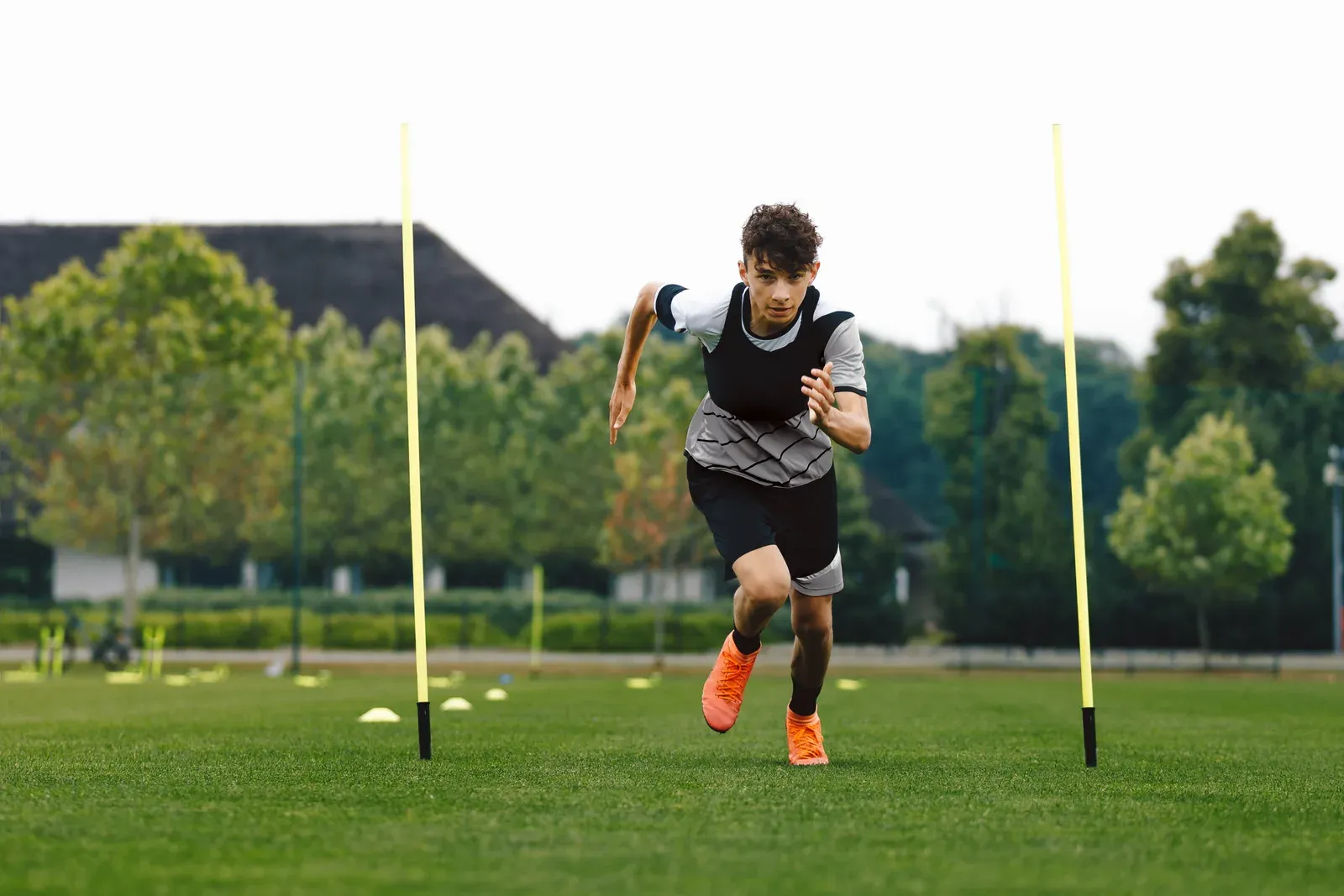
Hamilton County produces an enormous volume of youth soccer. Grand Park alone, 400 acres and 31 fields just north in Westfield, draws around 1.5 million visitors a year, and a large share of them are local families living the club calendar. What all that practice quietly assumes, and rarely builds, is the strength and speed underneath the sport: the force behind the first three steps, the strength to hold a shoulder challenge, and the durability to survive a ten-month season. Soccer strength and conditioning in Carmel exists to close that gap, one athlete at a time.
The entry point is a free consultation, which includes a free InBody body composition scan and a conversation about position, schedule, and goals before anyone touches a barbell.
The gap club soccer leaves open
Club practice is technical and tactical, as it should be. Touches, patterns, small-sided games. The physical qualities that separate players at tryouts, acceleration, change of direction, repeat-sprint capacity, and the strength to win duels, are assumed to develop on their own. Sometimes they do. Usually the athletes who look “naturally athletic” are simply the ones whose bodies happened to develop those qualities early.
The rest can train them. Sprinting is a force problem: stronger hips and legs put more push into the ground. Cutting is a braking problem: athletes who can decelerate under control change direction faster and load their knees more kindly. And a long season is a durability problem: hamstring, hip, and trunk strength is the difference between an athlete who plays November through August and one who spends the spring managing a strain.
What one-on-one soccer S&C looks like
A coached block for a soccer athlete typically runs one to two private sessions a week and covers:
- Lower-body strength. Squat, hinge, and single-leg patterns, taught technique-first and loaded progressively. Single-leg work earns extra attention because soccer is played one leg at a time.
- Acceleration mechanics. Short sprint work and positional starts, converting new strength into the first three steps that decide loose balls.
- Deceleration and cutting. Controlled landing and plant-and-go work that builds change-of-direction speed and trains the braking capacity young knees need.
- Trunk and hip durability. Hamstring, adductor, and core work, the unglamorous volume that keeps soft-tissue trouble rare.
Because sessions are one-on-one, the program bends around the club calendar instead of breaking against it. Tournament weekend coming up, the week goes light. Winter futsal block, sessions shift days. The build-versus-maintain logic that governs those decisions is laid out in in-season versus offseason training, and the summer window, the one stretch when real physical building is easiest, gets its own treatment in our summer training guide for high school athletes.
Why a private suite fits youth athletes
At FlexWerk in Carmel City Center, every session runs in a reserved private suite: a lifting rack, cable system, and dumbbells in a room that belongs to your athlete for the hour. No crowded floor, no waiting for equipment, no audience while a 13-year-old learns to hinge. Parents are welcome to stay, which matters both for comfort and because many big-box gyms restrict access for younger teens in the first place. For athletes still in middle school, the supervision case is even stronger, and we cover it separately in strength training for middle school athletes.
More than 40 independent fitness professionals run their businesses at FlexWerk, and FlexConnect matches your athlete with a coach by goals, schedule, and specialty, so you can ask specifically for youth athletic development experience. Hours run 5 AM to 9 PM weekdays and 7 AM to 4 PM weekends, and the location at 885 Monon Green Blvd has garage parking a short walk away, a straightforward stop between school and evening practice.
The knee question soccer families ask
Soccer parents, especially parents of girls, usually arrive with one question already loaded: what about knees? It deserves a straight answer. Soccer’s cutting and landing demands put real stress on the knee, and adolescent female athletes face a well-documented elevated risk of serious knee injury. The encouraging part is equally well documented: structured neuromuscular training, the combination of strength work, landing mechanics, and controlled deceleration practice, is widely used across the sport specifically to manage that risk. It is not a certainty, and no honest coach will sell it that way. It is the best available preparation, and it is exactly the work described above, delivered with more individual attention than any team warm-up can manage.
The one-on-one format matters here for an unglamorous reason: landing and cutting mechanics are habits, and habits change through repetition with feedback. A coach watching a single athlete catches the inward knee drift on rep three, not at the end of the season.
Two honest notes for parents. First, no private coach replaces the club: this work supplements team training, and one to two focused hours a week is plenty alongside a full practice load. Second, if your athlete is playing through pain, the first stop is a physician or physical therapist, not a strength program. Coaches here train alongside clinical guidance, never instead of it.
Adult players, it should be said, get the same benefits from the same work. Sunday league legs respond to strength training just as readily as a 15-year-old’s, and the schedule flexibility works even better for adults with jobs.
If your soccer player has the touch and the drive but keeps losing the physical battles, book the free consultation and let a performance coach build what practice assumes.
Related questions
When does a club soccer player have time for strength training?
One to two hours a week, placed on lighter practice days, is enough. Coaches at FlexWerk book by the hour, so sessions move with the club calendar instead of fighting it.
Will lifting make my soccer player slow or bulky?
No. Properly programmed strength work makes young athletes faster, because sprinting and cutting are expressions of force. Bulk requires years of dedicated eating and volume that a soccer schedule does not allow.
What age can soccer strength training start?
Pediatric sports medicine guidance supports supervised, technique-first strength training well before high school. The keys are qualified supervision and appropriate loading, which is exactly what one-on-one coaching provides.