
Basketball Strength Training in Carmel: Stronger in Season, Explosive in the Offseason
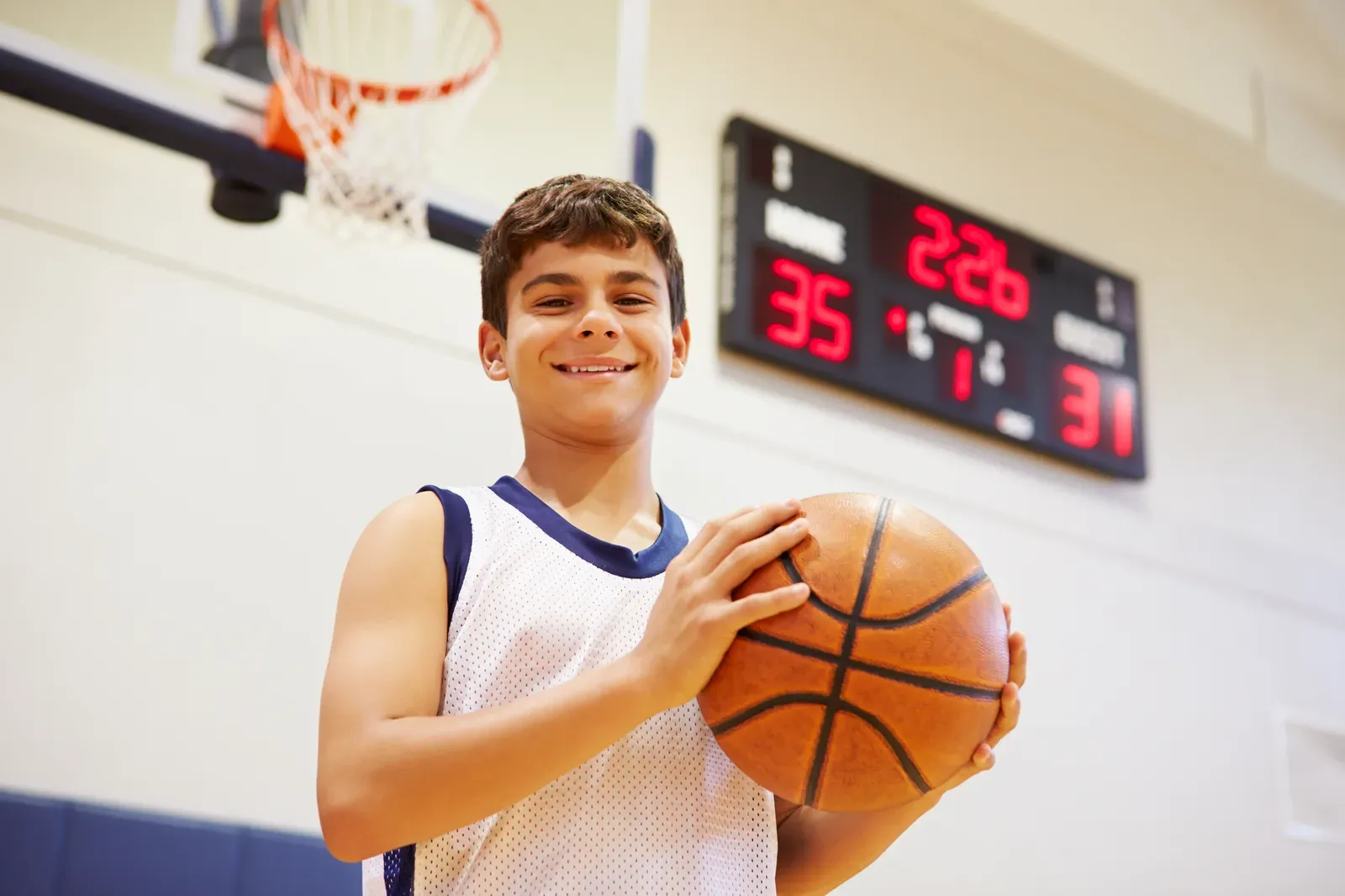
Basketball in Carmel is not a casual undertaking. The local high school was named the nation’s top athletic program for 2025-26, travel teams run nearly year-round, and the bar for making any roster keeps rising. Basketball strength training is how players raise their physical ceiling: a higher vertical, a stronger base in the post and on drives, and knees prepared for a thousand landings a season. Practice sharpens skill. The weight room, used correctly, upgrades the athlete the skill runs on.
The way to start is a free consultation, which includes a free InBody body composition scan, so the coach sees your athlete’s actual starting point, muscle, not just height and weight, before writing a program.
What basketball asks from a body
Strip the sport to its physical demands and a clear training menu appears. Jumping is force produced fast, which means leg and hip strength converted through explosive work. Landing is force absorbed, thousands of times a season, which makes controlled deceleration and landing mechanics some of the most protective work a player can do. Physical play in the lane rewards trunk and upper-body strength. And the fourth quarter rewards a conditioning base that keeps legs live when everyone else’s are gone.
A coached basketball block typically builds around:
- Lower-body strength. Squat and hinge patterns, plus heavy single-leg work, because drives, cuts, and rebounds happen off one leg more often than two.
- Explosive conversion. Jump variations, medicine ball work, and short sprint efforts that turn strength into pop.
- Landing and deceleration. Technique-first landing practice and controlled braking work, the quiet foundation of both quickness and knee health.
- Trunk and upper-body strength. Finishing through contact, holding post position, and ripping rebounds away are strength contests, and they are trainable.
None of this replaces skill work, and a good performance coach will say so plainly. It multiplies it.
In season and offseason are different jobs
The most common mistake Carmel basketball families make is treating training as a summer-only project. The offseason, roughly spring through fall for a winter sport, is for building: progressive strength work, jump development, higher volume. The season is for keeping: one or two short, sharp sessions a week that maintain strength and jump height through February. Players who lift in season arrive at tournament time stronger than opponents who stopped in November, and the full logic of that split is laid out in in-season versus offseason training.
For high schoolers, the summer block is the single biggest window, and it deserves its own plan; our summer strength training guide covers how to use it. College players home from May to August have a different assignment, usually a packet from their program’s strength staff, and that situation is covered in offseason training for college athletes.
Why one-on-one, and why a private suite
Basketball strength training fails most often for two reasons: technique nobody corrected, and schedules nobody accommodated. One-on-one coaching solves both. At FlexWerk in Carmel City Center, sessions run in a reserved private suite with a custom lifting rack, cable system, and dumbbells, a room where a coach can watch every rep of a trap bar pull and film a jump landing without a crowd around. Booking is by the hour, so training slots into the gaps a team calendar actually leaves: early mornings from 5 AM, post-practice evenings until 9 PM, weekend mornings from 7 AM.
More than 40 independent fitness professionals are based at FlexWerk, and FlexConnect matches your athlete with one by goals, schedule, and specialty, so you can ask directly for basketball or jump-training experience. The building sits at 885 Monon Green Blvd with garage parking a short walk away.
What a week actually looks like
In the offseason, the standard structure is two to three coached hours: a heavier lower-body strength day, an explosive day built around jump and sprint work, and, for athletes with the calendar room, a third session covering upper body and trunk. Skill work continues around it; the coach’s job is to place lifting where it will not sabotage shooting legs, which usually means hard leg days land after skill sessions or on separate days entirely.
In season, the same program compresses to one or two 30-to-45-minute maintenance sessions: a few heavy, low-volume sets to keep strength honest, brief jump work to keep pop, and out the door. The mistake to avoid is the November disappearance, because strength that took a summer to build erodes measurably over a four-month season left untended. The athletes who maintain arrive at sectionals stronger than they started the season, which is precisely when it pays.
Two cautions worth stating. For younger athletes, supervision is the whole game: pediatric sports medicine guidance supports strength training for teens when it is technique-first and properly supervised, which is precisely what a private one-on-one session provides. And any athlete training through knee, ankle, or back pain should see a physician or physical therapist first; a performance coach builds around clinical guidance, never over it.
Adult players are welcome in this conversation too. Rec league basketball is one of the most explosive things a 35-year-old does all week, and an untrained body is the usual reason it goes badly. The same strength, landing, and conditioning work applies, scaled to the athlete in front of the coach.
If your player’s effort has outgrown their physical tools, book the free consultation, get the baseline, and let a performance coach raise the ceiling the skills sit on.
Related questions
Should basketball players lift during the season?
Yes, less but not zero. One or two short maintenance sessions a week preserve the strength and jump height built in the offseason. Athletes who stop entirely in November are measurably weaker by February, when the games matter most.
Will strength training add inches to a vertical jump?
It is the most reliable path for untrained and moderately trained athletes, because jumping is a force output. No coach can promise a number, but stronger legs plus trained landing and jumping mechanics is how verticals actually move.
How do sessions fit around practice?
Sessions book by the hour, one-on-one, so they move with the team calendar. Before school, after practice, or on lighter days, between 5 AM and 9 PM on weekdays and 7 AM to 4 PM on weekends.