
Prehab Training Before Joint Replacement in Carmel: Arriving Strong on Surgery Day
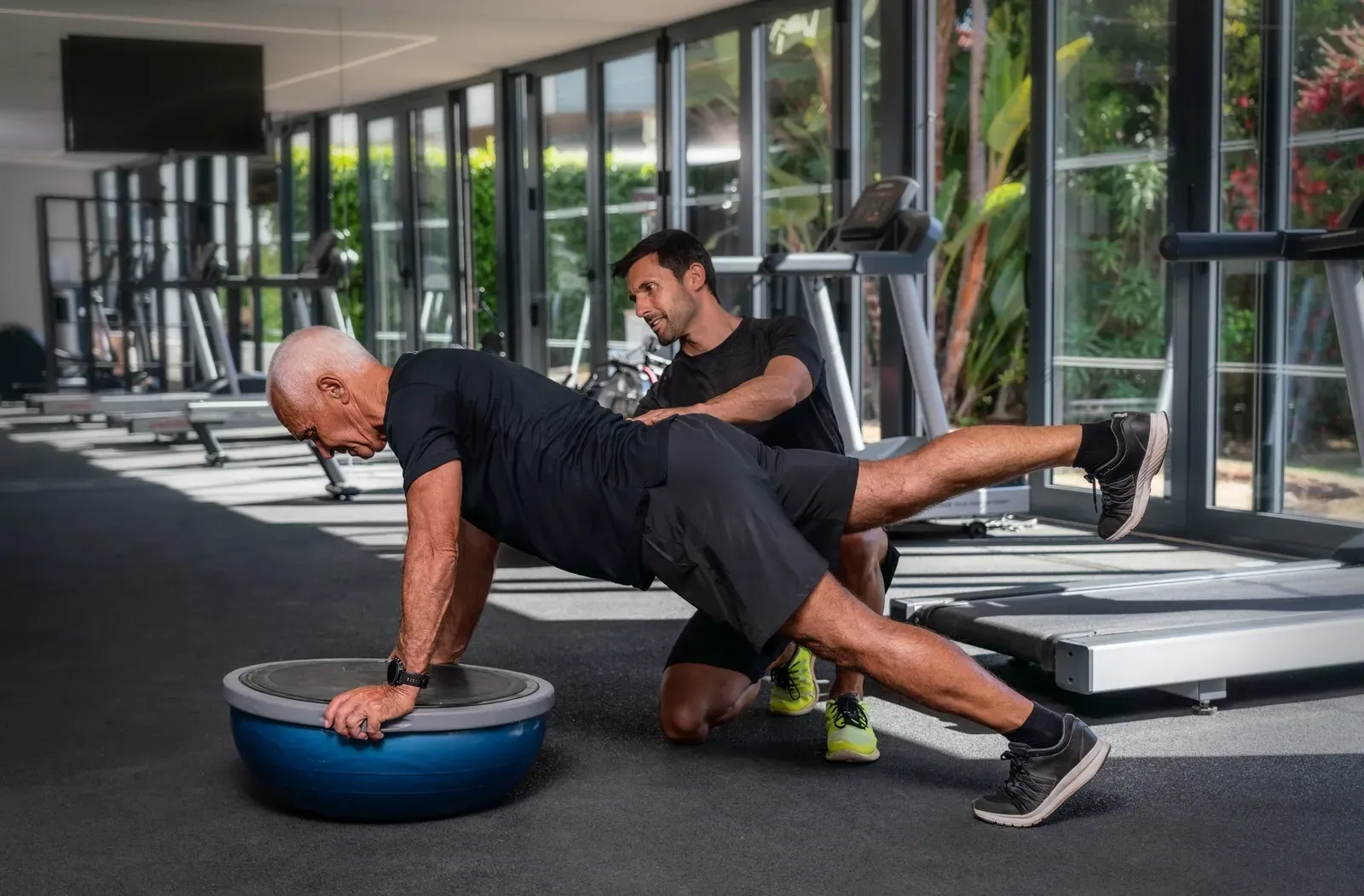
Joint replacement comes with a built-in waiting period, and what you do with those weeks is worth a deliberate plan. Prehab training before a joint replacement is surgeon-cleared conditioning: coached strength and mobility work that helps you arrive on surgery day as prepared as your joint currently allows. One rule sits above everything else on this page: your surgical team decides whether prehab is appropriate for you at all, and their guidance outranks anything a trainer, or an article, suggests. If surgery is on your calendar, the first conversation belongs with your surgeon, not with a gym.
Why surgical teams bring up prehab
Many orthopedic teams encourage patients to use the weeks before a knee or hip replacement rather than lose them, and the reasoning is practical. Surgery and early recovery place real demands on the rest of your body: getting out of chairs, managing stairs, handling a walker or cane, and moving through a house that suddenly feels much larger. A body that goes into the operation conditioned has a different starting point than one that spent the waiting period on the couch, worried and still.
Whether any of that changes your individual recovery is a question only your surgical team can answer, and an honest coach will not promise it. What a coach can offer is narrower and still worth having: a structured, supervised way to spend the pre-surgery window, built around your surgeon’s instructions instead of guesswork and internet routines. At FlexWerk in Carmel City Center, that starts with a free consultation that includes a free InBody body composition scan and an unhurried medical history conversation, where your surgeon’s guidance goes on the table before anything else does. Ask your clinical team one plain question first: is coached conditioning appropriate for me before this operation, and what should it avoid?
What surgeon-cleared prehab usually includes
Prehab is not an aggressive program, and it should never feel like one. Done properly it is patient, modest, and shaped by what your joint tolerates today:
- Strength around the joint, inside approved range. Supported squat and sit-to-stand patterns, gentle hinge work, and machine or cable variations chosen because your joint accepts them, not because they look impressive.
- The other side and the support system. The opposite leg, the hips, and the trunk pick up extra work after surgery. Training them now is often the least controversial part of the plan.
- Upper body and grip work. Chairs, stair rails, and walking aids all ask your arms to do real work in early recovery. Rows, presses, and carries prepare them for that job.
- General conditioning, as approved. Easy, conversational-effort cardio if your team agrees, using whatever your joint tolerates best.
- Habit groundwork. A sleep rhythm, protein basics, and the appointment habit itself, which matters more than any single exercise on this list.
Expect loads to stay conservative and progress in small steps. The goal is arriving prepared, not setting personal records the week before an operation.
What prehab is not
The boundaries matter more here than almost anywhere else in fitness, so it is worth naming them plainly:
- It is not treatment. Conditioning does not change your diagnosis, your imaging, or your surgical plan. Those belong entirely to your surgeon.
- It is not a substitute for physical therapy. If your team prescribes pre-surgical PT, that work comes first and a coach schedules around it. The division of labor is laid out in our guide to trainers versus physical therapists.
- It is not pain-through work. Pain that changes character or intensity goes back to your surgeon immediately, not into a workaround.
- It is not a promised outcome. Anyone promising a faster recovery or a better surgical result is selling past their scope. Walk away from that pitch.
The handoff around surgery day
A well-run prehab arrangement has a clear end date and a clear restart condition. Before the operation, your coach works from your surgical team’s written guidance and reports anything unusual back to you so you can raise it with them. After the operation, your physical therapist owns the process completely, and coached training pauses until you are discharged from PT and cleared to resume. There is no gray zone worth exploring here, and a coach who suggests otherwise is the wrong hire.
When clearance eventually comes, the return path looks like the one described in after physical therapy, what comes next, and the joint-specific stories continue in our guides to training after a knee replacement and returning after a hip replacement.
Where this happens in Carmel
Prehab benefits from privacy and predictability. Every session at FlexWerk runs in a private reserved room, which means no waiting for equipment on a joint that dislikes standing around, a coach within arm’s reach for anything balance-related, and a pace set by your body rather than by a crowd. Nobody watches you work around a joint that has good days and bad days, and nobody hurries you off a rack mid-set.
The logistics cooperate too. The building sits at 885 Monon Green Blvd at Carmel City Center, with garage parking a short walk from the door, and hours run Monday through Friday from 5 AM to 9 PM and weekends from 7 AM to 4 PM, so pre-surgery sessions can fit around work and a calendar that is suddenly full of appointments. Coach matching happens through FlexConnect, which pairs you with one of the more than 40 independent professionals working here based on your goals, schedule, and personality; experience with pre- and post-surgical clients is exactly the kind of requirement to name in that conversation.
If a knee or hip replacement is ahead of you, take one question to your next surgical appointment: is coached conditioning appropriate for me before this operation? If the answer is yes, bring the guidance you receive to the free consultation and put the waiting period to work.
Related questions
Do I need my surgeon's approval before starting prehab?
Yes. Prehab only makes sense inside your surgical team's guidance. Ask whether conditioning is appropriate before your operation, what it should avoid, and whether they want anything specific included, then bring that guidance to your coach in writing.
Will prehab make my recovery faster?
That is a question for your surgical team, and no trainer should promise you a recovery timeline. A coach's job is supervised conditioning within your surgeon's limits, not predictions about surgical outcomes.
What happens to training after the operation?
Your physical therapist owns the recovery phase, and coached training pauses until you are discharged from PT and explicitly cleared to resume. A good coach coordinates with that plan rather than competing with it.