
Pickleball Fitness Coach in Carmel: Train for the Game You Cannot Stop Playing
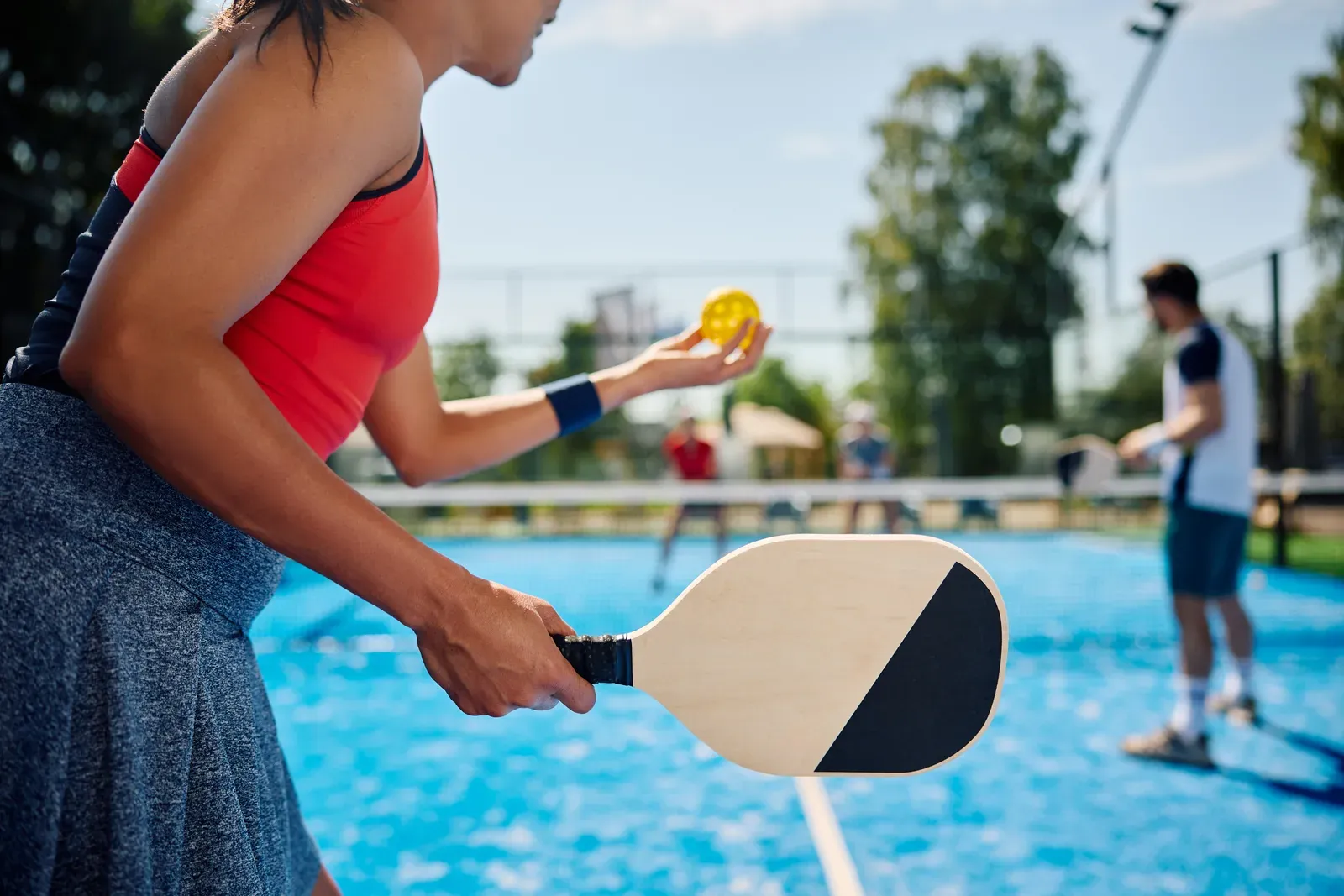
Pickleball has done something remarkable in Hamilton County: it has convinced thousands of adults who had drifted away from exercise to sprint, lunge, and pivot for hours a week. A pickleball fitness coach makes sure your body can cash the checks your enthusiasm is writing, building the leg strength, balance, and first-step quickness the game demands but never develops. In Carmel, that coaching runs one-on-one in a private training suite, minutes from the courts you already play on.
The way in is a free consultation with a free InBody body composition scan, so your coach knows exactly what they are working with before your first session.
Why the fastest-growing game needs a fitness coach
Pickleball looks gentle from the fence and plays fast from the baseline. Points are decided by sudden lunges to the kitchen line, quick lateral scrambles, and repeated explosive starts, precisely the movements most adults have not trained in decades. The game’s genius is that it gets people playing four, six, sometimes ten hours a week almost overnight. The catch is that playing volume rises far faster than physical capacity does.
That gap has consequences on both ends. On the performance end, the player with stronger legs and a quicker first step simply wins more of the close rallies; the specifics of what to build are covered in strength training for pickleball. On the durability end, the numbers deserve respect: per orthopedic clinic data, 91 percent of pickleball injuries occur in players 50 and older. That risk is trainable, and our guide to pickleball injury prevention over 50 covers it in depth. A coach addresses both ends with one program.
What coached pickleball fitness looks like
A pickleball block is short on machines and long on patterns the court will test:
- Leg strength you can trust. Squats, split squats, and step-downs build the base for every lunge to the kitchen line and every low volley you have to rise out of.
- Lateral quickness. Skater bounds, lateral lunges, and short shuffle work sharpen the side-to-side movement that straight-ahead cardio never touches.
- Balance and deceleration. The scrambles that decide close games are really tests of stopping strength. Single-leg work and controlled landing practice make those moments routine instead of risky.
- An engine for long court days. Easy aerobic work between sessions, on the Monon Trail if you like, keeps your legs fresh through a three-hour open play block.
Sessions run in a reserved FlexSpace at Carmel City Center: a private room with a lifting rack, cable system, and dumbbells where the door closes and the hour is yours. For adults learning strength training in their 50s and 60s, that privacy is frequently the deciding factor. Nobody is watching you learn, and your coach’s attention never leaves you.
Finding the right coach in Carmel
More than 40 independent fitness professionals train clients at FlexWerk, and FlexConnect matches you with one based on goals, schedule, personality, and specialty. Tell the matching conversation the truth: you are here for pickleball. Coaches who work with older adults and recreational athletes will build the program around your actual game schedule, and because everything books by the hour, training fits around morning open play, league nights, and travel.
Hours run 5 AM to 9 PM weekdays and 7 AM to 4 PM weekends. The location at 885 Monon Green Blvd sits in Carmel City Center with garage parking a short walk away, an easy pairing with the outdoor courts at Meadowlark Park in summer and the indoor season that keeps Hamilton County pickleball alive from November through March. Winter, when court time naturally thins, is the ideal building window; summer league season is when two short maintenance sessions protect what you built.
What a training week looks like
The structure most Carmel players sustain is simple enough to survive a busy retirement or a full work calendar:
- Two coached hours a week. One session biased toward strength, one toward movement and balance, booked at the same times each week so the habit sets. Many players pair a morning session with their regular open play day.
- Short homework between. Ten minutes of assigned mobility or balance work on play days, nothing heroic. Your coach writes it down; you check it off.
- Play as much as you like. The training exists to serve the pickleball, not to compete with it. In tournament weeks, the coach trims gym volume so your legs show up fresh.
- A re-scan every several weeks. The InBody re-test shows muscle and body composition moving, which for many returning exercisers is the first objective proof in years that their body still adapts.
The first month is mostly technique and baseline building. After that, loads progress steadily, and the work starts showing up on court in the places you notice: the third game of the morning, the lunge you get up from easily, the ball you now reach.
The honest pitch
Here is what a pickleball fitness coach will not do: promise you a tournament medal, swear you will never tweak a calf, or turn you into a 25-year-old. Here is what the work reliably delivers: legs that hold up through long play days, quicker movement to balls you currently wave at, better balance in the scrambles, and a body that recovers overnight instead of over three days. Players who also carry a racquet background will find nearly everything transfers; the same qualities anchor our tennis fitness training, and one program can serve both games.
One medical note that matters at every age: if you already have joint pain, heart or blood pressure history, or your physician’s attention for any reason, bring that guidance to your coach. Good training runs alongside your doctor’s advice, never around it.
If pickleball has become the best part of your week, protect it. Book the free consultation, get your baseline, and give the game a body built for it.
Related questions
I have not exercised in years. Can I still work with a pickleball fitness coach?
Yes, and you are the most common client. Pickleball is often the thing that makes people want to train again, and a coach starts from your current baseline, not from where the competitive players are.
Is pickleball itself enough exercise?
It is excellent activity, but it is not strength training. The game asks for lunges, pivots, and quick reactions without ever building them, which is why dedicated strength work changes how you play and how you feel afterward.
How quickly will training change my game?
No honest coach promises a timeline. Most players notice steadier legs and easier movement within the first several weeks, and the InBody re-scans track the underlying changes so progress is measured rather than guessed.