
Tennis Fitness Trainer in Carmel: Built for the Court, Not the Mirror
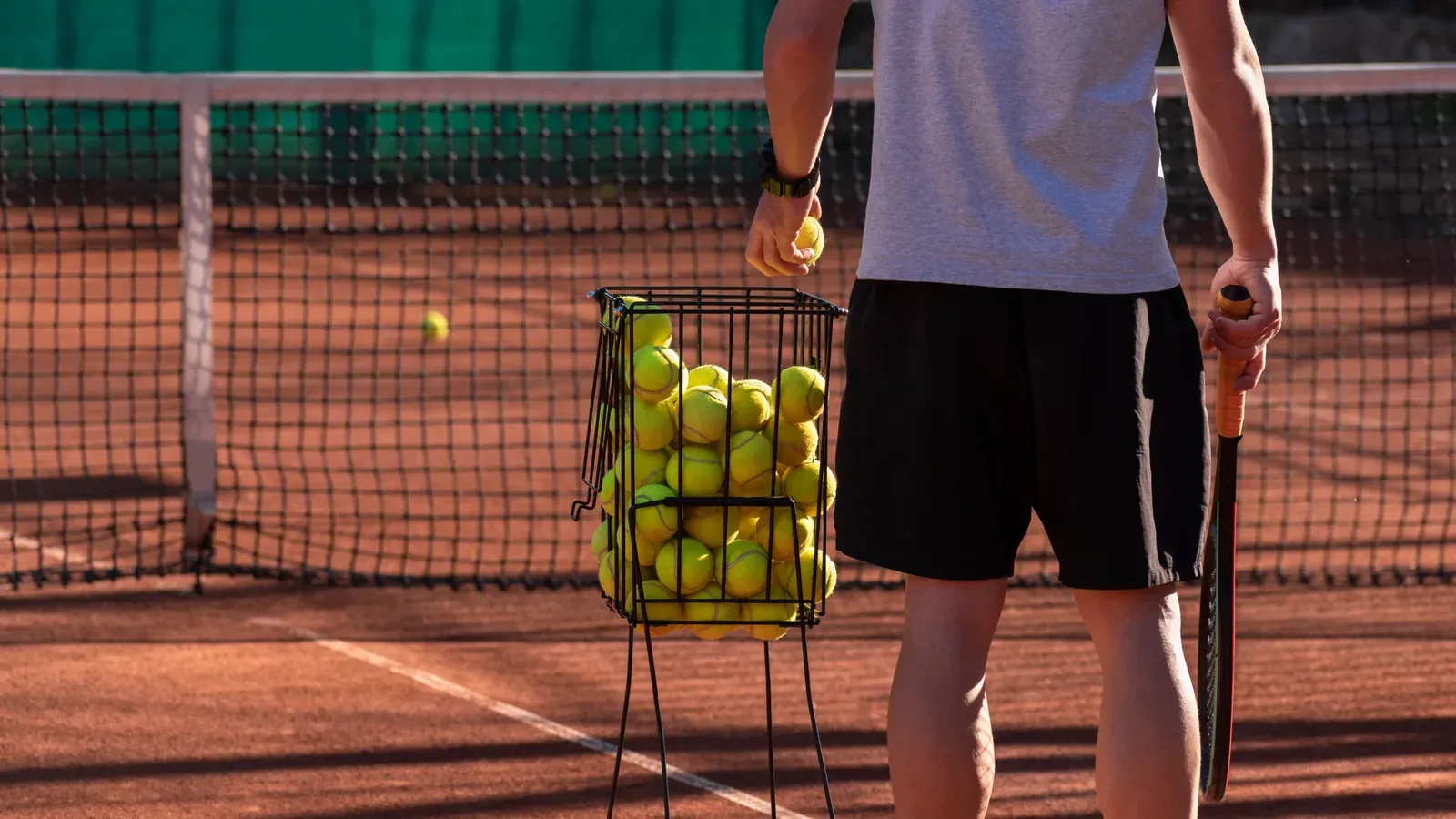
A tennis fitness trainer does the work your teaching pro cannot do from the other side of the net. Court speed, stroke power, and shoulder durability are built off court, and in Carmel you can build them one-on-one with a performance coach in a private training suite at City Center, steps from the Monon Trail. Lessons sharpen technique. This is about the body swinging the racquet.
The starting point is a free consultation that includes a free InBody body composition scan, so your coach begins with a measured baseline instead of a guess about your fitness.
What a tennis fitness trainer actually coaches
The job is court-specific physical development, not generic gym work with a tennis label. A good tennis block is organized around five demands the sport makes and never trains on its own:
- The first step. Most points at club level are decided by who reaches the ball with time to spare. Strength work in lateral patterns, split squats, and low skater bounds converts directly into that first explosive step.
- Change of direction. Tennis is a game of stopping as much as sprinting. Deceleration strength, the ability to plant, absorb, and push back the other way, is trainable and badly undertrained in most players.
- Rotational power. Serves and groundstrokes are rotation from the ground up. Cable chops, medicine ball throws, and hip-driven patterns restore pace that court time alone cannot add.
- Shoulder and elbow durability. Rowing variations, external rotation work, and gradual overhead loading build the tissue capacity a serve-heavy week demands. If a shoulder or elbow already hurts, that conversation belongs with your physician or physical therapist before it belongs in a program.
- The repeat engine. Long matches reward players who recover between points. An aerobic base plus short intervals keeps your legs honest in a third set.
If you are past 40, the priorities shift in specific ways, and we cover that in detail in tennis fitness over 40. This page is about the coaching itself: who does it, how it runs, and where it fits in a Carmel tennis year.
Who hires one in Carmel
Three groups show up most. League and club players who have plateaued and realize more court time is not moving them anymore. High school players competing for spots in a district whose athletic programs rank among the best in the country, where the physical bar for varsity tennis is real. And returning adults, players coming back after years away who want their body rebuilt before their schedule fills with matches.
What they share is a common discovery: tennis exposes fitness gaps faster than almost any recreational sport, because every weakness has a scoreboard. Slow first step, lost games. Tired legs, dropped third sets. Undertrained shoulder, a serve you start protecting. A coach closes those gaps deliberately instead of hoping another clinic will.
How the coaching works at FlexWerk
Sessions run one-on-one in a reserved private suite at Carmel City Center, 885 Monon Green Blvd, with garage parking a short walk away. The room is yours for the hour: a custom lifting rack, cable system, and dumbbells, your music, no waiting for equipment between supersets, and nobody watching you learn a new movement pattern. For rotational and plyometric work, that privacy is more than comfort. Skater bounds and medicine ball throws are awkward to train on a crowded floor and easy to coach properly behind a closed door.
More than 40 independent fitness professionals run their businesses at FlexWerk, and FlexConnect matches you with one based on your goals, schedule, and personality, so you can ask specifically for racquet-sport or athletic-performance experience. Hours run 5 AM to 9 PM on weekdays and 7 AM to 4 PM on weekends, which is how training fits before work or between school pickup and evening clinics.
A Carmel tennis year, planned backward
Central Indiana hands tennis players a natural periodization calendar. January highs around 33 degrees push the game indoors and shrink most players’ court volume, which makes November through March the obvious building window: heavier strength work, power development, and shoulder capacity, exactly when match play is lightest. Spring and summer flip the ratio. League season and humid 90-degree outdoor matches call for two short maintenance sessions that keep qualities topped up without stealing match legs. The logic of that split, build in the offseason, keep in season, is the same for every sport, and it is laid out in in-season versus offseason training.
Many Carmel players now split racquet time with pickleball, and the off-court program transfers almost wholesale between the two games. If that is you, the coaching case is covered in our pickleball fitness coach guide, and one program can serve both.
One honest note: a fitness coach cannot promise you a league title or an injury-free season, and you should be suspicious of anyone who does. What coached off-court training reliably delivers is a body with more speed, more pace, and more durability than the one you are currently asking trained performances from.
What the first month looks like
Week one is assessment and technique: your baseline scan on record, movement patterns screened, and the basic strength lifts taught properly, because everything after depends on them. Weeks two through four settle into the working rhythm, two sessions a week, one biased toward strength, one toward power and movement, with loads progressing as technique earns them. Doubles players get one adjustment worth naming: shorter points but just as many explosive starts, and a net game that leans even harder on shoulder durability, so the emphasis shifts rather than the volume. By the end of the month you and your coach both know exactly what you are building and why, and the re-test date is already on the calendar.
If your game has stopped improving at the rate your effort deserves, book the free consultation, get the baseline scan, and let a performance coach build the player underneath the strokes.
Related questions
Do I need to be a competitive player to hire a tennis fitness trainer?
No. League and club players often see the biggest gains, because they have the most untrained headroom. If you play twice a week and want to move better and hurt less, you are exactly the person this work is for.
Will off-court training change my strokes?
Your teaching pro owns your technique. A fitness coach builds the strength, speed, and shoulder durability underneath the strokes, so the two roles compound instead of competing.
How many sessions a week does tennis fitness take?
Two one-hour sessions is the standard structure: one strength-focused, one power and movement focused, placed on non-match days. In league season the volume drops so your legs stay fresh for matches.