
Pickleball Injury Prevention for Players Over 50
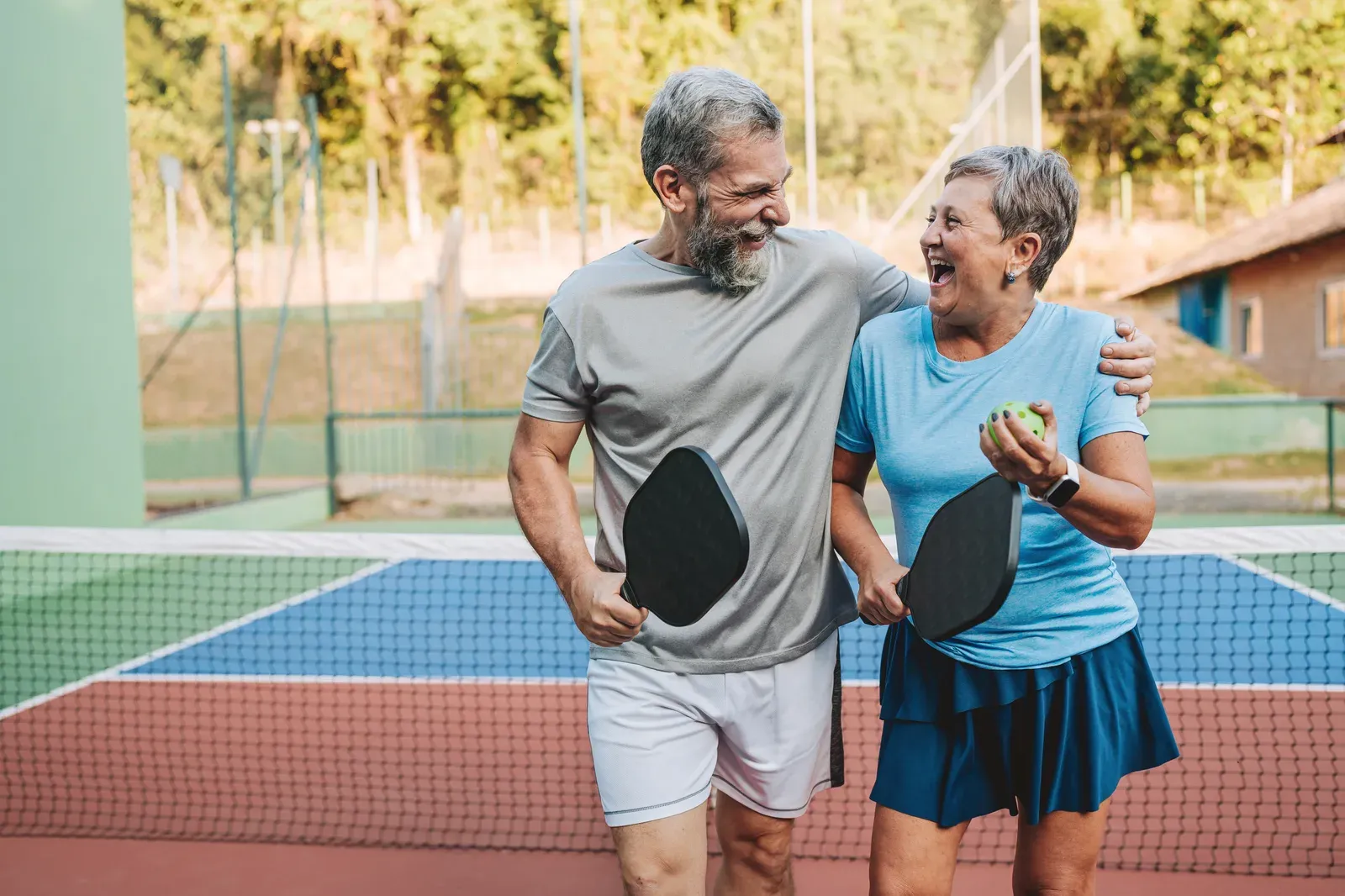
Pickleball is booming across Hamilton County, and so are its trips to the orthopedist: per orthopedic clinic data, 91% of pickleball injuries occur in players 50 and older, not because the sport is dangerous, but because it asks for sudden lunges, quick pivots, and fast reactions from bodies that often have not trained those abilities in years. The honest fix is not playing less. It is building the strength, balance, and tissue resilience that let you play more.
With 24/7 DINK opening in Fishers in February 2025 with 20 indoor courts, the largest facility in central Indiana, plus courts at Pickle on Penn, Meadowlark Park, and the Monon Community Center, local players can now play year round. Your body should be ready for that schedule, and a free consultation with a coach is the simplest place to start.
Why players over 50 get hurt more
The injuries cluster over 50 because the sport’s demands and the body’s quiet declines meet head-on. From midlife onward, muscle mass, tendon elasticity, bone density, and reaction speed all drift downward unless something in your week actively trains them. Pickleball then asks for exactly those qualities: explosive first steps, deceleration at the kitchen line, overhead reaches, and the occasional stumble you have to catch.
The common injuries follow that pattern. Calf and Achilles strains from sudden pushes off a cold leg. Ankle sprains from lateral lunges. Wrist and shoulder injuries from falls, which matter more when bone density has slipped. Low back and knee complaints from repeated bending and twisting. None of this is a reason to quit. It is a job description for your training.
What actually lowers your risk
Strength training reduces injury risk; it does not eliminate it, and you should be suspicious of anyone who says otherwise. That said, the evidence and coaching experience point at a consistent short list:
- Leg strength. Squats, split squats, and step-downs build the capacity to lunge, stop, and get up from the ground. Strong legs are the single best insurance the sport allows.
- Calf and Achilles capacity. Calf raises, done slowly and loaded progressively, prepare the tissue that pickleball injures most often in this age group.
- Balance and deceleration. Single-leg work and controlled lateral drills train you to catch yourself, which is what actually happens in the split second before most falls.
- Bone loading. Progressive resistance training is one of the best-studied ways to support bone density, which changes what a fall costs you. The full picture is in strength training and bone density.
- A real warm-up. Five minutes of movement before the first game, not a stretch and a wave. Cold calves write most of the sad stories.
If you have existing joint pain, osteoporosis, or a heart condition, loop in your physician before ramping anything up. Coaches build around medical guidance; they do not replace it.
A weekly template for court longevity
Two off-court sessions a week fit around almost any playing schedule. A typical structure for a player over 50 looks like this: one session focused on total-body strength, one focused on power, balance, and movement quality, both about an hour, both leaving you fresh enough to play the next day. Court time itself stays fun. The gym handles the homework the sport quietly assigns.
If you are deep in a league or ladder, put the heavier session early in the week and keep the movement session at least a day away from your biggest playing day. Recovery is part of the template too: over 50, an extra rest day is often the difference between training that builds you up and training that simply piles onto court fatigue.
This is also where private coaching earns its fee for this audience. At FlexWerk, the consultation starts with a free InBody body composition scan and an honest conversation about injury history, medications, and how much you play. Then you train one on one in a private suite, with a coach watching every rep, rather than guessing at form on a crowded gym floor. For players who have not lifted in decades, or ever, that supervision is the difference between training that protects you and training that becomes its own injury story.
Getting stronger helps your game too
The same qualities that lower your risk also win rallies, and that is a happy accident worth knowing about. Stronger legs get you to more balls. Better balance keeps you in points you used to concede. Trained rotation puts more pace on your drives. This article stays focused on keeping you healthy; the performance side, what strength training does for your quickness, power, and endurance on court, is covered separately in does strength training improve your pickleball game.
The point is that nothing here is eat-your-vegetables training you endure so you can go have fun later. It shows up in the fun directly.
Play for decades, not seasons
The players still competing at 70 are rarely the ones who were most gifted at 50. They are the ones who treated their bodies as the equipment the sport runs on and maintained accordingly. Central Indiana now has the courts, the indoor winters at 24/7 DINK, the summer mornings at Meadowlark, and a community that keeps growing. Two hours a week of coached strength work is a small subscription fee for twenty more years of it.
If you want a program built around your history, your doctor’s guidance, and your playing schedule, book the free consultation and bring your paddle hand ready to talk.
Related questions
Can training really keep me from getting hurt playing pickleball?
No training plan can prevent every injury, and anyone promising that is overselling. What strength, balance, and calf work reliably do is reduce your risk and leave you more resilient when awkward moments happen on court.
How much off-court training does a pickleball player over 50 need?
Two sessions a week is the common recommendation: enough to build leg strength, calf capacity, and balance without cutting into your court days.
Should I see a doctor before ramping up my pickleball schedule?
If you have heart, bone, or joint conditions, or you are returning to sport after years away, a conversation with your physician is the right first step. Bring their guidance to your coach and the program gets built around it.