
Personal Trainer for Women Over 60: What to Look For
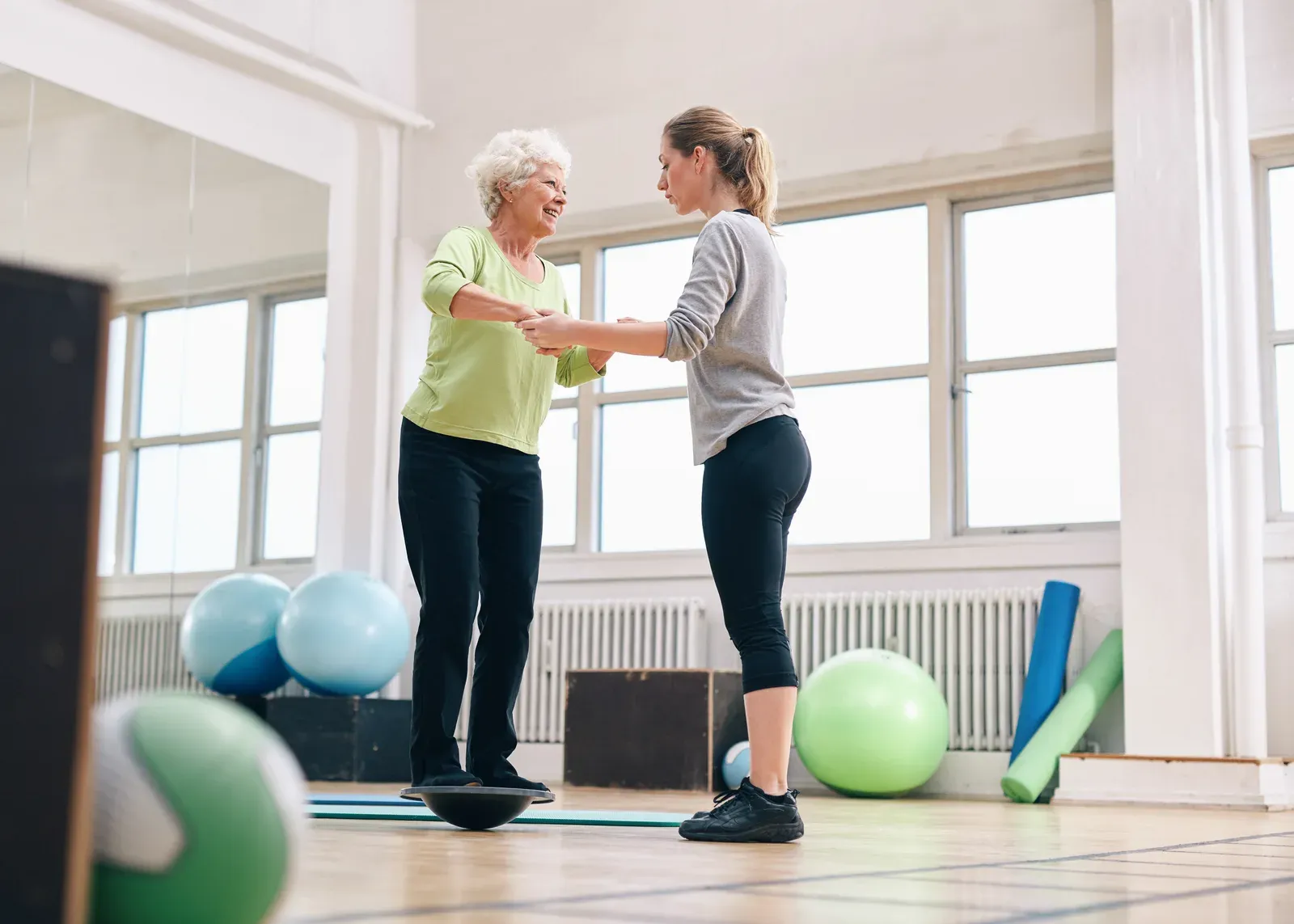
The right personal trainer for a woman over 60 is a coach who begins with a written assessment, builds around your clinician’s guidance and raises the load in small, recorded steps, and who explains every exercise in plain language. Credentials and a warm manner matter, but what protects you and moves you forward is process. This page walks through the qualities to look for, what a first meeting should cover and how progressions are kept safe for bones and joints.
Six qualities worth checking before you book
Treat these as an interview checklist. A coach who is good with this age group will answer each without hesitation.
- They ask about your history first. Surgeries, falls, medications, bone density results and what you have done for exercise in the last year should come up before any workout does.
- They assess before they prescribe. Expect a few simple tests: standing up from a chair, a short walk, a balance hold and a look at how you move your shoulders and hips.
- They coordinate with your clinicians. A coach should be glad to receive a note from your physician or physical therapist, and should not claim to treat anything.
- They teach, and do not just count reps. You should leave understanding why a movement is there and what it should feel like.
- They write it down. Loads, reps and how you felt belong in a log you can see.
- They accept a no. If an exercise bothers a joint, you should be able to say so and get a substitute without a speech.
Indiana does not license personal trainers, so the screening is yours to do. The credential guide shows how to check what a coach holds.
What the first assessment should include
A useful first session is mostly measurement and conversation. It commonly includes a sit-to-stand count over thirty seconds, a grip reading if equipment allows, a balance test with eyes open and then closed near a support, and a walking observation. These give you a baseline you can retest every three months, and the grip strength by age chart and balance tests page show commonly cited reference points.
Notes from the coach should record anything that hurts, anything that is stiff and what you want to do more easily: stairs, a grandchild, a garden bed, a trip.
How progressions stay bone-safe
Bone responds to load, so the goal is steady, controlled resistance. Several rules keep that safe:
- Change one variable at a time. Add weight or reps or range, but not all three in a week.
- Prefer controlled lifts to ballistic ones. Squats to a box, supported rows and cable presses before jumps or quick twists.
- Respect spinal positions. If a scan shows low bone density, ask your physician which forward bending and twisting under load to avoid. A coach builds around the answer and does not make the call.
- Train balance on purpose. Single-leg stands near a rail, heel-to-toe walking and slow step-ups protect against falls.
- Plan recovery. Two to three days between sessions that load the same joints.
For the evidence behind loading and bone, the bone density training page explains what lifting does and does not do.
Questions to ask your physician first
Before the first session, ask:
- Are there movements, heart rates or blood pressure limits I should respect?
- Does my bone density result change which lifts are appropriate?
- Are my medications likely to cause dizziness or low energy during exercise?
- Which symptoms mean I should stop and call you?
Red flags during the search
Some signals are reason enough to keep looking. Be wary of a coach who promises a dramatic body change within weeks, who dismisses your clinician’s advice, who pushes supplements or who hands every client the same printed routine. Be wary too of a plan that has you doing floor exercises you cannot get up from, or high-impact moves with no build-up. Training at this stage should feel progressively easier to start and slightly harder to finish.
Equally, watch for the opposite: a coach so cautious that nothing ever gets heavier. Muscle and bone respond to challenge, and a plan of pink dumbbells and chair stretches alone will not do much. The right answer is a ladder with small rungs, each one climbed only after the last feels solid.
What progress looks like at 60 and beyond
Gains in this decade often show in daily life before the mirror. Stairs feel shorter, a bag of groceries stops being a negotiation, getting up from a low couch needs less push and a walk on uneven ground feels steadier. Track those, along with the baseline tests, and you will have a clear record of what the plan is doing. Strength usually rises within the first eight to twelve weeks, and balance improves as the legs get stronger and the practice adds up.
Where FlexWerk fits
FlexWerk in Carmel offers private training suites where independent coaches work by appointment. For some women over 60, the appeal is a quiet room and no audience while learning new movements. Each coach sets their own approach and terms, so ask how they work with this age group and whether they have a suite arrangement that suits you. The free consultation includes a free InBody scan, so you start with a measured picture of muscle and fat, and the suites have a cable system and dumbbells that allow small steps in load.
A coach is a good match when you leave the first meeting feeling heard, informed and a little challenged. The personal trainer over 50 page explains how coaching works at FlexWerk, and the women’s strength guide covers why the training priorities change at this stage. When you are ready to compare, book the free consultation and bring your clinician’s notes.
A first month that builds confidence
A sensible first month is not heroic. Week one is assessment and learning three or four patterns: a sit-to-stand, a hip hinge with a light weight, a supported row and a push from the wall or an incline. Weeks two and three repeat those patterns with slightly more load and add balance work. Week four rechecks the baseline tests and sets the next block. Soreness that fades within two days is normal, and sharp or joint pain is a reason to pause and tell your coach.
Related questions
Do I need my doctor's approval before I hire a trainer at 60?
It is wise, and a good coach will ask for it if you have heart, blood pressure, bone or joint concerns. Bring your physician's notes and any restrictions to the first meeting so the plan starts inside them.
Is lifting weights safe with low bone density?
Controlled, progressive loading is commonly recommended to support bone, but which movements are right depends on your scan results and clinician. Ask which spinal positions to avoid and let your coach build around the answer.
How many sessions a week does a woman over 60 need?
Two coached strength sessions a week, with walking on other days, is a common starting pattern. Some women add a third lighter session once recovery is steady.