
Personal Training for Veterans in Carmel: Structure, Standards, Privacy
For years, someone else handled the hardest parts of fitness for you: the schedule existed, the standard was published, the workout was planned, and showing up was simply what happened at that hour. The hardest part of staying fit after the military is rarely effort; it is that the structure organizing the effort disappeared on your last day in uniform, and civilian gyms hand you a key fob where a system used to be. Rebuilding that system is a solvable problem, and for veterans in Carmel it starts with a free consultation that treats structure, not motivation, as the missing piece.
Structure is the actual product
A good coach sells the same four things the service gave away for free. A program someone else designed, so the thinking is done before you arrive. A standing appointment, so training happens at an hour instead of at a mood. Benchmarks that get tested, so progress is measured rather than felt. And a person who notices when you do not show, which is quietly the strongest accountability mechanism ever invented. Veterans tend to respond to this arrangement immediately, not because of any stereotype about discipline, but because it is the operating system they already ran on for years. The difference is that this time the standards are yours.
Your standard, not the old test
Here is the honest conversation a good coach will have in week one: the fastest way to end a comeback is to open it at your service-era numbers. The body that passed fitness tests years ago and the body reading this page are different bodies, and pretending otherwise is how week two becomes a strained back and a quiet exit. The working method for closing that gap without drama is covered in restarting after years off: honest baseline, conservative opening loads, progress earned weekly.
What happens after the baseline is a genuine fork, and both paths are legitimate. Some veterans want the test-day culture back: numbers on a whiteboard, benchmarks with dates attached, a coach who holds the clipboard and expects the standard met. Others spent years being measured and are done with it; they want strength for the second career, the kids, and the decades ahead, with no scoreboard in sight. A one-on-one coach programs either version. What you do not get is someone else’s default; the standard is set to the life you are actually building.
Adaptive needs, without spectacle
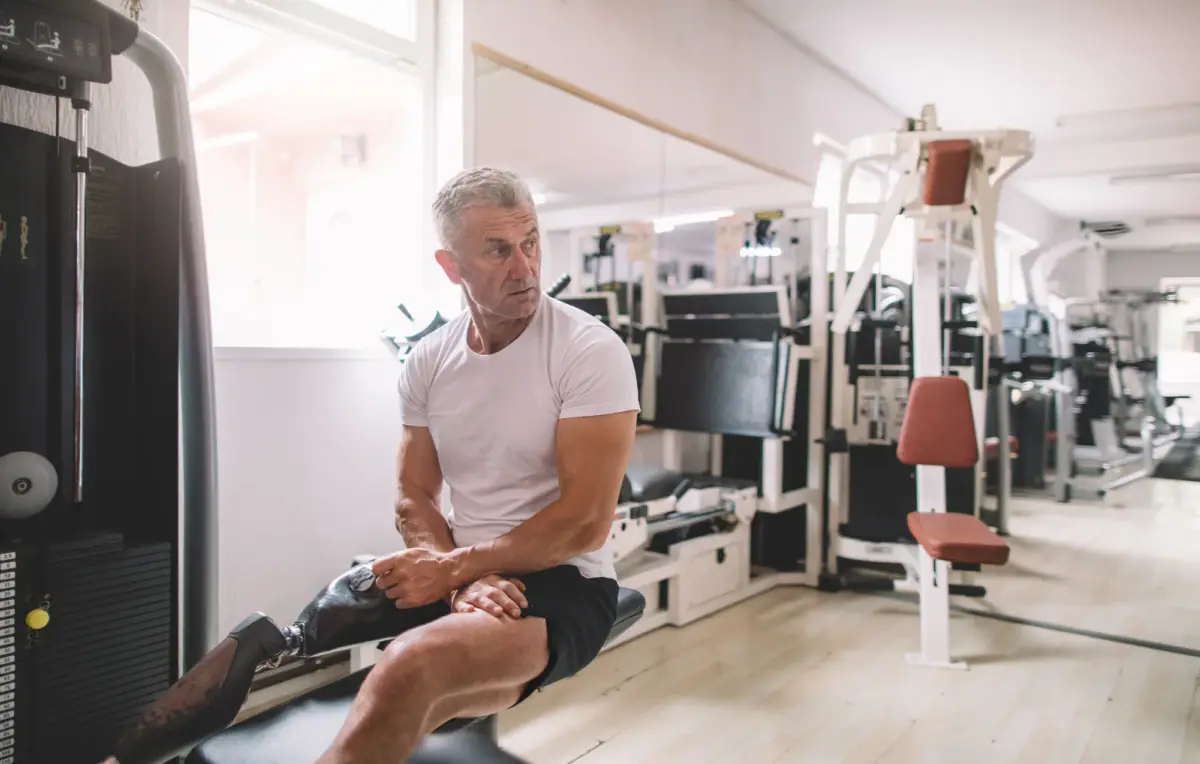
Service leaves marks, and a program should account for them without making a production of it. For many veterans that means the ordinary inventory, a back that logged years of loaded miles, knees and shoulders with stories attached, and a coach handles those the way any good coach handles a history: restrictions from your VA or civilian providers stay in force, the clinical questions stay with the clinicians, and the training works around what needs working around. Some veterans carry bigger adaptations than a cranky knee, and the same matter-of-fact engineering applies: seated and single-side variations, equipment set up before you walk in, and the same coach in the same room every session so nothing ever needs re-explaining to a stranger. The full picture of that kind of programming lives in adaptive personal training in Carmel. None of it is remarkable in a private room, which is precisely the point.
Camaraderie and privacy: the honest trade
A private training suite is the opposite of unit PT, and it is worth being straight about what that trade gives and takes. What it gives: a room reserved for you, a coach’s undivided attention, your music, and nobody between you and the work, no small talk, no audience, and no strangers asking about your service. For a lot of veterans, that privacy is not a perk; it is the condition under which they will actually train.
What it takes: the shared-effort energy some people genuinely ran on. If that is the part you miss, there are real answers rather than substitutes. Clients of trainers receive free guest access, so a fellow veteran, a spouse, or a buddy from work can train alongside you, and small group personal training rebuilds the crew dynamic at a size where the coaching still lands. Plenty of people run a hybrid: solo sessions for the serious work, a partner session for the shared kind.
The Carmel logistics
The details cooperate with either version of your routine. The building sits at 885 Monon Green Blvd in Carmel City Center, with garage parking a short, weatherproof walk away. If the early wake-up never left you, weekday doors open at 5 AM; if you buried it gladly, evenings run to 9 PM and weekends 7 AM to 4 PM. The Monon Trail starts steps from the entrance, ready for weighted walks, easy miles, or conditioning days between sessions. Coach matching runs through FlexConnect across the building’s independent professionals, weighing goals, schedule, personality, and specialties; if it matters that your coach gets where you are coming from, whether that means adaptive experience, a direct communication style, or comfort with performance standards, name it in the matching conversation and interview for it. The same appointment-based structure serves the police, fire, and EMS crowd, as the first responder fitness page lays out, and the two audiences tend to want the same two things: competence and zero wasted time.
The consultation is free, includes a free InBody body composition scan for the honest baseline, and your first session is free as well, so the whole system can be evaluated before a dollar changes hands. The structure that used to be issued to you can be rebuilt on your own terms; book the consultation and start with the baseline.
Related questions
I have not trained seriously since I got out. Where do I start?
Start from an honest baseline instead of your old numbers. A free consultation with a body composition scan establishes where you are now, and the program builds forward from there rather than backward from memory.
Can a trainer work around a service-connected injury?
Yes, inside your clinicians' guidance. Bring whatever your VA or civilian providers have told you, and a coach programs around the restriction rather than through it. Diagnosis and treatment stay with your care team.
Can I train with another veteran or my spouse?
Clients of trainers receive free guest access, so bringing a training partner is straightforward. Small group formats exist as well if shared effort is the part you miss most.