
Adaptive Personal Training in Carmel: Coaching Built Around Your Body
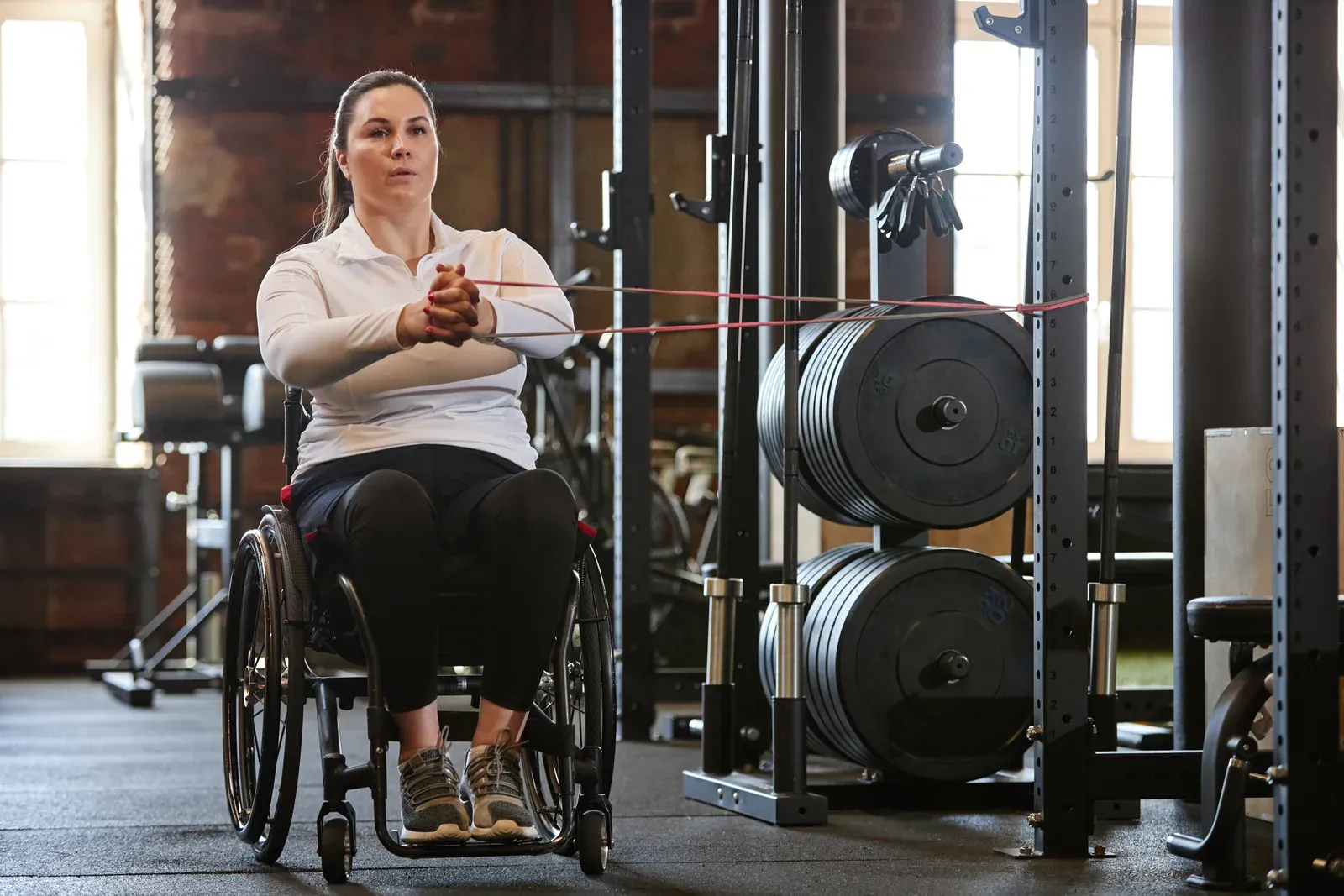
Adaptive personal training exists for everyone the standard gym script skips: wheelchair users, people with limb difference, anyone managing MS, Parkinson’s, stroke recovery, or a chronic condition that makes cookie-cutter programming useless. In Carmel, adaptive one-on-one coaching means a private reserved suite, a coach who programs around your body instead of a template, and a working relationship with your physician and physical therapist rather than a workaround of them. Strength, capacity, and independence are trainable in nearly every body; the craft is in how.
The right first step is a free consultation: your goals, your medical context, your equipment needs, and a coach match built on all three.
Coach scope, clinical scope, and why the line is a feature
An adaptive trainer is not a physical therapist and should never pretend to be. The division of labor is clean: your physician and PT own diagnosis, treatment, restrictions, and rehab; your coach owns general strength and conditioning inside those lines. The best adaptive coaches actively want your PT’s input, will follow a home program’s spirit into the gym, and send you back to your clinical team the moment something falls outside coaching scope.
If you are finishing a course of rehab, this is the natural next chapter, and the handoff question is covered in after physical therapy, what’s next. If you are starting from a stable chronic condition, bring your physician’s guidance to the consultation and let the program be built inside it.
What adaptive programming actually looks like
The principles are ordinary strength training; the engineering is personal. Every program starts from an honest inventory: what moves well, what needs engineering, and what the next three months should make easier in daily life.
- Seated and supported strength: cable systems and dumbbells adapt to seated positions naturally, which makes pressing, pulling, and rotational work fully available from a chair.
- Asymmetric programming: limb difference and one-sided conditions call for single-side loading, grip adaptations, and honest attention to the strong side as well as the affected one.
- Capacity for real life: transfers, carries, pushing endurance, floor-to-chair strength, balance where applicable. Goals come from your life, not a template.
- Progression that respects variability: conditions fluctuate. Good coaching autoregulates, trains the body that shows up that day, and tracks trend lines instead of forcing linear plans.
Progress gets measured, not guessed at: the consultation includes a free InBody body composition scan where appropriate, and re-tests over time show muscle and composition changes that day-to-day feel can hide. No honest coach promises outcomes or timelines for any body, adaptive or otherwise; what you get is a baseline, a plan, and evidence.
Why the private suite matters for adaptive work
Commercial gym floors are built for the median body: tight equipment spacing, machines that assume standing transfers, crowds to navigate, and an audience for every workaround you have engineered. A reserved private suite at FlexWerk in Carmel City Center removes the floor entirely. The room is yours for the hour: rack, cable system, and dumbbells with no one else using them, open floor space arranged for you, your music and lighting, a coach’s full attention, and a door.
Logistics are part of accessibility, and the access details are answered plainly here: the location sits at 885 Monon Green Blvd in Carmel City Center with garage parking a short walk away, and hours run 5 AM to 9 PM weekdays, 7 AM to 4 PM weekends, so you can book around energy patterns, medication schedules, and the times you prefer to travel. Because coaching is appointment-based, session times can track energy cycles and treatment calendars instead of a fixed class grid, and the same coach in the same room each visit means nothing gets re-explained to a rotating cast of staff. The Monon Trail, steps away, is one of the flattest, most accessible stretches of trail in Hamilton County when outdoor work fits the plan.
Finding a coach with the right experience
Adaptive experience is a specialty, and you should get to require it. More than 40 independent fitness professionals run their businesses at FlexWerk Carmel, and FlexConnect matches on goals, schedule, personality, and specialties: name your condition or your equipment reality, ask directly what experience a prospective coach has with it, and expect straight answers. The consultation costs nothing, the first session is free, and rematching is normal if the fit is not right.
Questions worth asking an adaptive coach
- Who have you trained with a situation like mine, and what changed in their program over six months?
- How will you communicate with my PT or physician, and what do you want from them before we start?
- What does session one look like if my energy shows up at half strength?
- How do we measure progress if standard tests do not fit my body?
- What happens when something falls outside your scope?
Straight, specific answers are the green light. Vague reassurance, promised outcomes, or any hint of medical advice are the exit cue. The consultation is free precisely so this interview costs you nothing, and it is entirely reasonable to interview more than one coach before choosing.
If a standard gym has ever made you feel like an edge case, the consultation is where that stops: bring your goals and your clinical team’s guidance, and get a program built for the body you actually train in.
Related questions
Is adaptive training the same as physical therapy?
No. Physical therapy treats and rehabilitates under a clinical license; adaptive training builds general strength and fitness within the guidance your clinical team provides. Many people move from PT into adaptive training, and the two work best in communication.
What conditions can an adaptive trainer work with?
Coaches commonly work with wheelchair users, limb difference, MS, Parkinson's, stroke recovery, and chronic conditions like arthritis or diabetes, always within physician guidance. The consultation is where you find out whether a specific coach's experience fits your situation.
Do I need a doctor's clearance to start?
If you have a significant medical condition or are coming off surgery or rehab, yes, talk to your physician or PT first. A good adaptive coach will ask about that conversation and program inside its boundaries, not around them.