
Personal Trainer for Osteoporosis in Carmel: Lifting Safely After a Diagnosis
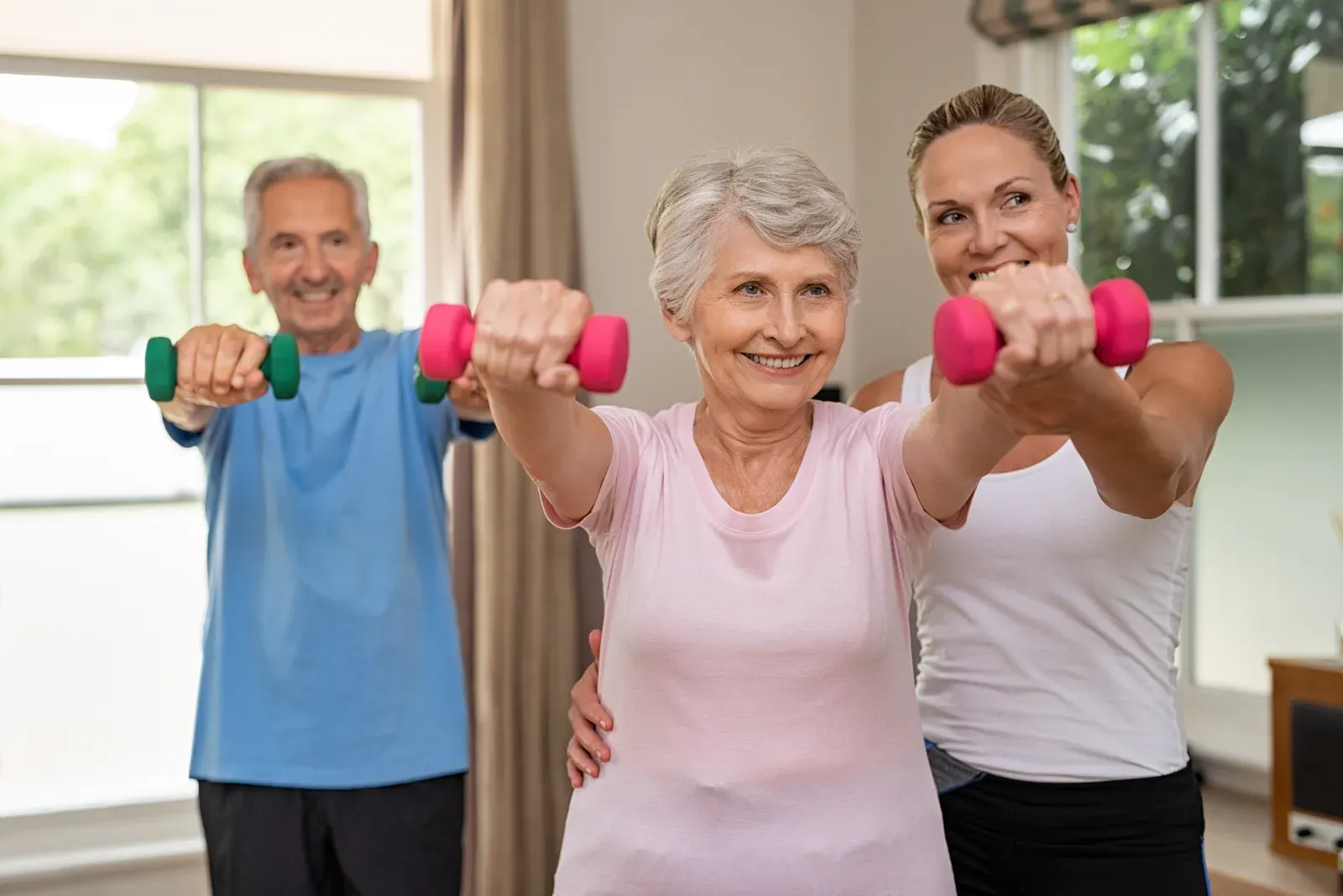
An osteoporosis diagnosis changes how you should train, not whether you should. The right personal trainer for osteoporosis in Carmel works alongside your physician, loads your bones progressively inside the limits your clinical team sets, and steers around the movements your care team flags, most commonly loaded spinal flexion. Done that way, strength training is one of the few tools that asks bone to adapt at all, which is exactly why it deserves a careful, coached rollout instead of a generic workout plan.
Your clinical team leads, your coach follows
A personal trainer does not diagnose osteoporosis, treat it, or interpret your bone density results. That work belongs to your physician. What a good coach does is take the guidance your clinical team provides, often a short list of movements to emphasize and movements to avoid, and turn it into a progressive program you actually follow through on. Before anything gets loaded, ask your doctor one plain question: is progressive resistance training appropriate for me, and is there anything I should not do? Bring the answer with you.
At FlexWerk in Carmel City Center, that conversation starts at the free consultation, which includes a free InBody body composition scan and an unhurried medical history conversation. Nothing goes on the bar until your clearance and your limits are on the table, and if your physician has also referred you to a physical therapist, the coach’s job is to stay in step with that plan. Training support runs alongside your clinical team, never instead of it.
What bone-safe strength training includes
Bone adapts to load the way muscle does, only more slowly, which is why the program must be progressive and must continue for months rather than weeks. The full science case lives in our strength training and bone density guide. The short version of what a coached, clearance-respecting program usually includes:
- Lower body strength patterns. Supported squat and hinge variations with dumbbells and the room’s lifting rack, taught with a neutral spine and progressed in small, patient steps.
- Upper body pushing and pulling. Presses, rows, and cable work that load the wrist, shoulder, and spine predictably, since those are the areas people worry about most.
- Loaded carries. Walking with weight held at your sides is one of the most joint-friendly ways to load the whole skeleton at once.
- Balance and fall prevention work. Most fractures require a fall, so balance training is not a side dish here, it is half the meal. Our fall prevention guide lays out that progression in detail.
Expect the loading to start lighter than your ego prefers. With bone, the win comes from showing up two or three times a week for a long stretch of months, not from any single heroic session, and a coach’s real product is making sure those months actually happen.
What a careful program avoids
Clinical guidance for osteoporosis tends to flag a consistent short list, and your own list from your physician always outranks anything written here:
- Loaded spinal flexion. Weighted crunches, loaded toe-touch stretches, and rounding forward while lifting sit in the classic caution zone.
- Forceful twisting under load. Rotation is part of daily life, but aggressive loaded rotation is usually out, at least early on.
- High impact work without clearance. Jumping helps some people and is wrong for others. That is a physician call, not a coach call.
- Ego progressions. Max-out testing and big load jumps have no place in a bone-safety program. Slow is the strategy, not the compromise.
A coach who cannot name that list without prompting is the wrong hire for this diagnosis. Which brings up the interview.
How to vet a coach for this diagnosis
Ask any prospective trainer four things. Have you worked with clients who have osteoporosis or low bone density? Will you read and follow my physician’s guidance, in writing? How will you build balance work into the plan? How will you track progress without max testing? Good answers are specific and unhurried. Vague reassurance, or any hint that the guidance is negotiable, is a red flag in this context.
In Carmel you do not have to cold-interview anyone. FlexConnect, FlexWerk’s coach-matching service, pairs you with one of the more than 40 independent professionals working at Carmel City Center based on your goals, schedule, and personality, and a bone-safety brief is exactly the kind of detail the matching conversation exists to surface. Our local guide to bone density training covers what those first coached sessions look like in practice.
Why the private room earns its keep here
Osteoporosis training benefits from an environment you control. Every session at FlexWerk happens in a private reserved room, which means clear floor space for balance work with a coach within arm’s reach, no strangers hurrying you off a rack mid-set, and none of the social pressure that nudges people into movements they were told to avoid. The logistics protect the habit too: the building sits at 885 Monon Green Blvd with garage parking a short walk away, doors open Monday through Friday from 5 AM to 9 PM and weekends from 7 AM to 4 PM, and the Monon Trail is steps away when your physician wants more walking in the mix.
The season matters as well. Carmel winters bring roughly 22 inches of snow and January highs around 33 degrees, which is exactly when outdoor walking turns risky and when an indoor, coached strength habit protects both your bones and your balance at the same time. If the diagnosis has you unsure what your body is still allowed to do, bring your physician’s guidance to the free consultation and let a coach show you, rep by rep, how much of the answer is still yes.
Related questions
Can a personal trainer treat osteoporosis?
No. Diagnosis and treatment belong to your physician, and rehabilitation belongs to a physical therapist. A trainer's role is building strength and balance within the limits your clinical team sets.
Which exercises are usually avoided with osteoporosis?
Loaded spinal flexion, forceful twisting under load, and high impact work without clearance are the common flags. Your physician's guidance for your specific case always comes first.
Do I need clearance before starting with a trainer?
Yes. Ask your doctor whether progressive resistance training is appropriate for you and whether anything is off the table, then bring that guidance to your first conversation with a coach.