
Pelvic Floor Safe Personal Training in Carmel: Strength Without Symptoms
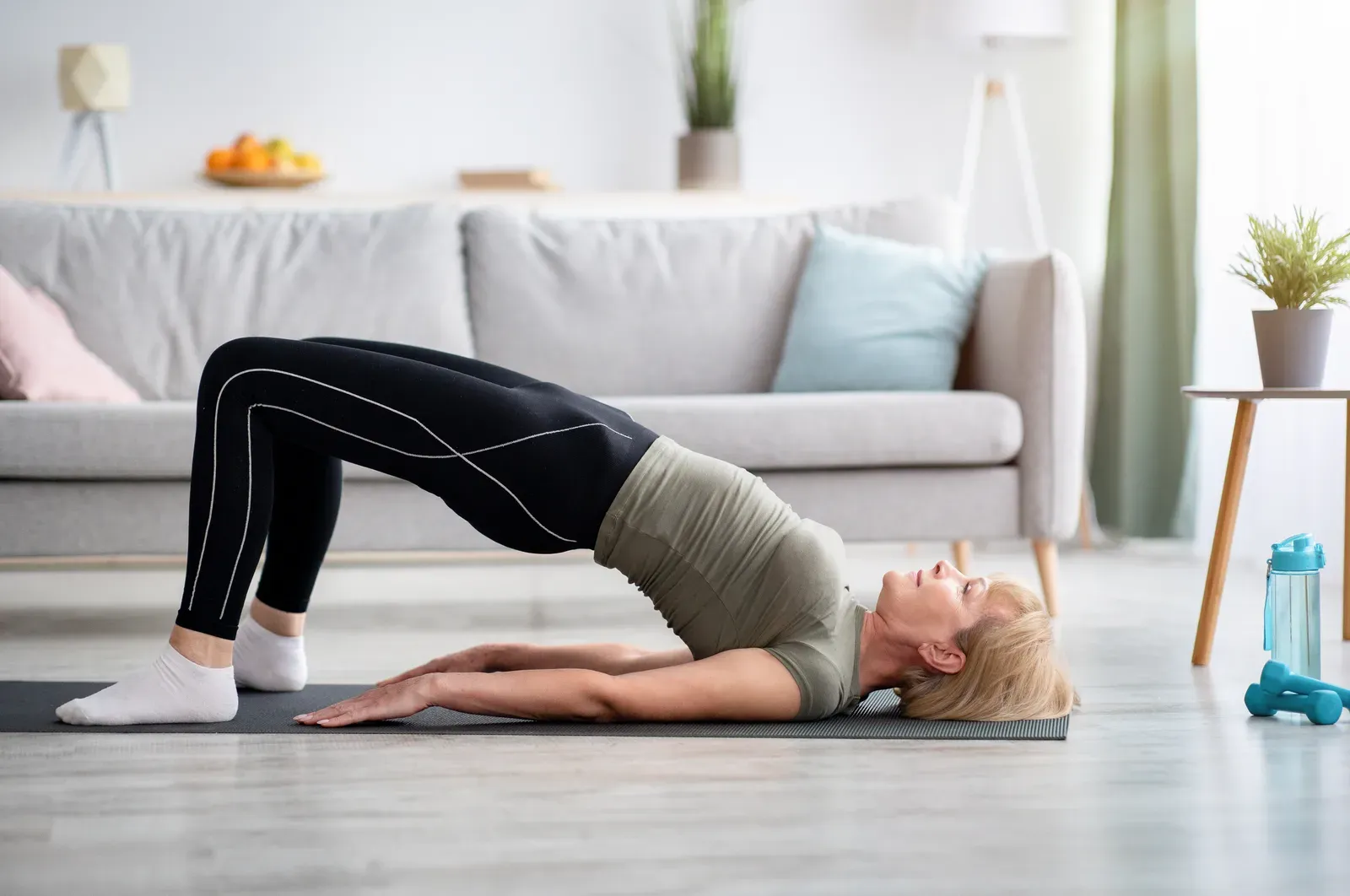
Plenty of women quietly shrink their workouts because jumping, running, or heavy lifting sets off symptoms nobody wants to discuss at a gym. Pelvic floor safe personal training in Carmel manages the two levers that matter, impact and pressure, so you can keep getting genuinely strong while your symptoms stay quiet, and it works best alongside a pelvic floor physical therapist, not instead of one. The coached version in Carmel starts with a free consultation; here is what the training after it looks like.
The two levers: impact and pressure
Almost every pelvic floor training modification is pulling one of two levers. The first is impact: how hard and how often your feet strike the ground. The second is pressure: how much intra-abdominal pressure a movement generates and how well your system manages it. A coach who understands both can keep nearly any training goal alive:
- Impact swaps. Step-outs instead of jumps, marches instead of runs, and hard conditioning on rowing machines, vertical climbers, and curved treadmills in the dedicated cardio rooms. Effort stays high while ground strike goes to zero, the same playbook as our low impact training guide.
- Breath strategy. Exhaling through the hard part of a lift instead of trapping breath behind it. It is the single highest-value habit in this entire category.
- Load and position selection. A goblet squat may behave differently than a barbell back squat; a supported hinge differently than a deadlift from the floor. The coach finds the versions your system supports today.
- Progression that listens. Loads climb as symptoms stay quiet. A symptom flare is data, not failure, and the next session adjusts because of it.
What this is not: a permanently tiny program. For most women it is a detour that rebuilds capacity, and plenty of strength personal records get set on the far side of it.
The return trip gets planned as carefully as the detour. When symptoms have stayed quiet and your clinician agrees, impact comes back in graded doses: marches become low hops, hops become short runs, and each new step keeps its place only if symptoms stay silent. Plenty of women are back to running the Monon Trail on exactly this staircase.
When a clinician comes first
A personal trainer does not diagnose or treat pelvic floor dysfunction, and the honest ones are quick to refer out. If you have leaking with effort or impact, a sensation of heaviness or pressure, pelvic pain, or a bulge feeling, see your physician or a pelvic floor physical therapist before starting any program. This is care worth getting: pelvic floor physical therapy is a well-established specialty, and coaching layered on top of it, following the clinician’s guidance, is the strongest version of this whole approach. Training support belongs alongside your clinical team, never in front of it.
If your symptoms trace back to pregnancy and ab separation specifically, the companion piece on diastasis recti training walks through that rebuild, and the same clearance-first logic applies.
What a coached session actually feels like
From the outside, a pelvic floor safe session looks like ordinary strength training, because it mostly is. Squat, hinge, push, and pull patterns; real loads; honest effort. The differences live in the details a coach manages rep by rep: the exhale timed to the press, the stance that keeps pressure manageable, the set cut one rep before strain, the box height that lets you own the squat. Sessions at FlexWerk in Carmel City Center start with that free consultation, which includes a free InBody body composition scan, so progress gets measured in muscle and body composition rather than in how much you survived.
The InBody piece matters here for morale. When impact work is scaled back, the scale and the mirror update slowly, and the rescan is what proves the quiet program is working anyway. Sessions also respect the reality that symptoms fluctuate with sleep, stress, and where you are in your cycle; a good coach reads the day and adjusts rather than forcing the plan through, which is how the weeks stay consistent even when bodies are not.
Why privacy changes this conversation
This topic runs on candor, and candor is hard on a crowded gym floor. Telling a coach mid-set that a movement caused symptoms requires either a whisper or an audience; in a private reserved room it requires neither. Every FlexWerk session happens behind a closed door, one on one, with your own music and lighting, and that privacy is not a luxury feature for this kind of training. It is the reason the honest feedback loop, the thing the entire method depends on, actually happens.
The match matters as much as the room. FlexConnect pairs you with one of the more than 40 independent professionals working at Carmel City Center based on your goals, schedule, and personality, and you can ask for a coach experienced with pelvic floor considerations, or simply for a female coach, in that conversation. The broader picture of training built around women’s goals and life stages lives on the personal training for women page, with hours from 5 AM to 9 PM weekdays and 7 AM to 4 PM weekends, at 885 Monon Green Blvd with garage parking a short walk away.
If you have been trading strength for symptom control, you do not have to keep making that trade. See your clinician if symptoms are active, then bring their guidance to the free consultation and build the version of strong that your body will actually keep.
Related questions
Can I still lift heavy with pelvic floor symptoms?
That question belongs to a pelvic floor physical therapist first. Once you are assessed and cleared, many women return to meaningful loading with adjusted breathing, positions, and progression, and a coach programs within whatever limits your clinician sets.
What symptoms mean I should see a clinician before training?
Leaking with effort or impact, a feeling of heaviness or pressure below, pelvic pain, or a bulge sensation all warrant a physician or pelvic floor physical therapist before a training program. A trainer does not diagnose or treat any of them.
Is pelvic floor safe training only for new moms?
No. Symptoms show up across life stages, including around menopause and in women who never had children, and the same pressure-aware coaching principles apply whenever they do.