
Men on a GLP-1 Losing Muscle: The Training Fix
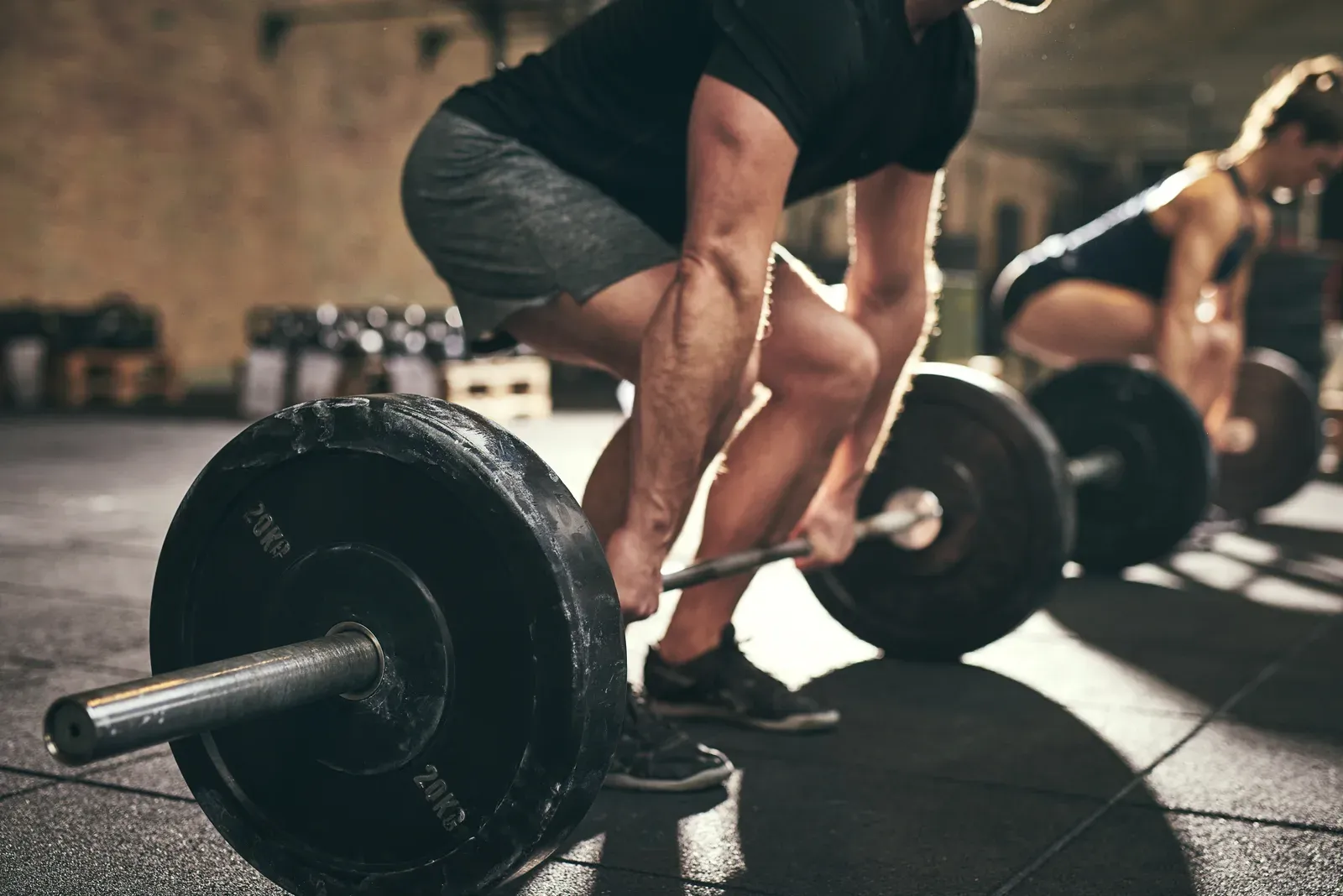
Men on a GLP-1 medication who feel weaker or see their chest, shoulders and legs shrinking should tell their prescriber, then put heavy, progressive strength training at the center of the week, because lifting is the main lever a coach has for holding muscle. The medication, the dose and any hormone question belong to your physicians. What follows is the training side of the problem, written for men who care about strength, physique and staying useful in a body that is getting smaller. It reflects the muscle-first approach of GLP-1 personal training.
What men notice first
Weight loss is rarely selective. Along with fat, many people lose lean tissue, and for men the early signs tend to be practical and visual:
- Barbell and dumbbell loads that used to feel moderate now feel heavy.
- Shirts hang off the shoulders and the chest looks flatter.
- Legs feel weak on stairs or at the end of the day.
- Belts tighten two notches but the mirror shows less muscle than hoped.
- Energy for training dips because appetite is low.
A shrinking waist with a shrinking frame can leave a man feeling frail instead of fit. It is not vanity to care. Muscle is what keeps you strong, mobile and metabolically healthy as you age.
The hormone question, handled properly
Men often wonder whether the medication affects testosterone, or whether low testosterone explains the muscle loss. Those are physician questions. If you have symptoms such as persistent low energy, low drive or unexplained weakness, ask your physician whether any testing makes sense. A coach does not diagnose, test or treat, and training should not be presented as a fix for any hormone condition. What a coach can do is help you keep your plan consistent while you get answers.
Principles that hold muscle
- Lift heavy enough to matter. Moderate-to-challenging loads, taken close to but not to failure.
- Prioritize big compound lifts. Squat or leg press, hinge, press, row.
- Progress slowly and steadily. A small increase each week or two, not a jump.
- Eat protein first. With a small appetite, make protein the first thing on the plate.
- Protect recovery. Sleep, fluids and rest days count as training.
The beginner strength plan for GLP-1 users covers the general version; this piece adapts it for men who already lift or want to.
A three-day strength template
This is a structure to discuss with your physician and coach, not a prescription:
| Day | Focus | Main lifts |
|---|---|---|
| Day 1 | Lower body and push | Squat or leg press, press, accessory work for shoulders and triceps |
| Day 2 | Upper pull and hinge | Hip hinge, row, pulldown, curls or face pulls |
| Day 3 | Full body, lighter | A leg movement, a press, a row, a loaded carry |
Keep each session to a manageable length, usually under an hour, and finish feeling like you could do a little more. If energy is poor, drop a day to a short session rather than skipping it. Add easy walking on the other days.
Protein and the plate
Appetite may keep portions small, so the plan is to make each bite count: lean meats, eggs, fish, dairy, legumes and, where appropriate, a shake. Your prescriber or a registered dietitian sets actual targets. The protein guidance for GLP-1 users explains the principle of eating protein first and spacing it through the day.
Tracking whether it is working
Beyond the scale, track:
- Your main lift weights and reps.
- Chest, arm and thigh tape measurements, once a month.
- A body composition scan. A free InBody scan at the consultation gives a starting point, and a rescan every couple of months shows whether skeletal muscle mass is holding.
- Energy, mood and sleep.
If strength falls for several weeks, tell your prescriber, since the cause may not be training alone. The losing strength guide lists the usual suspects.
Sample session, so the template is concrete
For Day 1, a workable layout might be: a warm-up of ten minutes with light sets of the first lift, then three or four working sets of a squat pattern in the six to ten rep range, three sets of a press, three sets of a row for balance and two short accessory movements. Rests between heavy sets run two to three minutes, which is longer than most people expect, and that rest is what keeps the quality of each set high on a smaller food intake. Stop each set with a rep or two in reserve. If your sleep was poor or you ate little that day, drop one set from each exercise and keep the weights the same, rather than lowering the weight and losing the stimulus.
Strength is also about daily life
Men often measure progress by the bar, but the best test is ordinary: carrying groceries and a toolbox, getting off the floor with a child or grandchild, climbing stairs without a pause. If those things feel easier in three months, the plan is working even when the scale is quiet. If they feel harder, say so to your prescriber and your coach.
Mistakes to avoid
- Doing mostly cardio. It does not protect muscle.
- Training to exhaustion on low food. Recovery suffers.
- Ignoring the lower body. Legs are the largest muscle groups and the first to go quietly.
- Hiding symptoms. Tell your clinicians.
Questions to ask your physician first
- Are there any limits on lifting heavy given my health?
- Should I have anything checked, such as labs, given my symptoms?
- How should I handle protein with a small appetite?
- How often should we review my progress?
- What would make you want to change my plan?
How coaching helps
A coach keeps the lifts progressing, spots the signs of overreaching and keeps you accountable on low-appetite weeks. Each coach sets their own terms, and the free consultation is where you can share your lifting history and your physician’s guidance and ask who has experience with men on medication-assisted weight loss.
Related questions
Is losing muscle on a GLP-1 more of a problem for men?
Muscle loss can happen to anyone, but men often care most about strength and upper body shape, which makes the loss easy to notice. Your prescriber can discuss risks for your own situation.
Should I ask about testosterone?
If you have symptoms such as low energy, low drive or unexplained weakness, raise them with your physician, who can decide whether any testing is appropriate. A coach does not diagnose or treat hormone issues.
Can I still build muscle while losing weight?
Many people, especially newer lifters, can build or hold muscle while fat comes off, but results vary and nothing is promised. Consistent lifting and enough protein give you the best chance.