
Kettlebell Trainer in Carmel: One Tool, Taught Properly
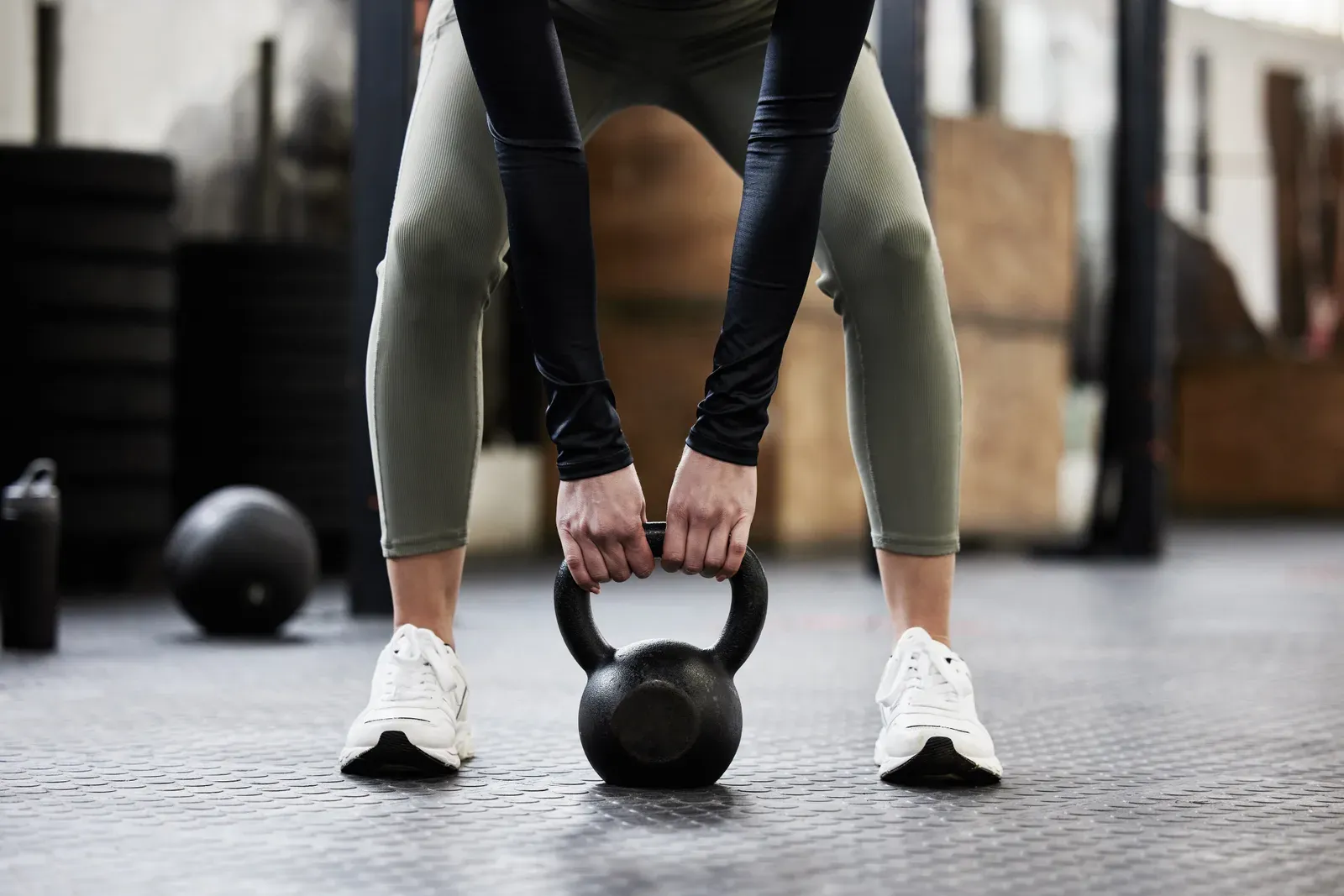
The kettlebell has outlived every fitness trend it was ever lumped in with, and for one reason: a single kettlebell trains the hinge, your grip, and your conditioning at once, but only if someone teaches you to use it, because the swing is the most commonly butchered exercise in any gym. That is the case for a kettlebell trainer in Carmel rather than a video and a garage bell.
Why this one tool earns a coach
Most gym equipment is self-explanatory in a week. The kettlebell is not, because its signature moves are ballistic: the swing, the clean, the snatch all involve a weight changing direction at speed, and the technique that makes that safe, a crisp hip hinge with a braced trunk, is invisible to the person doing it wrong. The classic errors feel productive while they quietly load the lower back: squatting the swing, muscling the bell with the arms, letting the spine round at the bottom.
A coach fixes this in weeks, not months, because the feedback loop is instant. You hinge, they adjust, you feel the difference on the next rep. This is also why the private setting earns its keep here: pattern learning goes faster when your full attention is on the movement instead of on who might be watching, and at FlexWerk every session runs in a reserved suite with the door closed. The starting point is a free consultation at Carmel City Center, where a free InBody body composition scan and a movement conversation tell your coach exactly where to begin. From there, kettlebell work usually lives inside a broader plan; the wider coaching landscape is covered on our personal training in Carmel page.
What a coached kettlebell session covers
A good kettlebell block is built from a short list of patterns, layered patiently:
- The hinge and the swing. The foundation. Deadlift pattern first, then the swing as a jump that never leaves the floor. Power comes from the hips; the arms are ropes.
- Loaded carries. Farmer and racked carries build grip, posture, and trunk endurance with almost no technique barrier. The most underrated strength work in fitness.
- Cleans, presses, and get-ups. Shoulder strength and stability through ranges that machines never touch.
- Complexes for conditioning. Chaining moves without setting the bell down turns strength work into cardio. Five focused minutes can end a session decisively.
Grip, glutes, hamstrings, and trunk do most of the earning, which is why kettlebell training pairs so naturally with the bracing work described in our core strength training guide and slots cleanly into the everyday-strength approach of functional fitness training.
A sensible first month looks almost boring on paper and feels anything but. Week one is hinge practice and light deadlifts, week two adds the swing at modest weight, weeks three and four grow the sets and introduce carries, and somewhere in there the get-up appears in pieces. Coaches resist the urge to sprint this timeline for a reason: the swing pattern you build in month one is the one you will repeat ten thousand times, so it is worth building once, correctly.
The home kettlebell problem
Here is a very Carmel situation: about 23 percent of Hamilton County works from home, the pandemic years put a kettlebell in a remarkable number of those homes, and most of them are now doorstops. The usual story is not laziness; it is uncertainty. Without feedback, people sense their swing is off, worry about their back, and quietly stop.
Coached sessions rescue that investment. Learn the patterns properly with your trainer, then run short home sessions between appointments with real confidence, a rhythm that fits the two-sessions-a-week structure most busy professionals land on. Your coach can program those home days too, so the bell by your desk becomes the between-sessions tool it was supposed to be.
Kettlebells in a private suite
Independent coaches at FlexWerk outfit their own sessions, and kettlebell specialists typically travel with a graded set of bells, so you progress in sensible jumps rather than lurching from too light to too heavy. The suite surrounds that work with a custom lifting rack, cable system, and dumbbells, which matters because pure kettlebell programs eventually want support: cable pulls for balanced shoulders, heavier bilateral lifts as strength grows. One tool starts the journey; the room keeps it from plateauing.
FlexConnect handles the matchmaking, pairing you with one of the more than 40 independent professionals based at Carmel City Center by goals, schedule, and personality. Ask specifically for kettlebell experience; specialty matching is the point of the system. Hours run 5 AM to 9 PM weekdays and 7 AM to 4 PM weekends, with the Monon Trail steps away when your coach sends you out for easy aerobic work between sessions.
Progress here is measurable in a way people underestimate. A heavier bell swung for the same crisp sets is the obvious marker, but the quieter ones matter more: a grip that stops being the weak link, a deadlift pattern that shows up unprompted when you lift a box at home, conditioning that arrives without a single treadmill mile. The InBody rescans add the body composition side of the story, and together they make a short, honest case that one iron ball, taught well, does the work of half a gym.
If your kettlebell curiosity has outlasted your confidence, book the free consultation and let a coach put a bell in your hands the right way.
Related questions
Are kettlebells better than dumbbells?
Different, not better. The offset handle makes kettlebells superior for ballistic moves like swings and for loaded carries, while dumbbells win for most pressing and isolation work. Good programs use both.
Can beginners start with kettlebells?
Yes, with instruction. The swing is a technique lift, not an instinct lift, and learning it coached from day one is far easier than unlearning a bad pattern later.
Will kettlebell training hurt my back?
A properly hinged swing trains the muscles that protect your back. Problems come from swinging with a rounded spine or lifting the bell with your arms. If you have an existing back condition, get your physician's clearance and tell your coach before the first swing.