
Exercise for Peripheral Artery Disease: Walking Through Pain
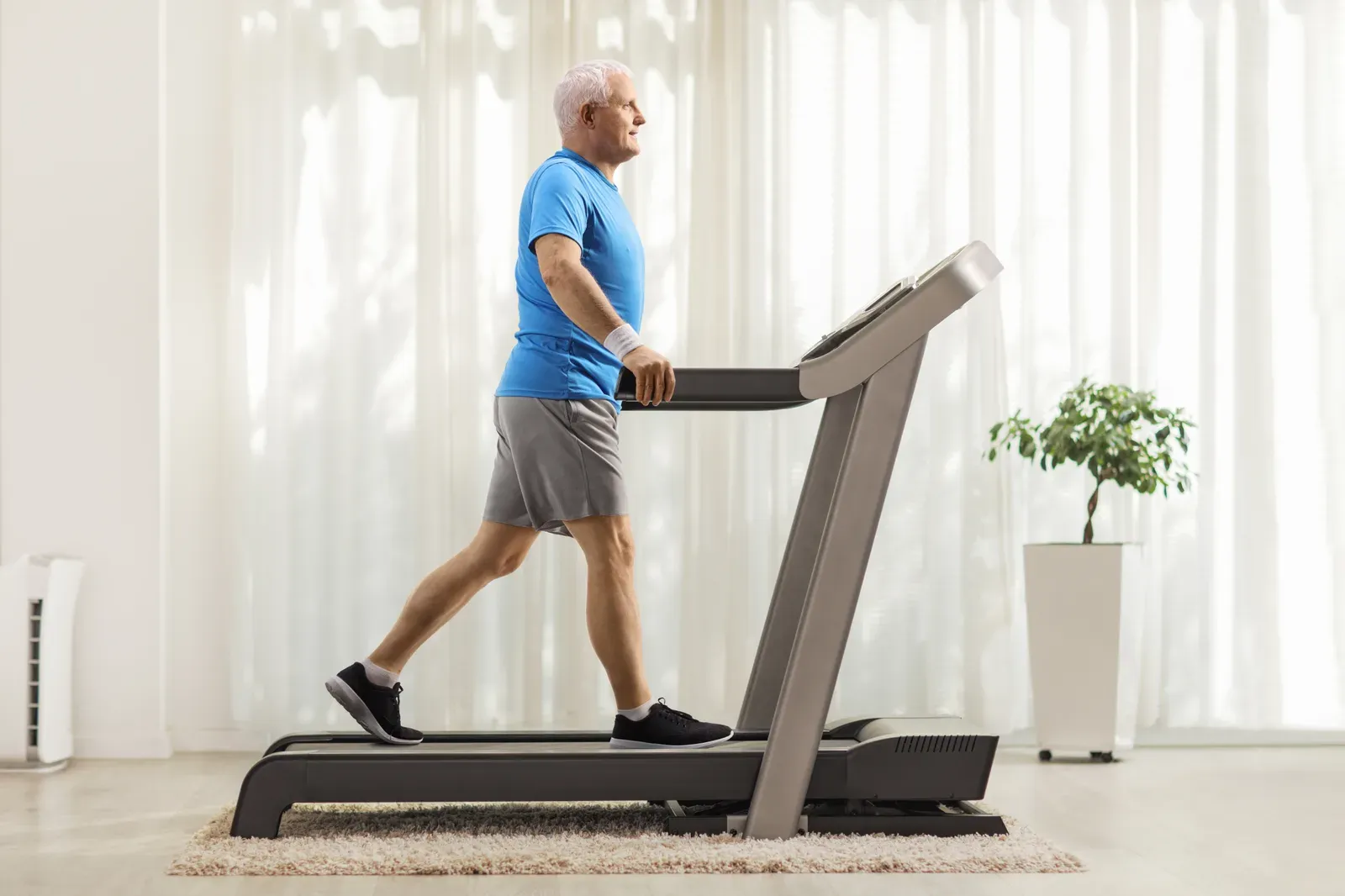
If you have peripheral artery disease, ask your physician or vascular specialist whether to start exercise and how, because the walking pattern that helps many people involves working through leg discomfort and deserves medical sign-off. After that, a coach can help you carry it out consistently, add strength work around it and keep notes you can share at appointments. A free consultation is the place to see how that would work in practice.
What the condition feels like
Peripheral artery disease, often shortened to PAD, narrows the arteries that carry blood to the legs. A common sign is claudication: cramping, aching or heaviness in the calves, thighs or hips that appears when you walk and settles with rest. Not everyone has symptoms, and other conditions can look similar, so the diagnosis is for your clinician.
That pain is the reason many people stop moving, which then makes walking harder still. A supervised exercise approach exists to break that cycle safely.
Start with your clinicians
Before you train, ask your physician or vascular specialist:
- Is exercise appropriate for me, and is a walking program recommended?
- What level of leg discomfort is acceptable during walking, and what level means stop?
- Do I have heart or other conditions that set limits on effort?
- How should I care for my feet and skin during exercise?
- Which symptoms, such as pain at rest, sores that will not heal or a cold, pale foot, need urgent attention?
- Can you write down your guidance for my trainer?
Without those answers, a coach should not begin.
The supervised walking pattern
The approach commonly used in structured programs follows a repeating rhythm:
- Walk at a steady pace until leg discomfort reaches the level your clinician specified.
- Stop and rest, standing or sitting, until the discomfort eases.
- Walk again, and repeat for the planned session length.
Over weeks, many people find they can go farther before the pain arrives. A coach can keep time, track distance or duration, cue pacing and record each interval. The log shows progress that your clinician can use.
A track, a treadmill or a flat route all work. A treadmill makes it easy to set pace and stop quickly, and a private room lets you rest without an audience.
Add strength around the walking
Strong legs and hips make everyday movement easier, and upper-body training keeps you active on days walking is limited. With clearance, a coach might include:
- Sit-to-stand and step-ups for the thighs and hips.
- Calf raises, scaled to what is comfortable and cleared.
- Rows, presses and carries for the upper body.
- Light balance work if stability is a concern.
Keep loads moderate and breathing steady. If a lift triggers leg pain, reduce the load or change the exercise and note it.
Foot and skin care
PAD can affect healing, so a few habits matter. Wear well-fitting, supportive shoes and clean socks, check your feet after each session for blisters, redness or cuts, and tell your clinician about any sore that is slow to heal. A coach can remind you to check, but they cannot treat wounds.
When to stop and call
Stop the session and contact your clinician if you notice chest discomfort, dizziness, unusual shortness of breath, pain at rest, a sudden cold or pale foot, or a wound that is worsening. Treat sudden, severe leg pain, numbness or discoloration as an emergency. These signals are medical, and not something to coach through.
A sample week, built on rhythm
Here is how a cleared week might look, to be adjusted by your clinician’s advice:
- Walking days: three or four short interval sessions, each with the walk, rest and repeat pattern, logged by time or distance.
- Strength days: two sessions of simple leg, hip and upper-body work, kept short, with long rests.
- Easy days: a relaxed stroll, stretching or complete rest.
The log matters. Write down how long you walked before the discomfort began, how long you rested and how the day felt. When the numbers drift upward over weeks, that is encouraging evidence for you and for your physician, and when they stall or fall, it is a reason to call.
Habits that support the plan
Exercise is one part of a bigger picture. Your clinician may talk with you about smoking, blood pressure, cholesterol, blood sugar and medication, and those decisions are theirs to make. A coach can support the habits around them, such as steady daily steps and a regular schedule, without stepping into treatment. Bring questions to your appointments and let the coach reinforce the plan between visits.
Where the coach’s lane ends
A trainer builds the plan within your clearance, keeps time, encourages and watches form. They do not diagnose, decide what counts as acceptable pain, interpret circulation tests or alter medication. That division is the same one explored in personal training after cardiac rehab in Carmel, where a clinical team sets the boundaries first. For a primer on turning a doctor’s go-ahead into a plan, see when your doctor says exercise, and for the handoff after formal therapy, what comes after physical therapy.
Questions to put to any coach
Before you book, ask each candidate how they would handle the specifics of this condition:
- How do you time and record walking intervals, and can I see a sample log?
- What will you do if my leg pain reaches the level my physician set before the interval is over?
- How do you adapt sessions on days when walking feels worse than usual?
- Will you coordinate with my care team if I give permission?
- What is your plan if I feel unwell during a session?
Specific, calm answers are a good sign, and vague confidence is not.
Consistency is the real program
Because the walking pattern works through repetition, showing up regularly matters more than any single session. Many people do best with fixed times, a written log and a coach who notices when they slip.
At FlexWerk, coaches are independent professionals who set their own terms and work in private suites where you can rest freely. Bring your physician’s guidance and the log of your walking so far to a consultation, and ask each coach how they would structure the intervals, track progress and keep your care team in the loop.
Related questions
Is it safe to walk when my legs hurt?
For many people with claudication, structured walking that reaches moderate discomfort is a standard part of care, but only under your clinician's guidance. Sharp, severe or resting pain is different and needs medical attention.
Can a personal trainer run a supervised walking program?
A trainer can guide timing, pacing and rest breaks once your clinician clears you, and keep a log. They do not diagnose, adjust treatment or decide what pain is acceptable on their own.
Should I also lift weights?
Often, yes, with clearance. Leg and hip strength can make walking easier, and upper-body work keeps you active on days walking is limited.