
What Is HRV?
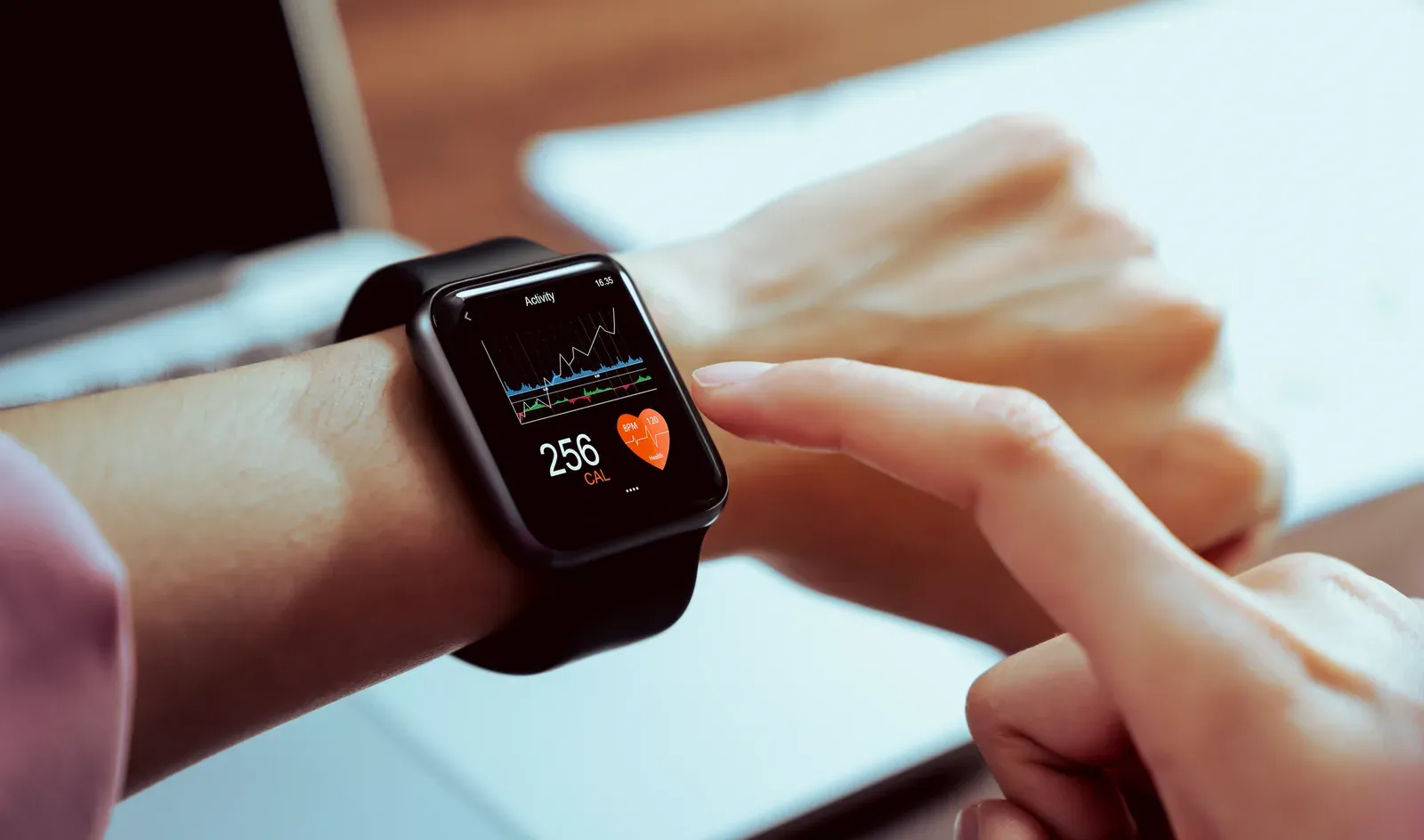
HRV, or heart rate variability, is the variation in the time between your heartbeats, and it works as a rough gauge of how recovered and how stressed your body is: higher than your personal normal usually means recovered, lower usually means stressed or run down. Counterintuitively, more variability is the good sign. A heart that subtly speeds and slows with every breath belongs to a relaxed, adaptable nervous system; a metronome-steady heart often belongs to a stressed one.
What HRV actually measures
HRV measures your autonomic nervous system, the automatic control panel that balances “fight or flight” against “rest and digest.” When you are recovered and calm, the rest-and-digest side dominates, and it constantly nudges the gap between beats, a few milliseconds longer here, a few shorter there. When you are stressed, sick, under-slept, or buried in training fatigue, the fight-or-flight side takes over and those gaps flatten out.
Your watch or ring samples those beat-to-beat intervals, usually overnight, and reports a summary number in milliseconds. Overnight measurement matters: readings taken during a random afternoon are polluted by coffee, meetings, and whatever your email just did to you. This is why most devices lean on sleep data, and why your HRV and your sleep quality tend to move together so tightly.
Why your number is not comparable to anyone else’s
Normal HRV spans an enormous range, roughly 20 to over 100 milliseconds across healthy adults, driven mostly by genetics and age. A fit 55-year-old can sit at 35 while a sedentary 25-year-old sits at 75, and neither number says who is healthier. On top of that, different devices calculate HRV differently, so your reading and your spouse’s from another brand are not even speaking the same language.
The practical rule: your baseline is the only reference that counts. Give any new device three to four weeks of ordinary living to learn your normal range, then read everything relative to that. A drop from 60 to 42 for several days running means something; the fact that a friend’s number is 80 means nothing.
What moves HRV, and what that tells you
The forces that push HRV down are exactly the forces that block training progress, which is what makes the metric useful. The big levers:
- Alcohol. Even two drinks reliably dent overnight HRV, often for a full night or two. Many people first take their watch seriously after seeing this effect in their own data.
- Sleep debt. Short or fragmented sleep suppresses recovery, and HRV reports it the next morning.
- Illness. HRV frequently sags a day or two before you feel symptoms.
- Psychological stress. A brutal work stretch shows up here. Plenty of professionals along Carmel’s Meridian corridor, with commutes averaging around 26 minutes on top of full calendars, watch their HRV sag during quarter-end and rebound on vacation.
- Training load. Hard blocks push HRV down temporarily; that is normal and expected. A number that stays suppressed for weeks suggests recovery is not keeping pace.
Notice what is on that list: behavior. HRV is less a fitness score than a mirror held up to how you are living, which is why chasing the number directly is pointless and improving the inputs works every time. It is also why the first thing a coach reviews at a free consultation is not your training plan but your week, because the fixes usually live there; sleep and training results covers the biggest of those levers in depth.
How to use HRV without letting it use you
Read the weekly trend, ignore the daily wobble, and never let a single reading overrule a plan plus common sense. A useful protocol looks like this: glance at HRV once or twice a week, not every morning. If the trend is at or above your baseline, train exactly as planned. If it has been clearly below baseline for three or more days and you also feel flat, tell your coach and expect that session to be adjusted, not cancelled. If low HRV comes with chest symptoms, palpitations, or anything that worries you, that is a physician conversation, full stop.
What to avoid is the failure mode where the metric becomes the stressor: checking obsessively, skipping workouts you felt fine for, and letting a red morning ruin your mood, which, in a perfect irony, lowers HRV. Your own perceived effort remains a better in-session guide than any overnight number; that is precisely what RPE exists for. A one-line journal note next to each reading, slept badly, wine with dinner, hard intervals yesterday, turns confusing numbers into obvious ones within a month.
What a coach does with your HRV
A trainer turns HRV from a curiosity into one input in a real decision process. At FlexWerk in Carmel, coaching starts with a free consultation and an InBody body-composition baseline, and from there your coach reads wearable trends alongside your session performance, sleep, and life schedule. A sagging HRV trend before a planned heavy week might mean the heavy week slides; a strong trend might mean it is time to push. That judgment layer, covered more broadly in how wearable data fits personal training, is what separates data you collect from data you benefit from.
If your ring or watch has been flagging your recovery for months while your routine stayed the same, treat that as your body requesting a better plan, and book the free consultation to build one around what your numbers are actually saying.
Related questions
Is a higher HRV always better?
Higher than your own baseline generally signals good recovery, but comparing your HRV to anyone else's is meaningless. Normal values span a huge range, and only your personal trend carries information.
What lowers HRV the most?
Alcohol, poor sleep, illness, psychological stress, and very hard training are the usual suspects. A single low morning is noise; a falling weekly trend is a signal worth acting on.
Should I skip my workout when HRV is low?
Not automatically. One low reading with normal energy usually means train as planned. A multi-day slump plus feeling run down is a reason to lighten the session, and unexplained heart rhythm concerns belong with your physician, not your watch.