
Do Gymnasts Need Separate Strength and Conditioning in Carmel?
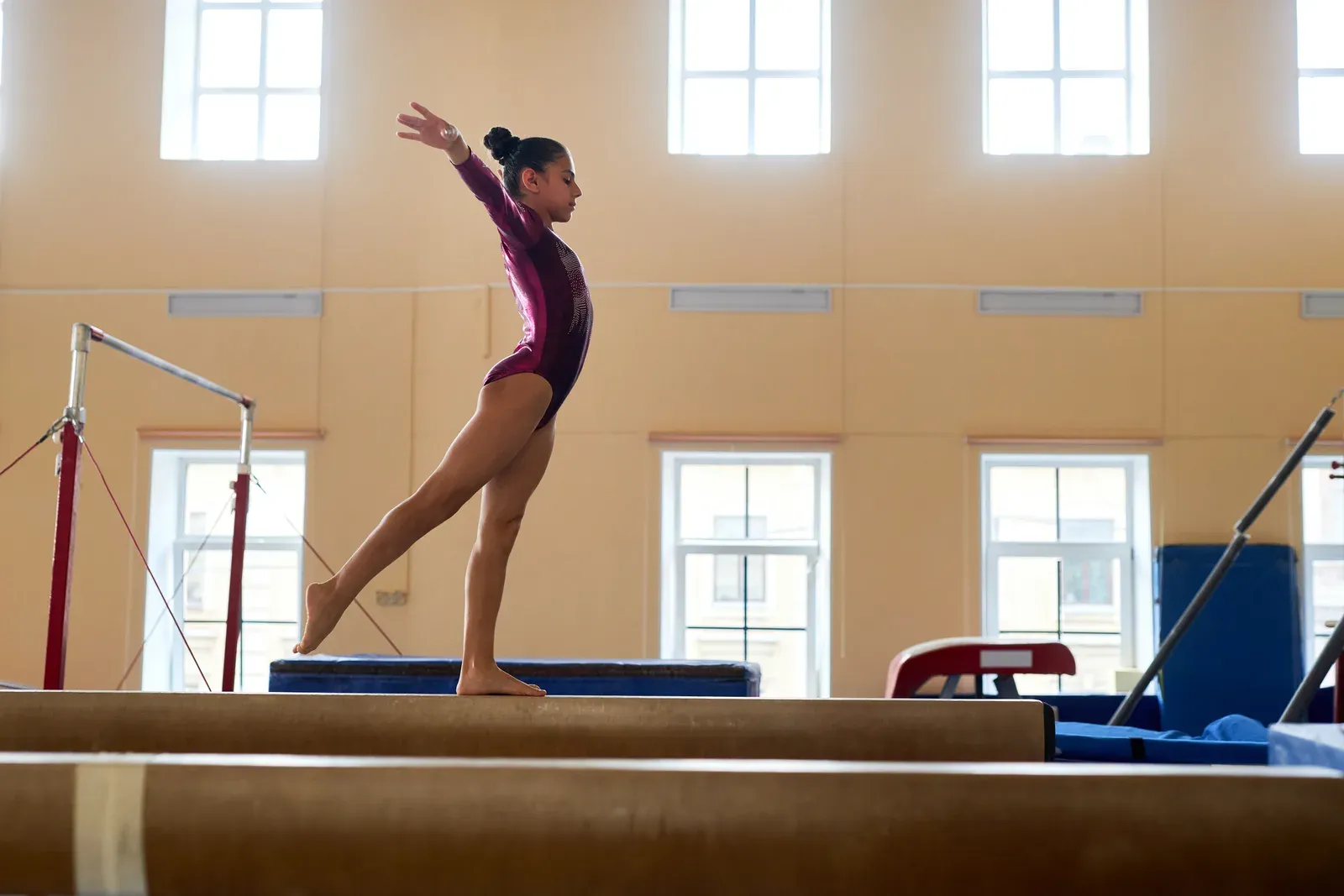
Yes, and the reason surprises parents: gymnasts are conditioned for hours a week inside their sport’s own patterns, and it is precisely the patterns the sport repeats that leave gaps, an anterior-chain-dominant, pushing-heavy profile that supplemental strength work rebalances with posterior chain, pulling, and progressively loaded landing capacity. More gym hours cannot fill a gap the gym hours created. One different hour can.
In Carmel’s serious gymnastics scene, that hour starts with a free consultation: a free InBody body composition scan, a movement conversation, and a coach who understands that this work supplements a demanding sport rather than competing with it.
What the sport’s own conditioning misses
Gymnastics conditioning is famous and famously specific: handstand work, core volume, leg lifts, support holds, pushing everywhere. What accumulates quietly is imbalance. The posterior chain, glutes and hamstrings, gets a fraction of the anterior work; pulling strength lags pushing badly; and landings, the sport’s highest-force events by far, are practiced endlessly but rarely trained as a loaded, progressive capacity. Supplemental strength work goes straight at those gaps: hinge patterns and posterior-chain strengthening, rowing and pulling volume for the shoulders’ long-term balance, and controlled landing and deceleration work that builds the tissue capacity every dismount spends. For a sport this skilled, the transfer is unglamorous and real: better landings, sturdier shoulders, and a body that absorbs training loads instead of accumulating them.
Growth-plate-aware is the operative phrase
Gymnasts concentrate two risk factors: they are young, and their sport already delivers high forces through growing wrists, spines, and heels. So the loading rules are conservative by design. Technique earns load; load progresses in small steps; nothing is maxed; and the coach tracks the sport’s weekly volume so the supplemental hour subtracts stress where the gym week is heavy rather than blindly adding to it. This is consistent with pediatric sports medicine guidance, which supports supervised, technique-first resistance training for young athletes, and it is only practical in a setting where someone is watching every rep. Pain is a bright line: gymnastics’ known overuse patterns in growing bodies are physician territory, and coached work then runs alongside the clinical plan, the arrangement described in training around an injury.
One hour that fits a gymnast’s week
A gymnast’s calendar has no slack, so the format matters: one, occasionally two, coached hours a week in a reserved private suite at Carmel City Center, scheduled around practice blocks, with a parent welcome in the room. The suite holds a lifting rack, cable system, and dumbbells, more than enough for this work, and hours run 5 AM to 9 PM weekdays and 7 AM to 4 PM weekends at 885 Monon Green Blvd, garage parking a short walk away. FlexConnect matches your athlete with one of the more than 40 independent professionals based here; ask for youth performance experience and describe the sport honestly. The same jump-and-land logic serves gymnasts who cross into other sports, volleyball’s load management being the nearest neighbor, and former gymnasts entering high school sport can point the summer at the block in our summer training guide.
If your gymnast’s hours are enormous and their strength profile is lopsided anyway, book the free consultation and add the one hour the other twenty are missing.
Related questions
Gymnasts already condition for hours. Why add more training?
Because gym conditioning repeats the sport's own patterns. Supplemental work targets what those hours miss: posterior chain, pulling balance, and progressively loaded landing capacity. It is one hour a week of different, not more of the same.
Is weighted strength work safe for a growing gymnast?
With growth-plate-aware programming, yes: pediatric sports medicine guidance supports supervised, technique-first resistance training for young athletes. Loads progress only as technique earns them, and nobody maxes a growing athlete.
What about wrist, back, or heel pain from the gym?
That goes to a physician or physical therapist first, full stop. Gymnastics has known overuse patterns in growing bodies, and a coach's job is to train around the clinical plan in communication with it, never to push through pain.