
After Physical Therapy: Finding a Trainer Near Fishers
The riskiest window in rehab is the month after discharge: you are cleared, but not yet strong, and drifting back to nothing is how the original problem returns. For Fishers residents, the bridge is post-rehab personal training in a private room 15 to 20 minutes away at Carmel City Center; the wider coaching landscape for your side of town is on the Fishers personal training page.
The discharge gap, honestly
Physical therapy ends when you are functional: pain managed, movement restored, daily life workable. Insurance commonly caps the visit count, so discharge arrives at functional, not at strong, and functional is a floor, not a finish line. The knee that carried you through week six of PT still is not ready for a full season of yard work, pickleball, or grandkids without a strength base underneath it.
What fills that gap well is a structured program that picks up exactly where therapy left off. What fills it badly is enthusiasm: returning to your old gym routine at your old weights, or joining a group class programmed for whoever shows up.
What post-rehab coaching looks like
A post-rehab block starts from paper, not guesswork: your discharge summary, your home exercise program, and what your PT says is cleared. From there the coach’s job is progression, gradually loading the movements therapy restored until they hold up under real life. The partnership framing matters. A trainer builds on your PT’s work rather than replacing it, coordinates with your consent, and routes anything symptomatic straight back to the clinic. Coaches train; they do not diagnose or treat.
The general roadmap for this stage is covered in what comes after physical therapy, and the day-to-day mechanics of working around a cleared issue are in training around an injury.
Why a private room suits this stage
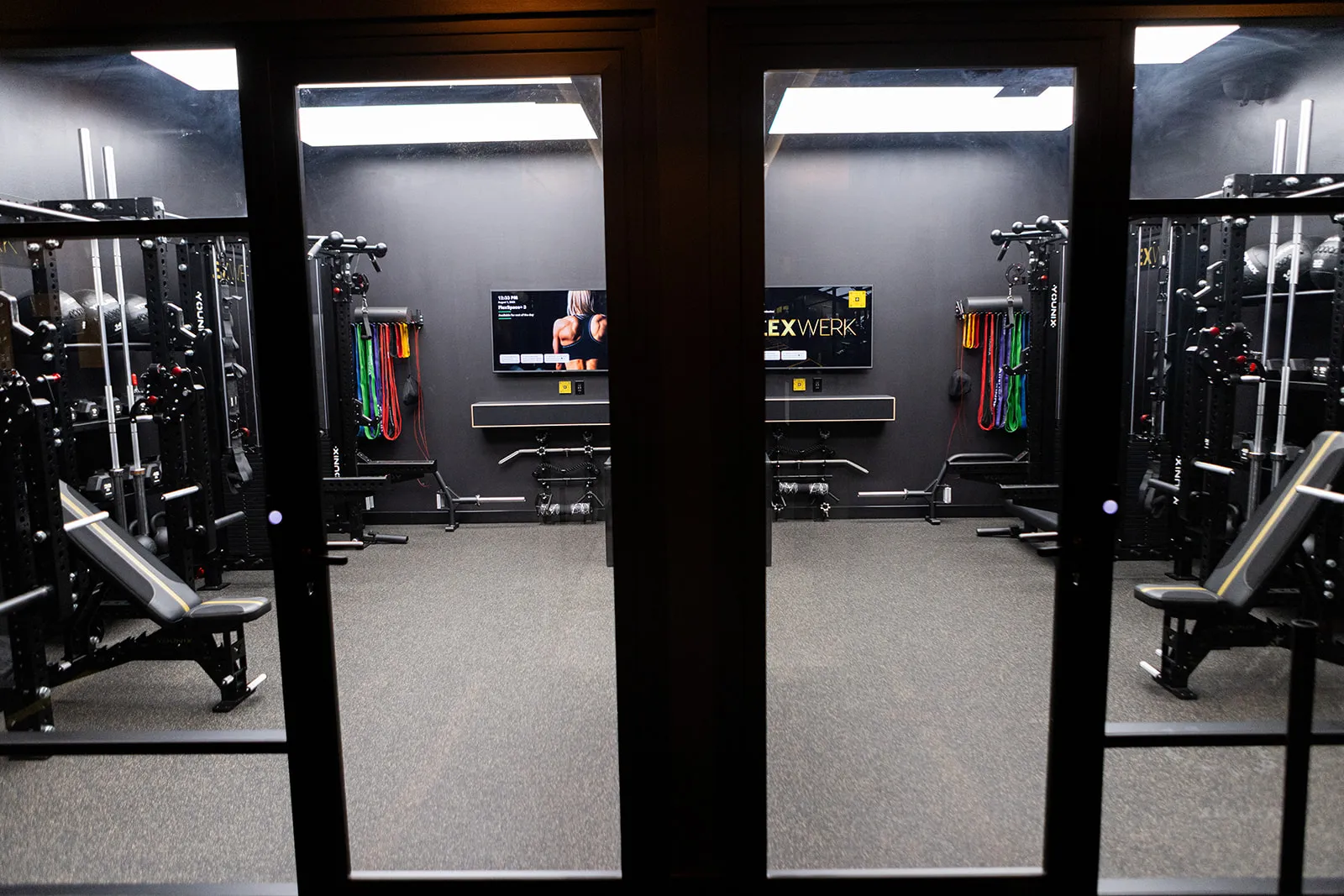
Rebuilding patterns is precision work, and shared gym floors are bad at precision: crowds set the pace, equipment negotiations interrupt sets, and self-consciousness rushes people through movements that deserve patience. In a reserved private FlexSpace, the rack, cable system, and dumbbells sit inside your room, your coach watches every rep, and nobody is waiting on the equipment while you take the rest a rebuilding joint needs.
Matching matters more here than for most goals. FlexConnect pairs you from more than 40 independent fitness professionals, and you should say plainly that you are post-PT; coaches with post-rehab experience will treat your history as the program’s starting point, not a footnote.
Getting started from Fishers
Most of Fishers reaches Carmel City Center in roughly 15 to 20 minutes via 116th Street or 146th Street, with garage parking a short walk from the door, and hours run 5 AM to 9 PM weekdays and 7 AM to 4 PM weekends. Start with the free consultation and bring your discharge notes: you get a free InBody body composition baseline and a coach match built around where your body actually is.
The therapy did its job; the next block of work decides whether it lasts. Book the consultation before the gap gets comfortable.
Related questions
Will a trainer actually communicate with my physical therapist?
Good ones do, with your consent. At minimum a post-rehab coach works from your discharge summary and home exercise program; many will exchange notes with your PT directly, and all of them should send you back if symptoms return.
How soon after discharge should I start training?
Soon, with your PT's or physician's blessing. The weeks right after discharge are when people quietly slide back to doing nothing, which is how the original problem returns. A coached program is the bridge, not a risk to it.
What if pain comes back during the program?
The session changes that day and the question goes back to your clinical team. A coach trains around what is cleared and comfortable; diagnosing a flare-up is a physical therapist's or physician's job, and a good coach never pretends otherwise.