
Strength Training for Masters Swimmers: Breaking the Plateau
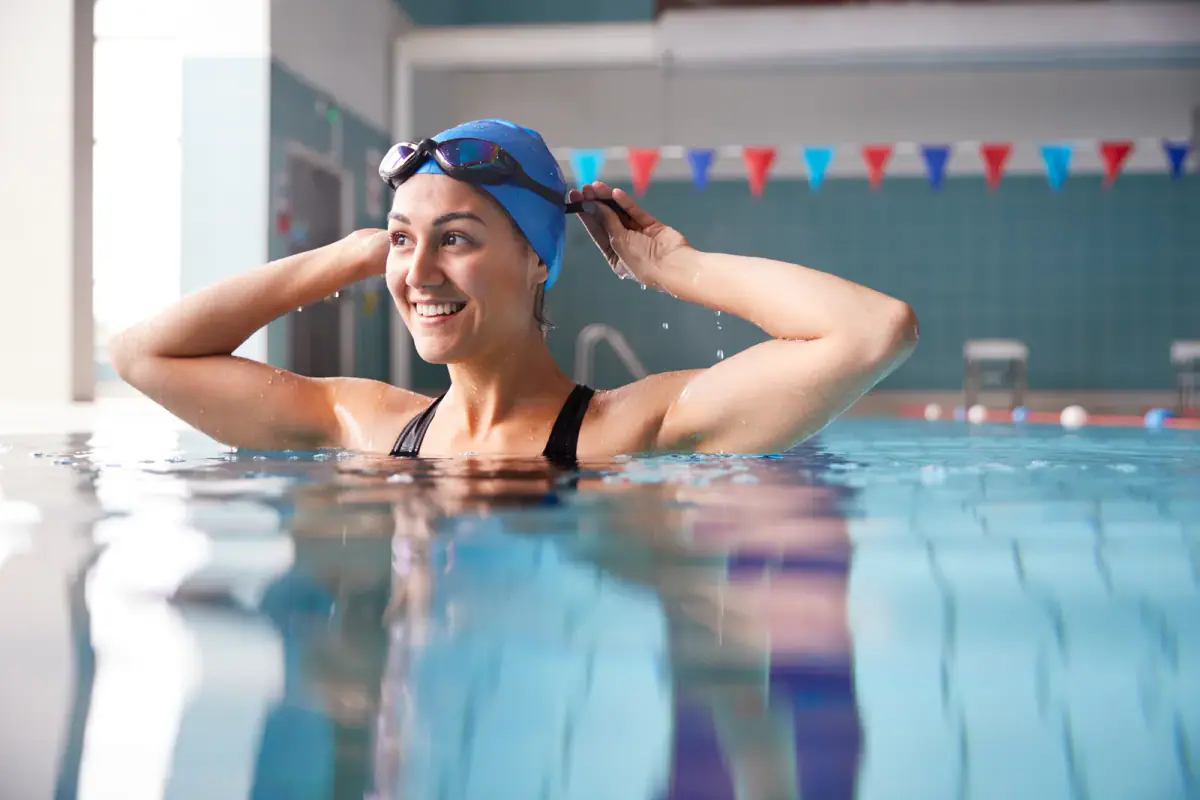
Masters swimmers stop dropping time for a predictable reason: after enough years in the water, technique and aerobic fitness settle, and the remaining limiter is force, how hard each pull, kick, and push-off actually is. Water is a gentle strength coach, which is why the next second usually has to be built on land. Two well-placed sessions a week is the whole prescription, and a free consultation with a coach who understands a swim schedule is the sensible way to set it up.
Why the plateau is a force problem
Swimming is unusually kind, which is its trap. The water never hands you a heavier barbell; it resists exactly as hard as you push, so once your stroke is efficient, your force output flatlines and your times follow. Layer aging onto that, adults gradually lose muscle from their 40s onward unless something loads it, and the masters swimmer is often getting technically better and physically weaker in the same season, a wash that reads on the pace clock as a plateau. Add the sport’s open secret, that adult swimmers train their legs the least of almost any athletes, soft two-beat kicks, gliding walls, and the diagnosis is usually not mysterious. The engine is fine. The horsepower is capped.
The three qualities to build on land
A masters dryland program is not the teenage club version with smaller weights; it targets the specific leaks of an adult swimmer’s body and schedule:
- Pull strength. Rows, pulldown patterns on the cable system, and loaded carries build the lat and upper-back force behind the catch, the part of the stroke where extra strength converts most directly to speed.
- Shoulder durability. Decades of strokes plus decades of desks leave predictable imbalances, so the program feeds the upper back and rotator cuff far more volume than the pressing muscles. Existing shoulder pain goes to a physician or physical therapist first, and the coach builds alongside that clearance.
- Hip drive and leg strength. Squats and hinge work put real force into starts, walls, and underwaters, the free speed most adult swimmers surrendered years ago, and they carry a bonus the mirror notices before the pace clock does.
That last point generalizes: strength work at this age is doing double duty, serving your swimming and your longevity at once, a case made more fully in building muscle after 50.
Programming around the pace clock
The swim week is the fixed structure and the lifting bends around it. Two sessions of about 45 minutes: on non-swim days ideally, or after an easy swim, never before a quality one. Nothing goes to failure, because tomorrow’s send-offs do not care how impressive today’s last rep was, and soreness that ruins a swim means the dose was wrong. In meet season, the lifting tapers when the yardage does. Swimmers juggling this alongside running or cycling goals should read how strength and cardio coexist without interference, because the scheduling logic is identical.
Local logistics happen to suit swimmer hours. FlexWerk’s weekday doors open at 5 AM at Carmel City Center, familiar territory for anyone who already trains before work, and sessions run one-on-one in a reserved private suite, rack, cables, and dumbbells with no crowd and no waiting between sets. The free consultation includes an InBody body composition scan, a genuinely useful baseline for an athlete whose body changes hide under water, with re-scans to verify the lean mass is actually arriving. Parents wondering about the youth version of all this will find it in the dryland training guide for swimmers; this page is for the adult in the next lane over.
The water taught you everything it can about efficiency. The next drop is sitting in a squat rack. Book the consultation and go collect it.
Related questions
Will lifting wreck my feel for the water?
Not at this dose. Feel suffers when you swim on deeply fatigued or very sore muscles, so the program avoids training to failure and keeps hard lifting away from quality swim days. Before a meet, the lifting tapers along with the yardage.
How do I fit strength work around three swims a week?
Slot the two lifts on non-swim days, or after an easy technique swim rather than before a hard one. The guiding rule is that lifting must never make the next quality swim worse, and a coach adjusts week by week to keep it that way.
I'm past 50 and have never lifted. Is it too late to start?
No, and swimmers who start now tend to feel the difference in the water within a couple of months. Start coached, start light, and if you have shoulder history or health conditions, bring your physician's guidance into the plan from day one.