
Dryland Training for Swimmers in Carmel: Shoulder-First Strength
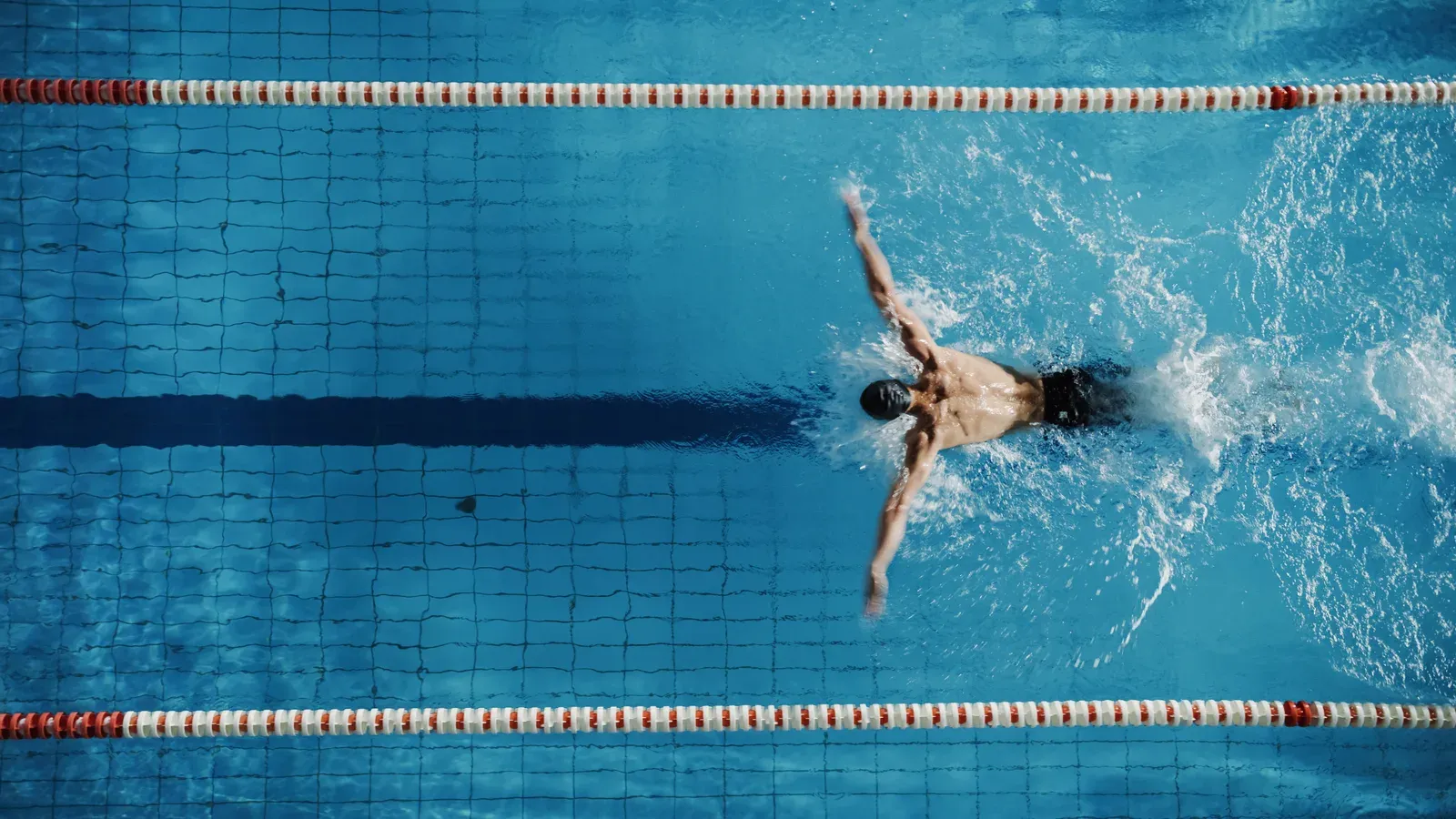
Carmel takes swimming seriously. The local high school’s girls program has won 40 consecutive state titles, and beneath that streak sits a year-round culture of early practices and serious yardage. Dryland training is the part of that culture most often done badly: the right version builds shoulder durability first, then the power behind starts, turns, and the final 25, in about two focused hours a week. The wrong version is random circuits that add fatigue and risk to a shoulder already doing 40,000 strokes a month.
The way in at FlexWerk is a free consultation with a free InBody body composition scan, a useful baseline for an athlete whose sport hides body composition changes under water.
Shoulder care is the program, not the warm-up
Here is the honest ordering that separates good dryland from filler. Swimming is one of the most repetitive overhead activities in sport, and the swimmer’s shoulder does not need more overhead pressing volume for its own sake. It needs balance. Practice loads the pulling-through-water pattern relentlessly; dryland’s first job is to strengthen everything that pattern neglects: the upper back, the scapular stabilizers, the rotator cuff, and the postural muscles that keep a growing athlete from folding into the classic swimmer’s slouch.
In a coached block, that looks like rowing variations, face pulls, external rotation work, and controlled overhead progressions earned over weeks, not assigned on day one. It is quiet, unglamorous work, and it is the reason the rest of the program is possible. A coach watching every rep one-on-one catches the shrugged shoulder or collapsed elbow that a group circuit never will.
Then comes the power the pool cannot build
Water is a poor medium for building maximal force, because it never lets a swimmer push against something unyielding. That is what land is for:
- Lower-body strength. Squat and hinge patterns drive the start off the blocks and every turn. The few tenths a stronger push buys are the cheapest time drops in swimming.
- Explosive conversion. Jump and medicine ball work turns leg strength into block speed and breakout momentum.
- Trunk stiffness. The body line that lets kick power reach the hands is a core strength quality. Dead bugs, carries, and anti-rotation work build a line that does not leak.
- General athleticism. Especially for age-groupers, land work develops the coordination and strength a swim-only childhood can quietly miss.
What one to two hours a week of this looks like in practice depends on the season: building blocks land in the lower-yardage stretches, and taper weeks go light or off entirely. Because sessions at FlexWerk book by the hour, one-on-one, the dryland plan follows the swim calendar instead of competing with it, the same in-season logic that governs every sport’s training year.
What a dryland hour contains
A coached session for a swimmer has a consistent shape, even as the contents progress:
- Ten minutes of preparation. Thoracic mobility, scapular activation, and hip work, the tissues a long practice morning leaves stiff and a lifting session needs awake.
- The main strength block. Two or three patterns, squat or hinge plus a pull, loaded progressively, with the coach watching the details that matter for a shoulder-dependent athlete.
- The balance work. Upper-back volume, cuff work, and trunk stiffness training, the quiet majority of the program and the reason it works.
- Short power finishers. Jump or medicine ball work when the season phase calls for it, kept brief because the pool already taxes the engine.
One hour, fully coached, no filler. The difference between this and the circuit-style dryland many swimmers know is the difference between training and exercising: every rep here is watched, corrected, and progressed on purpose, and the plan on the whiteboard connects to last week’s instead of starting over.
Built for the swim family schedule
Swim families run on brutal logistics, and the training setup has to respect that. FlexWerk sits at 885 Monon Green Blvd in Carmel City Center, garage parking a short walk away, with hours from 5 AM on weekdays, familiar territory for anyone who already does swim-practice mornings, and weekend availability from 7 AM. Sessions run in a reserved private suite with a lifting rack, cable system, and dumbbells: no crowd, no waiting, a parent welcome to stay, and a coach whose attention never leaves the athlete. That last point matters doubly for younger swimmers, since pediatric sports medicine guidance supports strength training for youth precisely when it is supervised and technique-first.
More than 40 independent fitness professionals are based here, and FlexConnect matches your swimmer with one by goals, schedule, and specialty, so ask specifically for experience with swimmers or overhead athletes. No clubs to name, no team politics: an independent coach’s only agenda is the athlete in the room.
Summer deserves a special mention. For high school swimmers, the long-course months double as the best strength-building window of the year, and the way to use it is covered in our summer training guide. College swimmers home from May to August usually carry a packet from their program’s strength staff, and executing it faithfully is its own job, covered in offseason training for college athletes.
Dryland will not replace yardage, and nobody honest claims it will. It builds the strength, balance, and durability that let the yardage keep working. If your swimmer’s next drop is hiding on land, book the free consultation and let a coach go find it.
Related questions
How many dryland sessions a week does a swimmer need?
One to two focused hours a week is the realistic and effective range alongside a full practice load. More than that usually steals recovery from the pool, where the sport is actually won.
Will lifting make a swimmer too bulky or too tight?
No, and the fear costs athletes real speed. Programmed strength work maintains range of motion while adding the force behind starts, turns, and the back half of races. Bulk requires eating and volume a swim schedule does not permit.
My swimmer already has shoulder pain. Is dryland safe?
Pain goes to a physician or physical therapist first, not a training program. Once cleared, a coach builds the pulling balance and scapular work that supports the shoulder, alongside the clinical plan rather than instead of it.