
How to Fuel Workouts With No Appetite on a GLP-1
Walking into a workout with no appetite and a growling schedule is a standard side effect of reduced hunger. To fuel workouts with no appetite on a GLP-1 medication, ask your prescriber or a registered dietitian for your targets, then use a small, easy snack or a drink in the hour before training and protein afterward. A coach in a free consultation can plan sessions around your answers, but food advice beyond habits belongs to those clinicians.
The goal is small and doable
The aim is not a full meal. It is to give your body enough to train and recover without upsetting your stomach. Three principles apply:
- Small beats skipped. A few bites often beat nothing.
- Plain beats rich. Low-fat, low-fiber, easy items travel better.
- Liquid is allowed. If food feels impossible, a drink may be easier.
Pre-session options, from smallest to largest
| Tolerance | Ideas |
|---|---|
| Barely anything | A few sips of milk or a small yogurt drink, a half banana |
| A little | Yogurt with a spoon of honey, a slice of toast with a thin spread |
| A bit more | A small egg-and-toast combination, a cheese stick and a cracker |
| On a good day | A small sandwich or a bowl of oatmeal, eaten earlier |
Choose what you tolerate, and give it time before training. If you feel worse after eating, scale back.
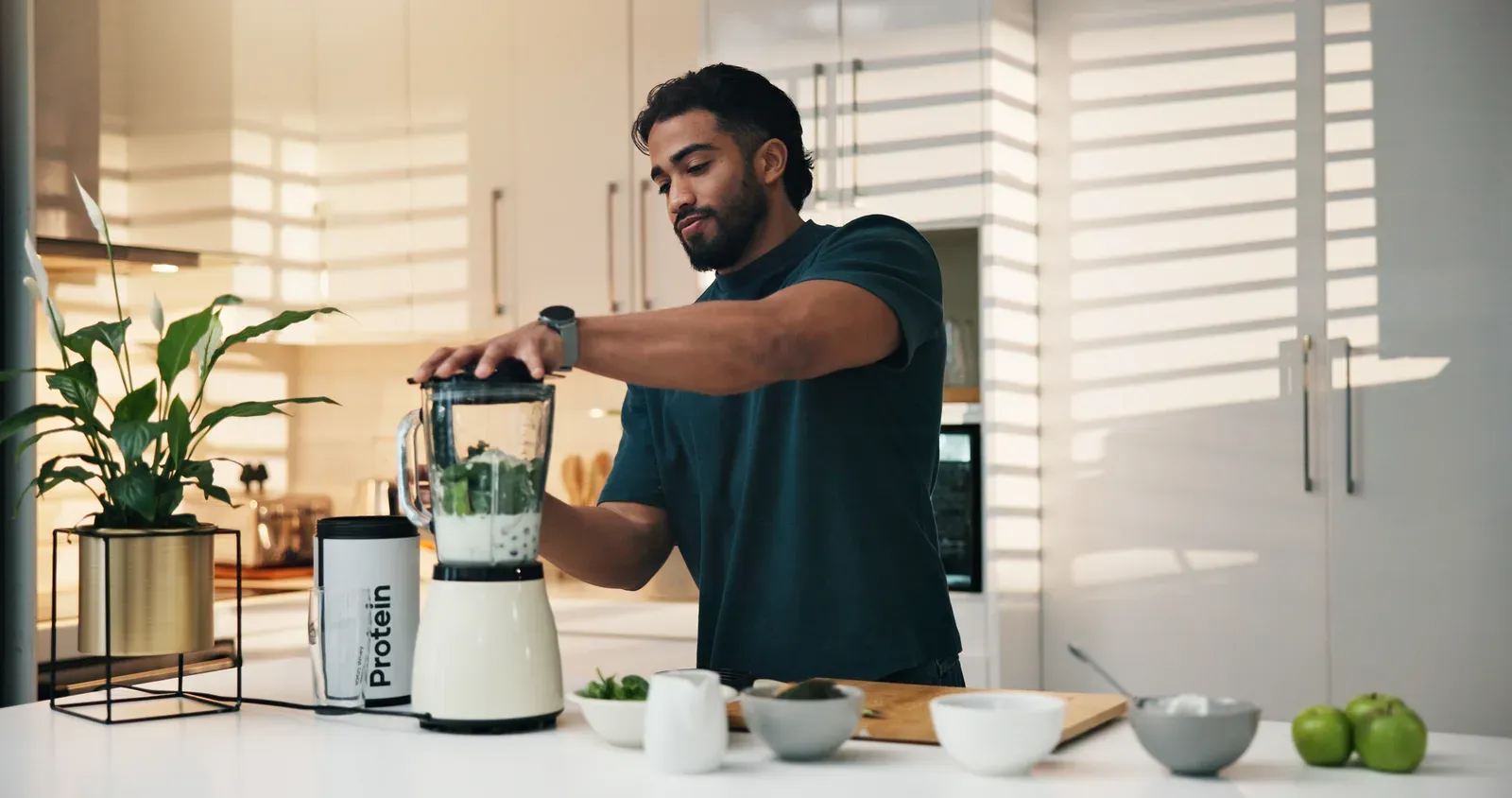
Liquid protein, when it helps
On days when chewing sounds unappealing, a protein drink or a glass of milk can bring protein in without a plate. Whether to use powders, and how much, is a dietitian or prescriber question. The protein shake guide lays out when a shake is worth it and when food does the job, and the protein targets guide covers the numbers.
Hydration counts as fuel
Thirst can fade on these medications, and dehydration makes workouts feel brutal and dizziness more likely. Practical habits:
- Sip steadily through the day, with a bottle in sight.
- Drink before, during and after sessions.
- Include fluids with a little salt if your clinician agrees.
- Notice dark urine, headaches and lightheadedness as prompts to drink and to tell your prescriber.
After the session
Recovery food does not need to wait for hunger. Try to get some protein in within a couple of hours, whether yogurt, milk, eggs or a small shake. If you cannot, note it and tell your coach, so the next session respects your reserves.
When it is a medical question
Contact your prescriber if you are consistently unable to eat or drink enough, if you feel faint, if vomiting is involved or if you lose weight very quickly. The dizziness guide and the nausea guide explain when to stop and who to call.
Questions to ask your prescriber or dietitian first
- What are my daily protein and fluid targets?
- Which foods or drinks should I avoid close to training?
- Is it safe for me to train when I have eaten very little?
- What signs should have me stopping and calling you?
Where coaching fits
A coach scales the session to the fuel you have, avoids hard efforts on empty days and keeps a note of what worked. Each coach sets their own terms.
Related questions
Can I train fasted if I am not hungry?
Some people feel fine, and others get lightheaded. If you are on a GLP-1 and eating little, ask your prescriber, and consider a small snack or a drink as a safer starting point.
What counts as a small pre-workout snack?
Things like a few spoons of yogurt, half a banana, a slice of toast with a thin spread or a small glass of milk. Choose what you can tolerate and keep it plain.
Do I need a protein shake?
Not necessarily. A shake can be convenient when food feels like a chore, and the [protein shake guide](/answers/do-i-need-protein-shakes/) explains when it helps and when food wins.