
Football Strength Training Near Westfield: The Four Year Athlete Plan
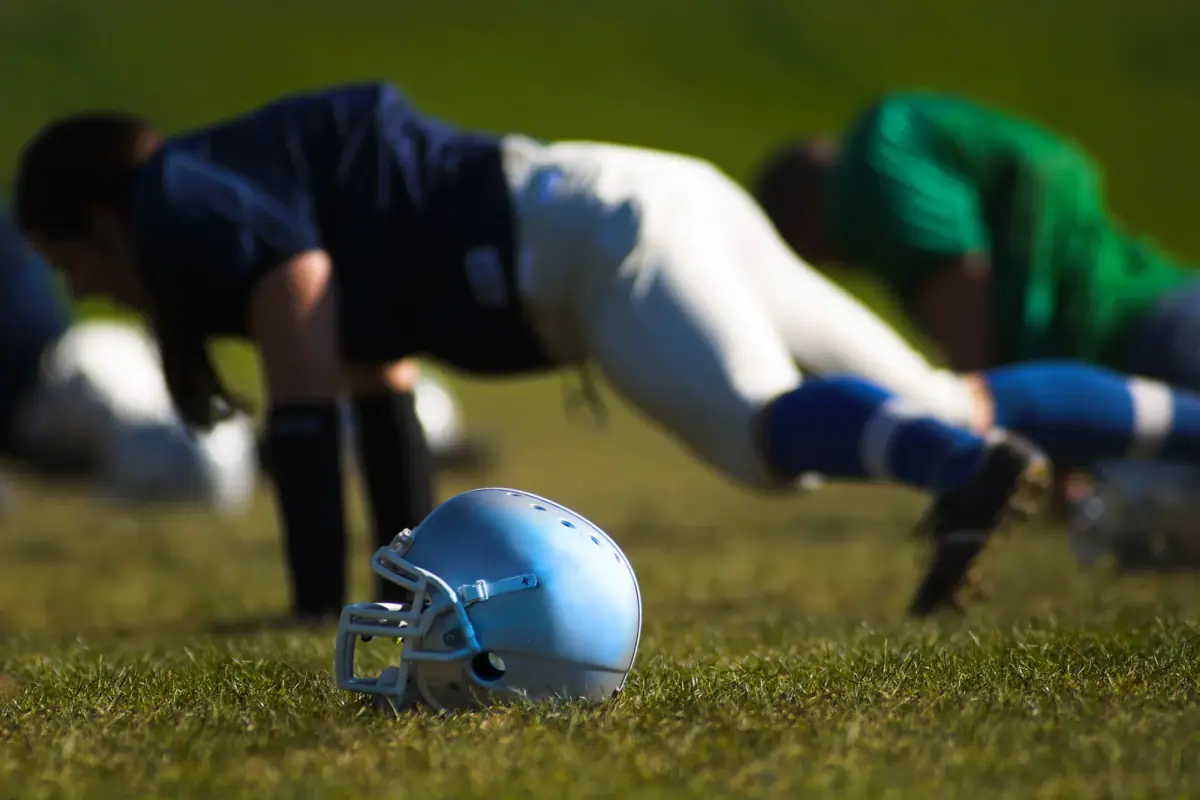
The football players who start as juniors are usually the ones who treated freshman and sophomore winters as training seasons instead of waiting rooms. Football strength training near Westfield is best understood as a four year project: patient technique early, progressive loading in the middle, and speed and power expression late. The one on one version runs at Carmel City Center, just down US-31, 10 to 15 minutes for most of Westfield.
What a room of forty athletes cannot see
School lifting programs do essential work, and a private coach’s job is to supplement them, never to undercut them. What a team room structurally cannot do is watch one athlete’s ninth rep. The knee that caves on the last squat, the hips that shoot early on every pull, the sprint stride that wastes force sideways: those are individual flaws, and they get fixed by an individual coach with time to film, correct, and rebuild. One weekly private session that repairs technique makes every school session after it more productive, which is the whole arrangement in a sentence.
Freshman to senior, in the right order
A four year plan has a shape. Year one is movement ownership: bodyweight and light loads, sprint mechanics, and the habits of a trainee. Year two adds progressive loading as positions stabilize and the body finishes its biggest growth. Years three and four convert strength into game speed, with position shading, since a lineman’s week leans into heavy drive work while a receiver’s leans into acceleration and cutting. What never appears on the plan for a minor is a tested one rep max. Strength shows up in performance and in submaximal benchmarks, and pediatric sports medicine has been clear for years that supervised, technique led progression is the safe route through a growing athlete’s window.
Many Westfield football players spend winter on a wrestling mat, which is genuinely useful conditioning, and the two sports share a strength base we cover in the wrestling strength guide.
Winters and springs, just down US-31
The calendar work happens December through spring, one or two private sessions a week in a reserved room with a rack, cables, and dumbbells, scheduled around school from early morning onward. A parent is welcome in the room, and FlexConnect matches your player with a coach who has football background from among the more than 40 independent professionals based here. Anything medical, an old injury, a concussion history, anything a doctor monitors, gets physician clearance first and the coach programs inside it. The complete position by position picture lives in the Carmel football strength guide.
If your player wants Friday nights, the honest path starts this winter. Book the free consultation and let a coach map the four years.
Related questions
What is worth training in the months right after the season ends?
Recovery first, then the longest build of the year. Winter is when a player can add strength without games taxing the tank, which is why December through March quietly matters more than July.
My freshman has never touched a barbell. Where does he start?
With movement, not weight: learning to squat, hinge, push, pull, and sprint with a coach watching every rep. Load arrives once positions are owned, and that patient first block is what the rest of high school gets built on.
Is it safe for a growing teenager to chase strength numbers?
Chasing numbers is the wrong frame for a growing athlete. Supervised, progressive lifting is well supported for teens, but growth plates and developing joints argue for earned progression and no one rep max attempts until much later.