
Conditioning for Muay Thai: Round-Based Cardio and Legs
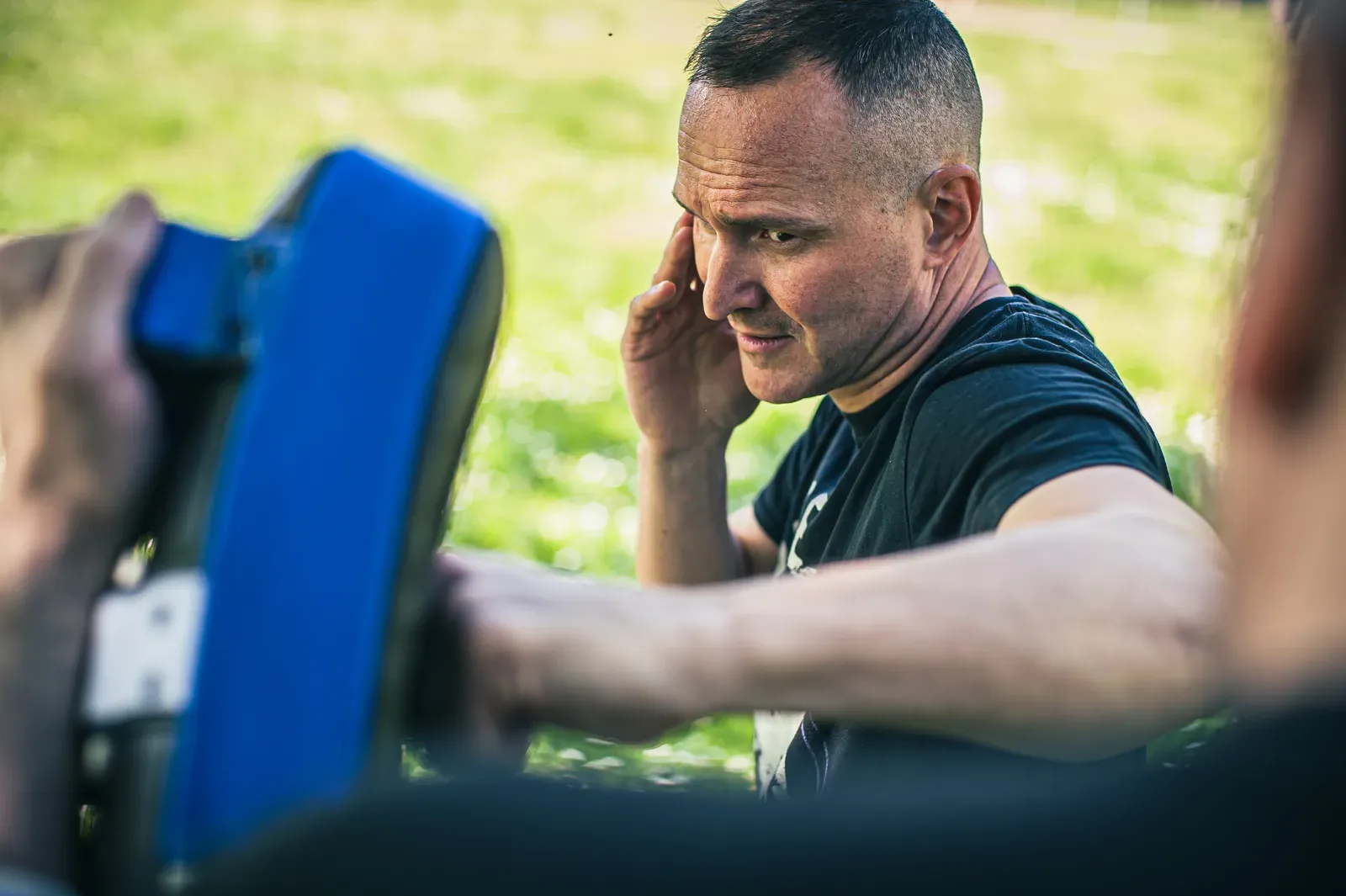
Conditioning for muay thai works best when it copies the rhythm of the sport: round-length intervals of about three minutes, short recoveries, and strength work for the hips, lower legs and clinch. Class training teaches the skills, and gym conditioning fills the gaps the class does not reach. If you train nak muay as a hobby, the aim is to arrive at class fresher and recover faster. A free consultation is the place to build that plan.
Round-length intervals
Muay thai rounds commonly last about three minutes, with roughly a two minute break. Mirroring that structure makes your cardio specific.
| Phase | Work | Rest | Rounds |
|---|---|---|---|
| Building | 2 minutes moderate | 1 minute | 4 to 5 |
| Standard | 3 minutes hard | 1 to 2 minutes | 3 to 5 |
| Peak, near an event | 3 minutes hard, with sprints inside | 1 to 2 minutes | 4 to 5 |
Pick tools that keep you moving: a rowing machine, a curved treadmill, shadow work, rope, or a bag. Measure effort by feel and breathing, and slow down if technique falls apart. Compare with the approach in private kickboxing workouts, which is built on strikes.
Hips: the engine of kicks and knees
A roundhouse kick and a knee strike both depend on hip mobility and power.
- Mobility: hip rotations, deep squat holds and 90 90 hip transitions.
- Strength: single-leg work such as split squats and step-ups, plus hip hinges.
- Power: controlled, low-impact jumps or med ball throws, introduced gradually.
Tight hips often show up as a short, arm-driven kick. Improving them helps the kick land with the hips and the trunk behind it.
Shins and lower legs
Shin conditioning in muay thai is built slowly through bag work and repetition under an instructor. A strength coach cannot replace that, and should not hurry it. What the gym can add:
- Calf raises, both straight-legged and bent-kneed.
- Tibialis raises, which strengthen the front of the shin.
- Single-leg balance and ankle control drills.
Stop and see a clinician if you have sharp or persistent shin or ankle pain.
Clinch strength
The clinch is a standing grappling position that rewards a strong neck, upper back, grip and trunk.
- Pulling: rows, pulldowns and band pulls.
- Neck and upper back: controlled neck work and shrugs with light loads.
- Grip: loaded carries and dead hangs from a bar if your shoulders are healthy.
- Trunk: planks and anti-rotation presses.
If your grip or elbows tire easily, the guide to strength training for rock climbers shares ideas on pulling without overloading the elbows.
Fitting it around classes
- Keep conditioning away from your hardest class days.
- Do the strength work before conditioning, on separate days if you can.
- Take at least one full rest day a week.
- Drop volume the week of a fight, a grading or a tournament.
If you have a joint, back or heart condition, check with your physician first.
Where FlexWerk fits
FlexWerk is a private suite at Carmel City Center, rented by the hour by independent coaches. It is not a fight gym and does not replace your instructor, but it can be the place where your strength and conditioning sessions happen. Coaches set their own formats, so ask which coaches have combat sports experience. For a boxing-based view of similar work, read boxing conditioning one on one.
Bring your class schedule to the consultation, and the plan can be built around it.
Related questions
How much conditioning do I need beside muay thai classes?
Most hobbyists benefit from one or two short sessions a week, placed away from the hardest class days. Classes already provide skill and cardio, so the extra work targets weak links.
Should I condition my shins in the gym?
Shin toughening in muay thai comes gradually through technique and bag work with your instructor. A gym coach can build general lower-leg strength and tissue tolerance, but should not replace that guidance.
What is the best cardio for a clinch-heavy class?
Interval work with a strong upper-body pulling element, such as rowing or sled work, resembles the grinding feel of the clinch more than steady jogging does.