
How to Build Chest Muscle After 40 With Healthy Shoulders
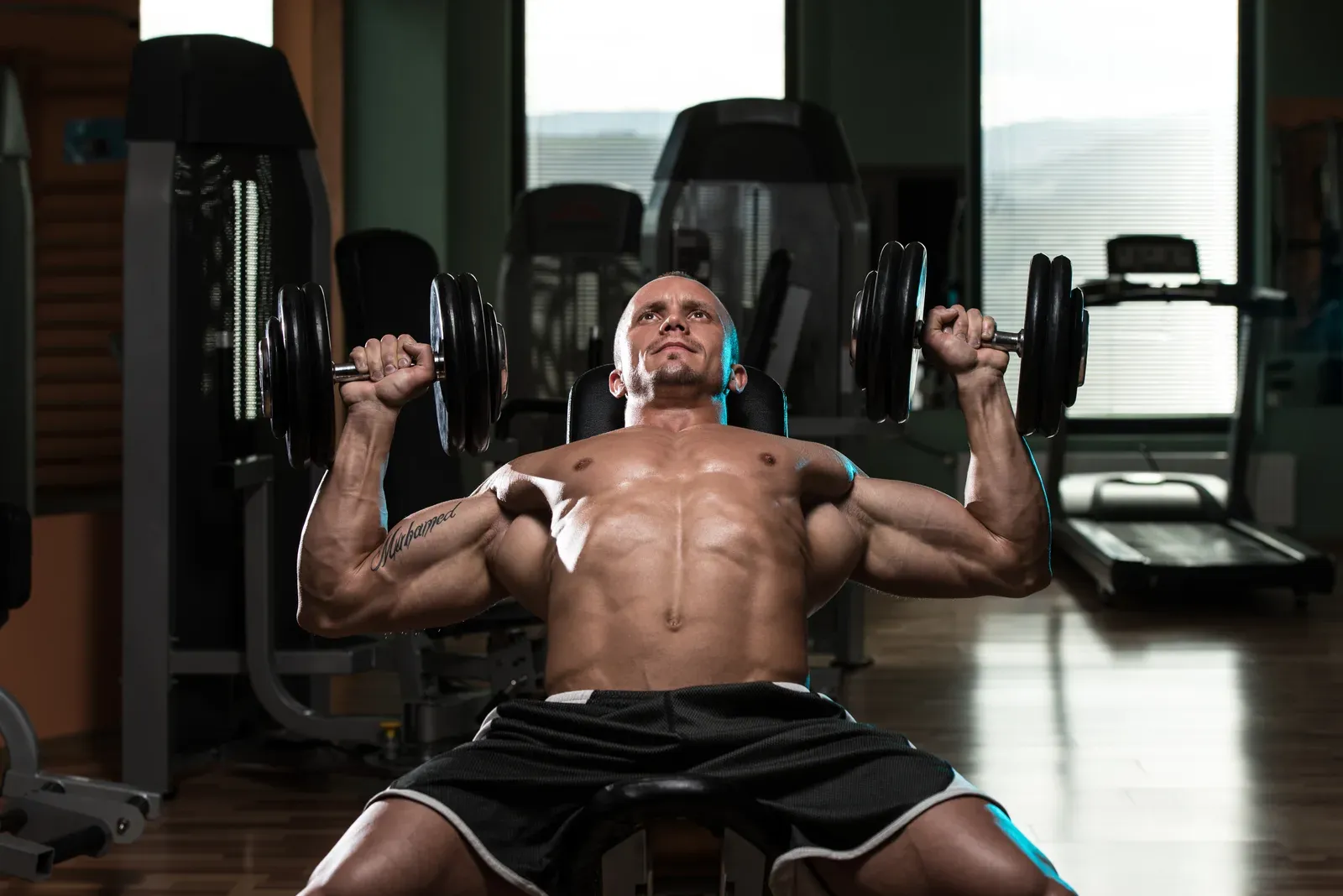
To build chest muscle after 40 and keep your shoulders happy, press with dumbbells or cables at a slight incline, use a neutral or semi-neutral grip, tuck the elbows to about 45 degrees, and balance every press with rowing. Do two chest sessions a week with 10 to 14 hard sets in total and add weight slowly. A free consultation is one way to get that angle checked by a coach, and the logic is simple: pick the angle your shoulder tolerates, then progress it. The strength training program in Carmel is built the same way.
Why the shoulder is the limit, not the chest
The chest muscle is large and recovers quickly. The shoulder joint is the weak link: a shallow socket, a busy tendon pocket and years of desk posture. Most people over 40 who hurt themselves benching do it by flaring the elbows wide, lowering the bar too deep and pressing heavy with a rounded upper back.
So the plan is to keep the chest working while taking pressure off the front of the shoulder.
The pressing menu, ranked for older shoulders
| Exercise | Why it works | Starting dose |
|---|---|---|
| Incline dumbbell press, 20 to 30 degrees | Hand path adjusts, friendly angle for the shoulder | 3 sets of 8 to 12 |
| Neutral-grip dumbbell press | Palms face each other, elbows tuck naturally | 3 sets of 8 to 12 |
| Push-up, hands on a bench or rack | Free shoulder blades, adjustable load | 3 sets of 10 to 15 |
| Cable chest press or fly, mid height | Constant tension, light on joints | 2 or 3 sets of 10 to 15 |
| Flat barbell bench, only if pain free | Heavy, but fixed grip | 3 sets of 5 to 8 |
Start your session with one of the top three, then add a cable movement for finishing volume. A steep incline above about 45 degrees shifts work to the front of the shoulder, so keep it low.
Setup details that protect the joint
Small cues make a big difference:
- Shoulder blades back and down against the bench, as if tucking them into your back pockets.
- Elbows at about 45 degrees from the torso, not flared straight out to the sides.
- Wrists stacked over elbows, forearms near vertical at the bottom.
- Stop the lowering when the upper arm reaches about parallel to the floor, or a touch lower if it is painless.
- Feet planted and a gentle arch in the upper back, not a big lumbar bend.
Warm up with two light sets and a band pull-apart before the first working set. After 40, warming up is part of the lift, not an optional extra.
Volume, frequency and progression
For most adults over 40 a good starting range is 10 to 14 hard sets for the chest each week, split over two sessions. Choose a weight that leaves you with one or two reps in reserve on each set, and when you hit the top of the rep range on all sets, add the smallest weight jump available.
Recovery matters more as the years go on. Leave 48 hours between chest days, sleep seven or more hours, and keep protein near 0.7 to 1 gram per pound of goal body weight, a commonly cited range. Our guide to bigger arms after 40 shares the same recovery logic, and presses will also work the triceps, so do not stack heavy arm days the day after.
Balance with pulling
A shoulder that presses a lot and pulls rarely tends to roll forward and complain. Match every pressing set with a rowing or pulling set, and make it two for one if your posture is rounded. Rows, face pulls and band pull-aparts do the job. If you are working toward your first pull-up, our page on learning a pull-up after 50 lays out a progression that suits the same shoulders.
When to get the shoulder checked
Stop and have a physician or physical therapist look at it if you notice:
- pain at the front of the shoulder that lingers after training or wakes you at night;
- a sharp pinch when you lift the arm overhead or reach behind you;
- weakness, numbness or tingling into the arm;
- a history of rotator cuff tear, dislocation or recent surgery, and no clearance to press.
Our page on training with shoulder pain explains how a coach works inside a clinician’s guidance, and often the fix is a change of angle or grip, not the end of pressing.
Coaching the press
A coach can watch your elbow path from the side, which is almost impossible to judge yourself. FlexWerk’s private suites in Carmel come with a rack, dumbbells and a cable system, and the free consultation includes an InBody scan so you can see your muscle baseline. Each coach sets their own session format, so ask about scheduling. Start with incline dumbbells this week, film one set from the side, and compare your elbow angle with the cues above.
Related questions
Is the barbell bench press bad for my shoulders after 40?
Not inherently, but it locks your hands in one path, which can bother some shoulders. Dumbbells, a neutral grip bar or a cable press let the arms find a more comfortable line while still loading the chest.
Are push-ups enough to build chest?
They are a good start, especially with the feet raised or a weight on the back. Once they feel easy for 15 clean reps, add dumbbell or cable work so the load can keep increasing.
Should I stop pressing if my shoulder clicks?
A painless click is common and usually harmless. Pain, weakness or catching is different, and a physician or physical therapist should look at it before you push through.